


why champagne isn’t always necessary (but it is allowed)
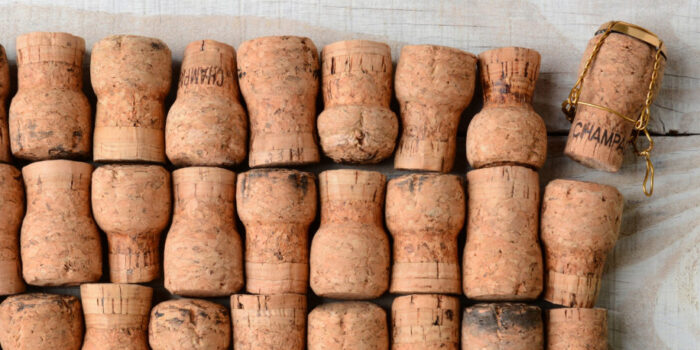
Here we go again. The bubbles are flying around your ears, because it’s December. Every wine magazine and wine shop is presenting its own catch of the year, and even the supermarket suddenly seems to have become a champagne specialist. Once a year, champagne is hot.

And that’s despite the fact that the average Dutch person isn’t exactly enthusiastic about sparkling wine. Worldwide, we rank somewhere near the bottom when it comes to uncorking such a bottle. In 2014, we accounted for just 0.8% of total champagne exports. That amounted to 2.4 million bottles, or exactly one glass of champagne per person. By comparison: our southern neighbours accounted for 3.1%. With more than six million fewer inhabitants.
Disappointing
Yes, at the end of the year we open one. After all, the start of the new year is ushered in with great fanfare. The corks have to pop! But at a Dutch price. For us, drinking champagne isn’t really about taste, but about rituals and tradition. Like the dust-covered Christmas baubles from the attic, that one bottle of bubbles on New Year’s Eve makes its annual appearance. As long as it fizzes and the label says champagne. Often, brut (for the ‘serious’ drinker) or demi-sec (for those with a sweet tooth) is the only choice made. And such a glass is disappointing. It will be tart and meagre. Partly because of the traditional oliebollen pairing – a bottle has to be from a very special place to stand up to that – and simply because good champagne is expensive.
Because you naturally pay top dollar for that enchanting prestige
Don’t get me wrong, I love champagne! The finesse and refinement that such a bottle can offer are phenomenal. The combination of terroir, grapes and sublime expertise, brought together in 0.75 litres of sparkling liquid, is almost impossible to match.
More value for money
But you’re not getting such a layered little masterpiece for a tenner! Due to local regulations, the Champagne grapes for a single bottle already cost around seven euros. Add another two euros in excise duty, plus the premium attached to its luxury image. Because you naturally pay top dollar for that enchanting prestige, especially with the better-known brands. Fortunately, more and more Dutch importers – such as Brouzje and Clara’s Champagne – are offering bottles from smaller houses. Still not cheap, but without a doubt better value for money.
Champagne is sparkling wine, so far so good. But sparkling wine is so much more than just champagne! German sekt, French crémant, Italian spumante, Spanish cava and South African vonkelwijn; they all belong to this category. Also traditionally made – with a second fermentation in the bottle, which creates the bubbles – but often from a different climate and with different grape varieties. And then there are the so-called champagne lookalikes. Made from the traditional grape varieties (chardonnay, pinot noir and/or pinot meunier), but originating from surprising regions such as Tasmania or Argentina. In short, there are still many gems to discover.
Exciting alternative
If you don’t want to pay too much for your bubbles, simply don’t buy champagne. Instead, discover an exciting alternative. Broaden your horizons! For a lovely glass at a nice price, look beyond that one region. There is crisp, fresh white from Tasmania and sparkling, voluptuous red from Barossa. But also refined sekt rosé from Germany. And even France produces fantastic other bubbles; seductively perfumed crémants from Alsace, for example, or a sparkling chardonnay from Burgundy. This way, sparkling wine becomes not only festive, but also delicious and affordable. And just as gastronomically versatile as any other wine.
Discover my nine other bottles, with a bonus – because the region shouldn’t be left out after all – at number 10: a little gem from Champagne. And once we realise that sparkling wine means more than just a popping finale, we may well rise above that one glass a year.
10 times the other bubble
Pasdutout | Provence, France | Grapedistrict € 6.99
airen, chardonnay, ugni blanc
dry, fresh-fruity, floral
ALCOHOL-FREE – for when necessary – 0.02% alcohol
Hochriegl Sekt Trocken – Johann Kattus | Austria | Vindict € 11.95
grüner veltliner, welschriesling
clean, mineral, fresh
(De Grote Hamersma 8.5)
Crémant de Bourgogne – Terres Burgondes | France | Hema € 12.50
chardonnay
fine, fresh, fruity
(De Grote Hamersma 8)
Pongrácz Sparkling Brut – House of JC le Roux | Stellenbosch, South Africa | Gall € 12.99
pinot noir, chardonnay
toast, elegant, fresh
(Top 3 Decanter)
Crémant d’Alsace Brut – Domaine René Meyer et Fils | Alsace, France | Thiessen € 14.95
chardonnay, pinot noir
light, fruity, soft
(Honourable mention Perswijn Wijnconcours Autumn & Winter 2015)
Vouvray De Chanceny Excellence | Loire, France | Gall € 16.99
chenin blanc
Spicy, lots of flavour, peach
Schild Estate – Sparkling Shiraz | Red| Barossa, South Australia | Grapedistrict € 16.99
shiraz
Jammy, spicy, full-bodied
Jansz Premium Cuvée – Wijnhuis Jansz | Tasmania, Australia | among others Flesjewijn.com
€ 21.50
chardonnay, pinot noir, pinot meunier
complex, crisp, hazelnut
Spätburgunder Brut rosé 2013 Sekt – Von Buhl | Palatinate, Germany | Les Généreux € 24.95
spätburgunder (pinot noir)
beautiful, subtle, berry-like
(Finalist Perswijn Wijnconcours Autumn & Winter 2015)
Varnier-Fannière Grand Vintage GC 2008 | Champagne, France | Clara’s Champagnes
€ 61.00
chardonnay – Blanc de Blancs
creamy, honeyed, mineral
(2nd place Perswijn Wijnconcours Autumn & Winter 2015, De Grote Hamersma 9-)
Text: Romy Kooij – Miss WineLane
Image: Shutterstock


