


The oldest restaurants in the Netherlands
A world without restaurants—can you imagine it? I can’t. And yet, the phenomenon as we know it today hasn’t actually been around for very long. Key detail: as we know it today. Because in other forms, eating out has existed for centuries.

The first form of a restaurant where you actually sat down may be found in medieval inns. “They existed in Antiquity too, but that was mainly takeaway. In medieval inns, you could join others at long tables and eat whatever was being served,” says culinary historian Charlotte Kleyn.
Enjoying a bite to eat at the inn around the corner, on the other hand, was not something you did. Charlotte: “You ate there when you were travelling or when you didn’t have a kitchen of your own—which happened often in Ancient Rome—and therefore couldn’t cook for yourself. Probably not for fun, as we do today. It was certainly not elitist. The elite ate at home, where their own cook prepared the food.”
The oldest
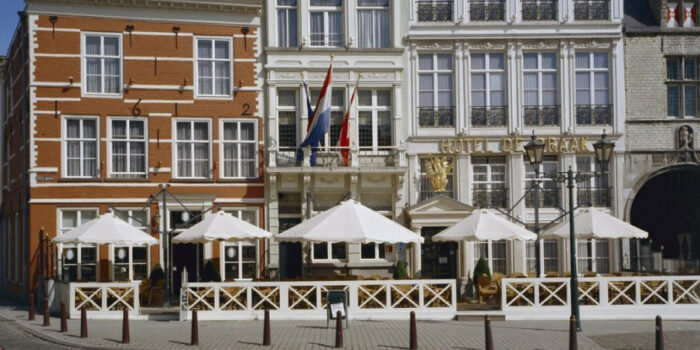
The oldest inn (and, in fact, the oldest continuously operating business) in the Netherlands is De Draeck in Bergen op Zoom. At least, in 1397 it began as the De Draeck inn; by now, it has grown into Grand Hotel de Draak.
At the restaurant on the premises, you can now eat lobster, sea bream and beetroot carpaccio, but owner Frans Hazen suspects things were different back then. “It would have been something like meat, vegetables and a chunk of bread. And beer and wine.”
As we know it
Restaurants with menus and the option to choose what you ate only emerged at the end of the 18th century. “That phenomenon began in Paris and was only for very wealthy, chic people,” says Charlotte. It was so new and unusual to eat out in public for pleasure that it quickly became a tourist attraction.
As tends to happen, other countries adopted the idea, and a few years later the first ‘French-style’ restaurants could also be found in the Netherlands. “Silver cutlery, neatly laid tables, menus in French: it really was only for the elite.”
Chinese-Indonesian
The first restaurants where you could eat more affordably were—yes, really—Chinese. It began with Chinese people working for low wages in the harbour who sold peanut cookies on the side, eventually developing into the establishment of small eateries. Cheung Kwok Low in Rotterdam was the first (1920); in 1924, Amsterdam followed with the famous ‘Kong Hing’.
When Dutch soldiers returned from their service in Indonesia at the end of the 1940s, along with repatriating Dutch-Indonesians, demand for Indonesian food grew. The Chinese then cleverly capitalised on this by also starting to serve nasi rames, gado-gado and other popular Indonesian dishes. Et voilà: the Chinese-Indonesian restaurant was born.
Research
Want to know more? Andere Tijden devoted an episode to it. Prof. Dr. Marius van Nieuwkerk, in collaboration with Weekblad Elsevier, compiled a list of the oldest businesses in the Netherlands. The top five is led by hospitality businesses:
- 1397: Grand Hotel de Draak (formerly De Draeck inn) in Bergen op Zoom
- 1423: Hotel and restaurant t Goude Hooft (formerly In tgulde hoift inn) in The Hague
- 1478: Restaurant De Waag (city beer house and weigh house) in Doesburg
- 1540: Restaurant De Spaanse Vloot (formerly De Borsboom inn) in ‘s-Gravenzande
- 1542: Café In de Blaauwe Hand (formerly Lakenhal drinks room) in Nijmegen


