


The roast of: coffee barbarian Steffi
Last month I wrote a little piece about coffee. Sour coffee, to be precise: why I hate it so much and how you can avoid it. Dozens of reactions, chats, DMs and emails later, I know this: that was a bit foolish.

Of course, you’re allowed to have an opinion. Please do. And at FavorFlav, we often add a sauce of contrariness, humor and—above all—self-deprecation. All of that was present in this piece. But yeah… if you jokingly create a ‘Sour Coffee Survival Guide‘ and, despite your research, it turns out not to be factually correct, that’s, uh… painful.
So there’s only one thing left to do: let myself be roasted. And by the real experts, at that. So I asked coffee connoisseurs Lex Wenneker (Barista champion and owner of Friedhats), Jeroen Veldkamp (co-owner of CoffeeLab) and Remco Tjallinks (hospitality coffee and tea advisor at Sligro Utrecht) to teach me a lesson and tell me how things really work with that ‘sour’ coffee.
-
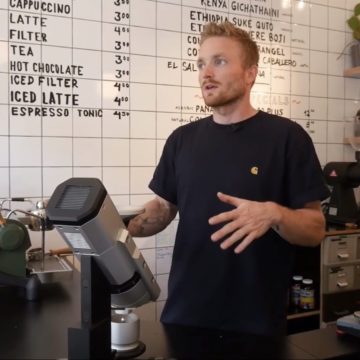
- Lex Wenneker
-


- Remco Tjallink
-
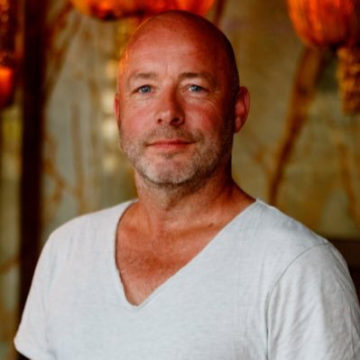
- Jeroen Veldkamp
Gentlemen, where did it go wrong?
Jeroen Veldkamp (co-owner of CoffeeLab)
“In your piece, you overlook an important fact: that in the Netherlands (and Northern Europe), we are social coffee drinkers. We drink coffee together: at the coffee machine, at the table, at the gas station. The farther south you go, the more people drink coffee ‘solo’. And that also means you can choose the bar or barista of your choice. And therefore the coffee of your choice.
By now, that custom has also spread here, and we have many specialty coffee bars and roasteries. Every specialty coffee bar chooses its own portfolio of single estates. The beans from one farmer are guided by one buyer, through one roaster, to that one coffee bar. And often, one barista then gets the very best out of those coffee beans. In that espresso, the ‘sourness’ is indeed often clearly recognizable. But—as you already said—we see that as an art.
Because try finding another product that undergoes so many treatments and where, right at the very end of the entire chain, a professional uses all their knowledge, experience and talent to turn all the work of the farmer, roaster, etcetera into a final result of 30 ml.
That’s extreme. That’s excessive. And the guest has to understand it. Fortunately, specialty coffee bars have guests who consciously choose this art. And so they don’t complain. So please, let’s respect this group of fellow professionals and let them practice their art.
Other coffee bars, such as CoffeeLab, work differently. We are more marketing-driven. So we know who our guests are. We find out what they like. And we make that. In our case, a milk chocolate profile with a fresh, fruity note at the end.
We get that flavor by blending beans (Cup of Excellence 84, 85) from Brazil (chocolate), Ethiopia (fresh) and Guatemala (red fruit). Roasting them slowly, not too lightly, and making delicious espresso with them.
Nowhere near the level Lex achieves. Nor does it need to be. Our bars are high-traffic and located at the station. Lex and others are the Michelin establishments. The Sergio and Jonnie of coffee. CoffeeLab (and others) are more at Bib Gourmand level.
Long story. But I’ve tried to make it clear that this also has to do with culture, history and mentality.”
Remco Tjallinks (hospitality coffee and tea advisor at Sligro Utrecht)
“Your question is simple, but the real answer is complex. If you want to understand coffee better, you have to take four factors into account: the coffee’s origin, the coffee roaster, the barista and, finally, the consumer.
As you already wrote: the flavor characteristics of your coffee are related to its origin and type, but also to how it was processed by the coffee farmer. The roaster can then emphasize a flavor or partly obscure it, but adding a flavor to the bean—or removing one entirely—is impossible. You can roast all the flavor out of the coffee bean, but a coffee variety with high acidity will always retain distinctive fruity notes.
A good roaster provides information about the origin and a good flavor description of the coffee. Unfortunately, as a customer, you often see extensive, vague texts that say nothing about the expected flavor profile, and all you know is whether a blend contains 100% Arabica beans and whether you’re dealing with lightly or darkly roasted coffee.”
In short: you can look for a ‘non-sour’ coffee variety, but the chances of figuring it out yourself are pretty slim. You have to taste a lot and learn through trial and error. Fortunately, we have a lifesaver for that: the barista.
“A barista must be able to help guests make a good choice or adjust a coffee blend that appeals to many guests. Just like a sommelier with wine, a barista can guide guests and indicate which flavor notes they can expect. Then prepare a cup of coffee that matches the description.”
Right, so my ‘guide’ was just hot air. But how do you actually prevent sour coffee?
Remco: “(Hopefully) you don’t. Coffee is ultimately a fruit, and there will always be fruity characteristics in a good cup of coffee. They may be a little sour, but just as easily beautifully bittersweet; the most important thing is that the coffee is balanced and negative flavors don’t dominate.”
Lex Wenneker (Barista champion and owner of Friedhats)
“The solution is deceptively easy. Especially for you. It’s actually very easy to get coffee in the Netherlands that isn’t sour. That’s because the vast majority of coffee in the Netherlands (and worldwide) is dark-roasted so it won’t be sour. All you have to do is avoid the small, fun coffee bars that radiate quality, and there’s nothing to worry about. I, on the other hand, have a much harder time; I have to search much harder to find a sour coffee.”
Read also:


