



The tropical truth behind Dutch cheese
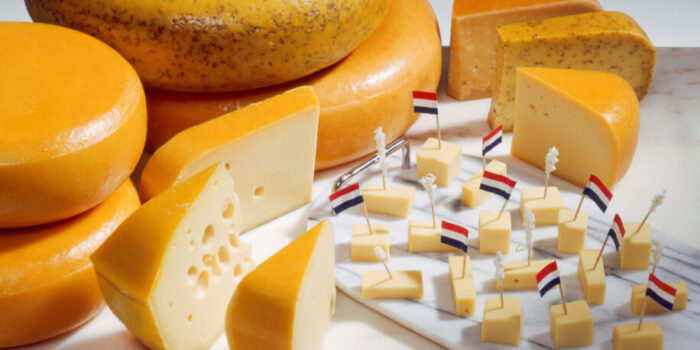
When you think of a typical Dutch cheese, you can already picture it: a dark yellow, sometimes orange exterior and a light yellow interior. The true color of cheese is yellow, but what actually causes it?

Because freshly milked cow’s milk is white, right? Just like goat’s milk, whose cheese, unlike cow’s milk cheese, is white. Curious, thinks Keuringsdienst van Waarde. Time for further investigation to find out what gives those slices of cheese their color.
The color of Dutch cheese
Cheese made from cow’s milk is naturally yellow. That’s because cows (just like goats and sheep) eat grass. Grass contains carotene, an orange-yellow natural colorant found in many vegetables, including carrots. Carotene is not broken down in a cow’s stomach. In goats and sheep, it is. That also explains why cheeses made from cow’s milk are yellow. And the more grass a cow eats, the yellower the cheese will be. If the cow eats little grass, the cheese will be paler.
Unnecessarily tropical yellow
Yet Keuringsdienst discovered that supermarket cheeses are often colored with a yellow dye to make the slices and blocks look more appealing. The South American colorant annatto is used for this purpose—listed on the cheese label as E-number e160b. But whether cheeses really need to be this yellow is debatable. Keuringsdienst conducted a test showing that consumers prefer to buy an uncolored, light cheese rather than a yellow one. So that tropical colorant is unnecessary.
Also read:
- Cheese according to your zodiac sign
- 5 surprising facts about blue cheese
- How to make the best cheese board of your life in a few simple steps
Source: Keuringsdienst van Waarde


