



The truth about (those irresistible) instant noodles
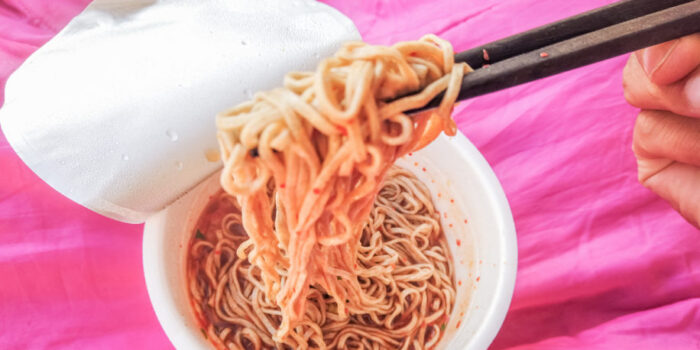
Of course, you can go down a rabbit hole on the internet and watch videos in which a camera someone has swallowed along with their Cup Noodles shows that those things still haven’t been digested after four hours, putting you off eating them ever again. You can also stick your fingers in your ears when someone suggests that instant noodles aren’t very good for you and stubbornly keep having them for lunch every day. But you can also simply stick to that old truism: everything in moderation.

Instant noodles: this may be something you don’t want to hear
Instant noodles aren’t good for you; we can be brief about that. It’s quite a downer – just think about that unbelievably satisfying salty, hot, spicy broth, into which those perfect chewy-yet-soft noodles are so deliciously easy to slurp. And then the choice, the range! The colors, the pictures, the price! Chef David Chang, of Netflix’s Ugly Delicious fame, named his entire Momofuku empire after the inventor of instant ramen: Momofuku Ando – that’s how much he loves them…
Bland
Unfortunately, as with many things in life, if something is made that easy for you, there’s probably something wrong with it. In this case: the noodles themselves are salted first, and then fried. So they aren’t all laid out strand by strand in the sun to gently dry for hours. In many cases, that frying is done in palm oil. Palm oil = generally produced in a hugely irresponsible way.
DELICIOUS
Then there’s that cozy little packet of powder, and often a greasy paste in a sachet that proves impossible to tear open with your hands or teeth, forcing you to get out the scissors, after which garlic-chili (palm) oil remains on the kids’ craft projects forever. That packet of powder contains salt, plus a variation on salt, and something to keep that salt salty for a good long time. I know exactly how all of this sounds: DELICIOUS. But many brands exceed the maximum amount of sodium an adult should consume in a day with just one such packet of powder. (Sodium is, alongside 60% chloride, the most important element salt consists of, at 40%).
Alt-salt
So if you eat instant noodles regularly, there are a few things you could do to make them a little less unhealthy: cook the noodles in water and then rinse them once more with hot water, and chuck those packets straight out and replace them with less processed flavorings. Soy sauce, for example, which is also high in salt, but there are definitely varieties with less sodium (look for a bottle labeled ‘low-sodium’ at the Asian grocery store), lime juice, sambal – it all works.
Yes, but…
And what if you really don’t feel like doing any of that? And don’t plan to waste a single milligram of your haul? Then, following the advice of nutrition professors, we’d say: see this delicious bowl as a guilty pleasure, something you don’t treat yourself to a few times a week, but simply have every now and then – and then enjoy it to the fullest. Pimped with some vegetables, an egg, seaweed and hot sauce, our opinion is unchanged: this stuff is irresistible!
Read also:
- How instant noodles came about
- Recipe: Ramenstein ‘Du hast pork’
- These 3 Japanese sauces you’ll be using a lot this year (+ recipes)


