


These five tips from a cooking course can be applied at home right away
Even experienced home cooks can always benefit from new tips & tricks, because something someone else has been doing for years may be incredibly new, surprising and helpful to you! So here are some seemingly obvious things that you simply need to know to make your cooking life even easier…

We can recommend that everyone take a cooking course at least once, but for those who can’t do that right away, here are five top tips:
The knuckle method
I always saw my mother doing this, but for vague reasons I taught myself to use ‘2 parts boiling water to 1 part rice’. Yet this is the trick many cooks use when cooking rice: swirl the rice around in the pan and shake it a little until the top is level, then pour in water up to the first knuckle of your finger (with your fingertip touching the rice). You’ll never need a measuring cup again! And because the rice cooks and steams this way, it’s much fluffier than when you randomly fill a pan with water and then drain the cooked rice.
Ice-cold bath
Cooking dried beans or pulses yourself: we’ve often said that they really taste better than those from a jar or can. Do you know what’s another good tip once they’re cooked? After draining them, drop them briefly into a bowl of ice water (and then drain them again). This stops them from cooking further and reduces the chance of them falling apart.
Remember, liquid gold
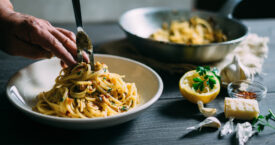
We already knew never to drain your pasta over a colander in the sink. Something that also comes up in cooking courses: remove the pasta from the water when it’s al dente and place it, with the water clinging to it, straight into the (deep) frying pan in which you made your sauce. Pick up spaghetti or other long strands with kitchen tongs, and smaller pasta shapes with a deep slotted spoon or frying skimmer. (You can find great, affordable examples at the Asian toko).
Dirty frying pan? You mean sauce in the making
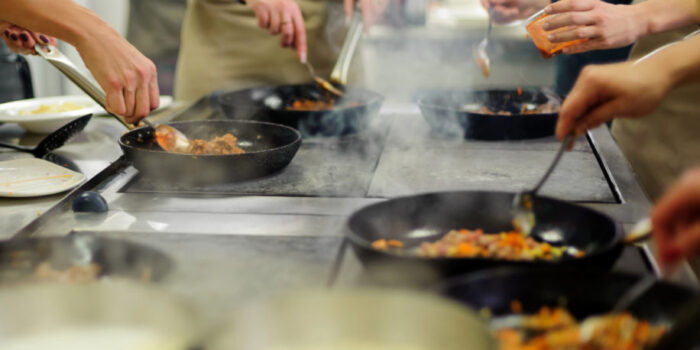
When you’ve fried a piece of meat or fish, or stir-fried some delicious vegetables, there are almost always lovely caramelized bits left in the pan. Don’t throw them away straight away! They’re the starting point for an easy sauce or gravy. My go-to: add a splash of olive oil to the pan (after removing whatever you fried), optionally add a finely chopped shallot (I often skip this), a teaspoon of mustard, a splash of alcohol (whatever wine or beer I have open), crumble 1/4 of a stock cube over it, add 1/3 cup of water, loosen everything with a wooden spatula and reduce by half (allowing the shallot to cook), then melt in a knob of butter, stir, add freshly ground pepper, and it’s ready. Pour it over whatever you just cooked and enjoy.
It’s not showing off
This is very simple, but when you see chefs sprinkling salt with their fingers from a great height, do you ever think they’re being terribly pretentious? They’re not… If you sprinkle very close to the food, much more salt lands on a much smaller surface area. That makes it far too concentrated. From a greater height, it spreads out more and you have better control over its distribution.
Read also:
- Which rice goes with which dish?
- What’s the difference between cheap table salt and expensive salt?
- Budget cooking: beans


