



This Is the Best Rendang Ever
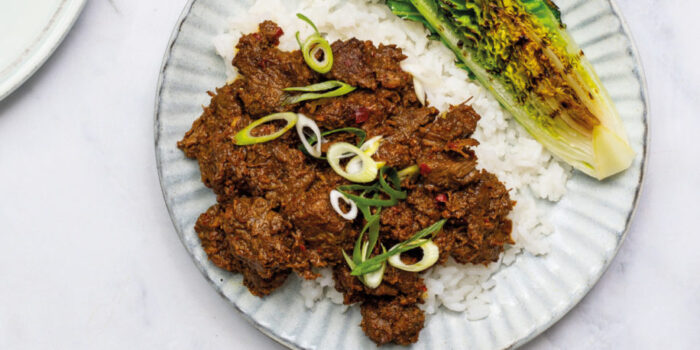
Every Indo swears by their mother’s rendang. And honestly, that sentiment is sacred. But former colleague and cookbook author Emma de Thouars genuinely thinks her own rendang recipe is the absolute best. Naturally, there’s a reason for that; this recipe is the result of years of perfecting it, cooking with at least three mothers, and plenty of trial and error with spices and coconut. The secret? Patience. A little love. And this precise step-by-step plan. Because making rendang isn’t a rushed job—it’s slow food in its purest form.

The Ultimate Result
In fact, rendang is a typical example of something that’s best the next day, so make it ahead of time, refrigerate it and warm it up slowly for the ultimate result. It’s also incredibly delicious over fries! Ready to make the best rendang ever? The ingredient list doesn’t lie, but follow this recipe step by step and you’ll have a dish you can confidently serve to the proudest Indo.
What Exactly Is Rendang?
In the Netherlands, rendang is usually made with beef, and sometimes with chicken or jackfruit. Mussel rendang is also possible. Logical, because for the Minangkabau people of West Sumatra, the origin of rendang, rendang isn’t a dish but a way of cooking.
Slowly Prepared
Maureen Tan wrote an entire book about rendang (you guessed it: called Rendang) and explains it in detail: ‘Rendang’ comes from the word marandang, meaning ‘slowly prepared’, and refers to the slow cooking process. The term describes continuously turning and stirring a dish over low heat, causing the moisture to evaporate while its color and texture transform through different stages into what may ultimately, with pride, be called ‘rendang’.
Not a Specific Dish
People often think rendang is a specific dish, but originally it is a method for preparing and preserving meat in a time when not everyone had a refrigerator. Ingredients such as shallot, garlic, ginger and galangal have antibacterial properties and serve as natural preservatives in the dish.
Want to Make the Best Rendang? This Is Your Secret Weapon
So: do you want to make the best rendang that even your critical aunt will dare to compliment? Follow this rendang recipe, turn the heat down low, let your home smell like an Indonesian warung and, above all: taste, taste, taste. And perhaps—just perhaps—you’ll soon be someone who says: “Nobody makes it better than I do.”
Making Rendang Step by Step
This ingredient list is long, but believe me: you can taste the difference. Everything is needed to achieve the deep flavor rendang is known for. The result is spicy, tender and intense, and practically melts in your mouth.
1. Roast the Candlenuts
Preheat the oven to 160 ºC and roast the candlenuts for approximately 10 minutes. This gives your boemboe extra depth.
2. Make the Boemboe
Grind the onions, garlic, ginger, galangal, bird’s-eye chilies, coriander, cinnamon, cumin, turmeric, candlenuts and cloves in a food processor. You can also use a mortar and pestle, which is good for your muscles.
3. Brown the Meat
Heat sunflower oil in a heavy-bottomed Dutch oven. Brown the meat all over until beautifully browned. Do this in batches; if you put too much meat in the pan, it won’t brown properly. Set the meat aside.
4. Sauté the Boemboe
Heat a little more oil in the pan and sauté the boemboe until fragrant, approximately 2 minutes. Keep stirring well so it doesn’t burn. Return the meat to the pan and add coconut milk, along with just enough water to cover the meat.
5. Let It Simmer
Tie a knot in the lemongrass stalk and add it to the pan, along with the cinnamon sticks, kaffir lime leaves, Indonesian bay leaves and tamarind. Season with salt, but not too much—you can always add more later. Bring the mixture to a boil, then lower the heat so it simmers gently. Let the rendang cook uncovered for approximately 2–3 hours, until it has completely cooked dry. If it dries out too quickly, add some water so it doesn’t stick to the pan. And of course, stir occasionally.
6. Add the Santen and Coconut
Cut the santen into pieces and add it to the rendang along with some water (approximately one glass). Put the grated coconut in a dry frying pan over medium-low heat. Keep stirring the coconut well until golden brown. Add the coconut to the rendang and let it simmer for approximately 10 more minutes.
7. Taste and Perfect
Taste the rendang and season with salt if necessary. The meat should fall apart slightly when you pierce it with a fork, but not so much that it becomes completely shredded.
-
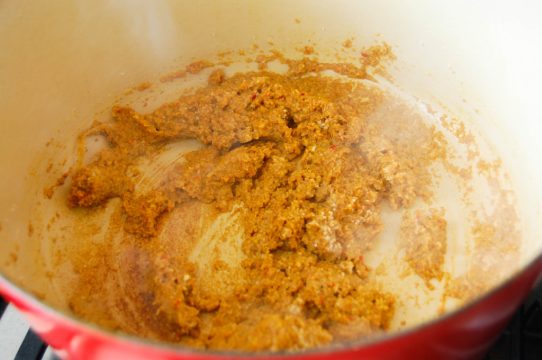
- Fruit de boemboe
-
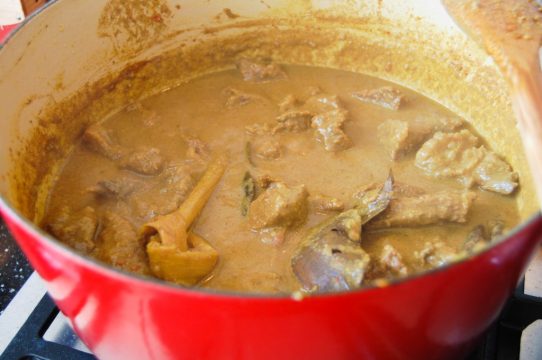

- Laat het sudderen
-
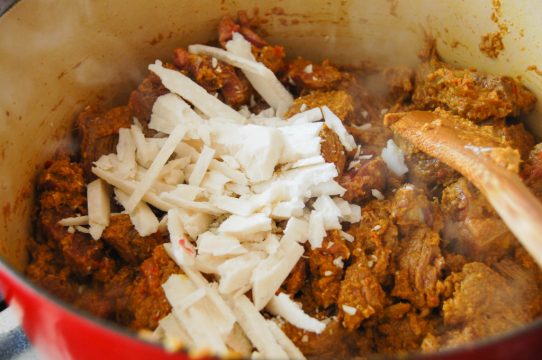
- Voeg santen en kokos toe
-
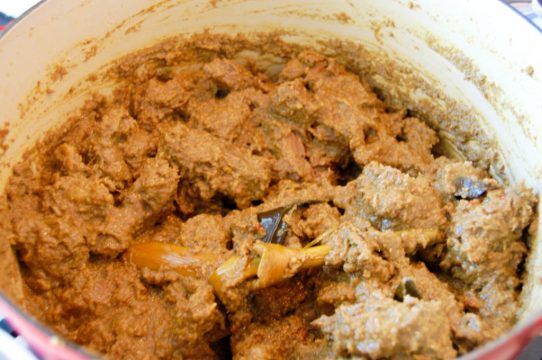
- Proeven en perfectioneren
8. Time to Serve! What Do You Eat with Rendang?
White rice—of course. Brown rice is definitely a no-go! Spicy atjar tjampoer or sweet-and-sour cucumber. And prawn crackers and seroendeng for crunch.
Also read:
- Help, how do I survive the toko?
- Restaurant char.d in Amsterdam: barbecue at its best!
- Saté kambing: a favorite from Indonesia


