



This is the best way to store apples
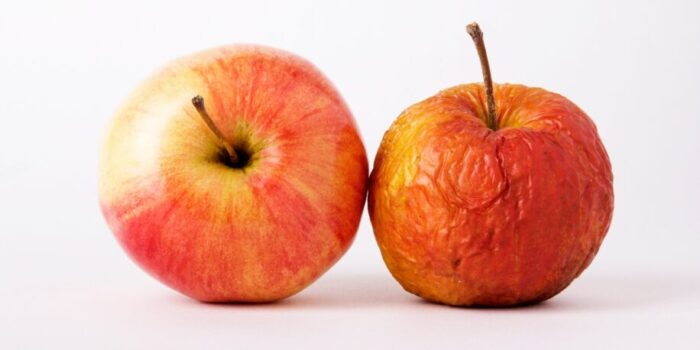
We previously told you that your freezer is your best friend when it comes to storing (surprising!) products. But with these tips, you can also keep coffee beans, mushrooms and bananas fresh for longer. But what about apples? Is it better to store them in the fruit bowl or in the refrigerator?

Floury and mushy—ugh!
Once an apple has been picked, it continues to ripen. This is caused by so-called ethylene gas, a natural plant hormone that stimulates the apple’s ripening process. This gas causes the skin and flesh of apples to become softer—and therefore less delicious—every day. You can prevent floury, mushy apples by storing them properly.
Unripe, ripe, riper, ripest
And that means in a cool, dark and humid environment. This way, you can store apples for weeks (sometimes even months) without them becoming floury. The cold slows down the ripening process and ensures that the apples remain fresh, juicy and full of flavor for a long time. So don’t store them in the fruit bowl anymore. It’s not only a bad idea for your juicy apple, but also for the other fruit in the bowl; the gas released by the apple causes fruit lying close to the apples to ripen faster too. Ripening apples therefore make the other fruit overripe quickly. So don’t store them in the fruit bowl anymore, but in the vegetable drawer of the refrigerator. Covering them with a tea towel in the cellar or garage works too, of course.
If you want to ripen other fruit quickly—hard pears, for example—you can speed up the softening process by placing a ripe apple next to them (a ripe banana has the same effect). The quickest way is to place the pears and the apple (or banana) together in a paper bag. That way, the ethylene gas cannot escape.
Dutch apple
Incidentally, almost all the apples you buy at the supermarket come from abroad. What a shame, since apple season has just begun in our country and you can spend a day picking your own apples at various orchards—and in a few weeks, provided you store them this way, you’ll still have a fresh Dutch apple!
Also read:


