


This is what we ate in the 1990s, part two
As you could read in part 1, we all had Breezer sex in the 1990s. When we went out for dinner, everything came ‘on a bed of’. And also: cappuccino and carpaccio throughout the entire menu. As long as you didn’t combine carbohydrates with fat, because Michel Montignac said that wasn’t allowed. Welcome to the nineties!

The menu is a rebus
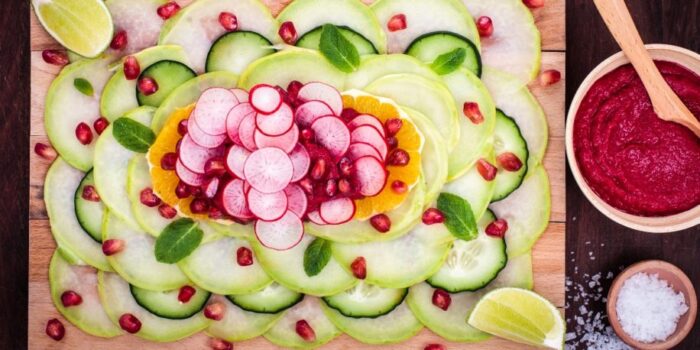
A little puzzling with the menu in the restaurant. In the nineties, cappuccino doesn’t always mean coffee with whipped milk, but actually anything with something foamy floating on top. Soups, airy sauces and even desserts can simply appear on the menu disguised as cappuccino . The same goes for carpaccio (anything sliced thinly, such as beetroot carpaccio or celeriac carpaccio) and tompoes (anything arranged in a stack, such as tompoes of duck liver, pear and blue cheese). ‘Beds’ also often appear on the menu; that means something with something on top. Yes, deliciously vague indeed.
Steak with lettuce, or fries with a glass of red wine
Not that dieting was invented in the nineties, because slimming clubs and calorie counters had of course already existed for years. But Michel Montignac introduced a new approach to losing weight, and it went down well: it’s not calories but combinations of foods that are the culprits. So on the Montignac diet, you can eat as much as you like, as long as you don’t combine carbohydrates with fat and eat enough fibre. Unlimited steak with lettuce, red wine is allowed, and the kilos fly off. It’s all far from undisputed, but Gérard Dépardieu is a fan and Queen Beatrix also strictly follows Montignac’s guidelines.
Very young Jamie
In 1997, he appeared on television for the first time: the very young Jamie Oliver. He was discovered while filming a documentary at The River Café in London, where he worked at the time. His first cookbook, published in 2000, immediately became a bestseller, as did all its successors. His nickname The Naked Chef isn’t a dress code, but refers to his way of cooking: simple, no fuss, no kitchen gadgets. He did come back on that last point at the end of 2010 when he presented his 15-minute recipes, because the food processor and kettle were working overtime, but the food remained the same: colourful, fresh and surprising.
Especially for housewives
In a corner of the famous Avro’s Service Salon, a programme specifically for women who were at home in the afternoons (yes, sexism is also very nineties), television chef Ria van Eijndhoven cooks mushrooms fit for heaven. So much so that she gets her own programme: Kook TV, where she presents new recipes every day together with Manon Thomas. Manon plays a supporting role and is mainly busy chopping parsley, even when it isn’t in the recipe at all; the formidable Ria provides healthy and nourishing meals every day.
Unbelievable, Haribo
Sweets with the theme ‘it’s not what it seems’ are perhaps quintessentially nineties. Think cola bottles, raspberries and blackberries, sour peaches, cherries, bananas and sour belts, not to mention bubblegum tape and candy necklaces. Or perhaps the theme is ‘the dentist can go skiing twice this year’, because those gummy sweets are to tooth enamel what gin and tonic is to good intentions. Haribo, the dealer behind this addiction, is immensely popular, perhaps also because Mr Cactus frolics around in the commercials.
Also read:


