


TikTok trend ‘extreme candy’ is especially extremely bad
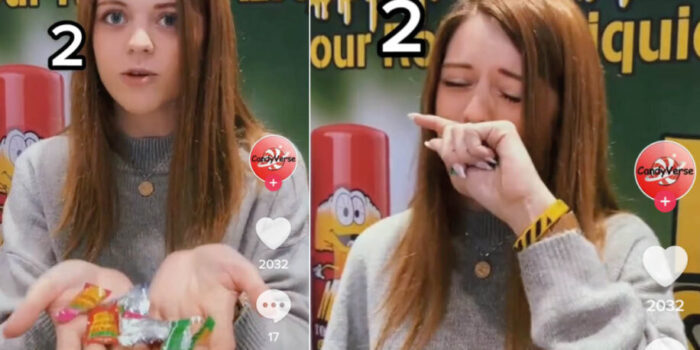
Children love candy. And TikTok. So it makes sense that TikTok videos featuring candy are popular among kids. The extreme candy challenges are disturbing.

Honestly: we also regularly go wild over TiKTok. We’ve already seen so many tips, tricks, hacks and recipes. Pesto eggs and McDonald’s loaded fries, to name a few – I think they’re cleverly done. But the platform also has a dark side. I previously wrote about the Toxic Waste challenge: a challenge that dares children to eat the sourest candy in the world – Toxic Waste. The aim: to keep the sour candy in your mouth for as long as possible. And yes, the filmed reactions are amusing. The consequences for the children themselves are just a little less funny.
Influencing
Children are incredibly easy to influence. Put an influencer behind your product, film it with a fun challenge and a funny song, and they’ll flock to the shop to buy the candy. It’s no surprise that candy stores are eagerly jumping on these TikTok trends. They import candy from every corner of the world. But what they fail to take into account is the amount of dangerous substances found in many of these types of candy. The American cake Twinkies, for example, contains bleached flour: a high-risk product that is banned here in the EU. Consumer rights organisation Foodwatch bought this product ‘quite normally’ at a candy store in Amsterdam.
Does anyone speak Japanese?
Walk around Jamin and you’ll see shelves full of Japanese candy. No idea what the packaging says, but there are funny characters on it. And you know it from TikTok. So: into your basket it goes. Have you ever thought about what all those Japanese characters might mean? What ingredients, which may well be illegal here, could be in such a packet of candy? It’s no surprise that in the Netherlands it is mandatory to put a Dutch translation of the ingredients list on the packaging. But quite a few candy stores seem to be failing at this.
Foodwatch investigation
Foodwatch conducted an investigation at three Amsterdam candy stores and two Jamin locations. In total, they bought 38 extreme candy products, most of which are known from TikTok challenges. And what did they find? No fewer than 32 products failed to comply with European and Dutch legislation. This included violations relating to labelling and the listing of ingredients and health warnings. What’s more, many products contained ingredients and additives that are banned here. Foodwatch has since filed more than 30 official reports with the Netherlands Food and Consumer Product Safety Authority. Let’s hope something more is done soon. Then the Jamin advertisement below can go in the bin too.

Source: Foodwatch, image in article: Jamin


