



Tsukiji Wonderland
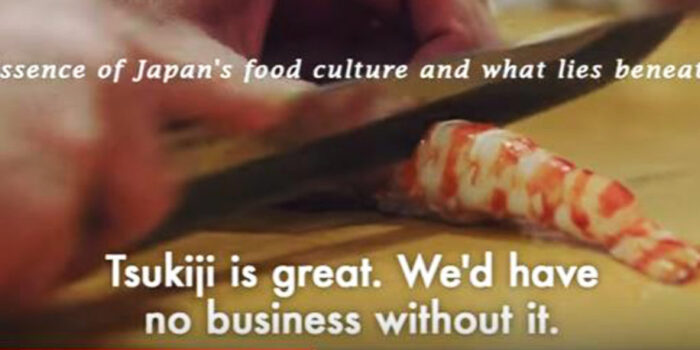
Intercontinental flights are, of course, ideal for binge-watching feature films. But there are even more gems in the selection. Such as Tsukiji Wonderland (2016), a documentary about the final year of Tokyo’s legendary fish market, before its relocation to a new complex far outside the city.

Much more than just fish is traded at Tsukiji Market. But the fish section, referred to by René Redzepi in the film as ‘one of the seven wonders of food’, is world-famous for a reason.
Tuna auction
That fish section, with its equally famous and controversial tuna auction, has its roots in the Nihonbashi fish market. More than 400 years ago, a group of fishermen moved this market to the new capital of Edo (now Tokyo) to supply fish exclusively to the shoguns of Edo Castle. They sold the surplus along the riverbank.
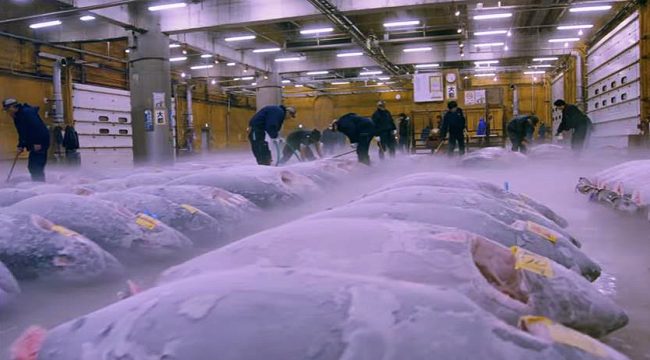
This Nihonbashi fish market was destroyed during the great earthquake of 1923 and subsequently moved to Tsukiji, where the market was up and running again from 1935 onward. During Japan’s economic boom in the 1980s, the fish section in particular grew into a global player.
Relocation
Now the 230,836-square-metre, round-the-clock market, which has outgrown its premises and employs 14,000 people while serving 28,000 buyers every day, is being relocated once again. The documentary captures the final year before the move to the new location in Toyosu.
180 tons of ice are produced on-site every day to keep the fish fresh.
The fish supply across the 600 stalls, each with its own speciality, follows the seasons, with more than 1,600 tons passing through each day. Because the film follows the market through all four seasons, as a viewer you experience in detail when each type of fish is at its best and, for example, has the ideal fat content. The documentary also shows activities that normally remain hidden even from the vendors, such as the 180 tons of ice produced on-site to keep the fish fresh.
Hyper-specialisation
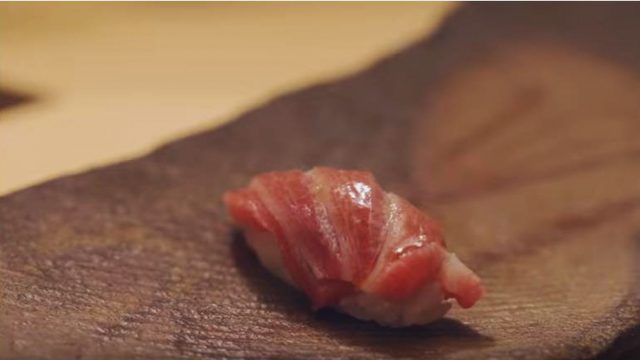
Yet Tsukiji Wonderland is actually not about fish, but about people. The sellers and buyers. And their deep mutual trust. Without the seller, the chef would have no livelihood either. The chef works at such a high level that they must place blind trust in the seller’s hyper-specialisation and judgement. Both parties have to earn that mutual trust day in, day out.
Anyone wondering why fish restaurants in Tokyo are so good will find the answer at Tsukiji.
As one shrimp seller says: ‘I love my shrimp; I don’t sell them to just anyone.’ And another: ‘The chefs cherish our craft. I don’t sell anything I can’t stand behind 100% in terms of quality.’ Anyone who has ever wondered why fish restaurants in Tokyo are so exceptionally good will find the answer at this market. It is a circle of trust and respect. And the film is an ode to that circle.
The only downside: the feeble airline meal served while you’re watching it.
Tsukiji Woderland (2016) can be seen, among other places, on KLM intercontinental flights.


