


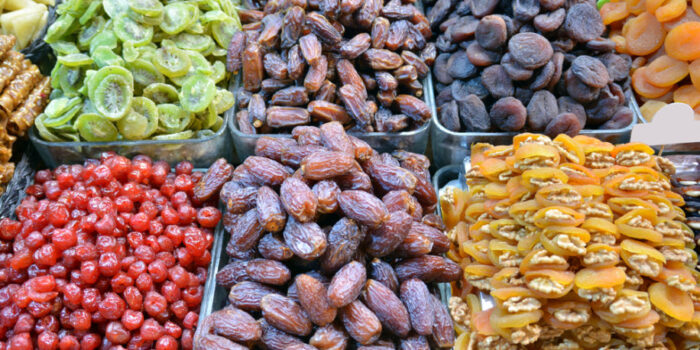
Turkish delight
FavorFlav selects the most remarkable food news every day.

Turkey: more than baklava and Turkish delight
When it comes to pastries and cake, many people probably immediately think of French patisserie, where the most beautiful sweets are baked with great precision. But the fact that Turkish cuisine has just as much to offer, beyond the familiar baklava or Turkish delight, is less well known. This is rightly highlighted in a good read by The New York Times. Sweets became popular during the rise of Islam. Muslims were not allowed to drink alcohol, so all kinds of fruity syrups were devised for religious ceremonies and gatherings. During the Ottoman era, sweets became truly important when a matching dessert was created for every social occasion, such as a birth or wedding. What is remarkable is that the flavors, textures and techniques are completely different from what we know in the Netherlands. First, there are sherbet sweets, such as cakes, pancakes and pastries containing sugared puff pastry. Then there are fruit desserts in which, for example, apricots are caramelized with syrup. The third category is helva, a collective name for all kinds of pastries made with butter, flour and lots of sugar. Pudding, such as rice pudding and all kinds of custards, is the fourth category. You can read much more about it on The New York Times website, and there is a video featuring the recipe for kazandibi, a creamy custard with a deep-brown, sweet crust.
Storks survive the winter on junk food
What does eating fries have to do with a stork’s life? At first glance, not much, but according to new research, quite a lot. Normally, storks migrate south to warmer regions at the beginning of winter. Food, such as frogs, fish, snails and worms, then becomes scarce. Increasingly, the birds now prefer the city to a round trip to the Sahara. Storks live in more densely populated areas than before because they know that food is easy to find there. No worms or frogs, but fries, sandwiches and other leftovers. Food that storks can live on perfectly well.
Social revolution in Italian cuisine
The social eating network Gnammo is causing a revolution in Italian cuisine. The classic image is of nonnas standing in the kitchen stirring large pots, but it is mainly male chefs who dominate professional kitchens. The chefs are usually Italian, and other kitchen staff consists of male immigrants. The arrival of Gnammo now gives women a tool for earning money by cooking dinners. Italy is struggling with high unemployment among women. Women do not see Gnammo as a stepping stone to working in a professional kitchen, but as a way to easily put the skills they already possess to use from home.
Sources: BBC, The Guardian, New York Times
Image: Shutterstock


