



We’ll always have Paris
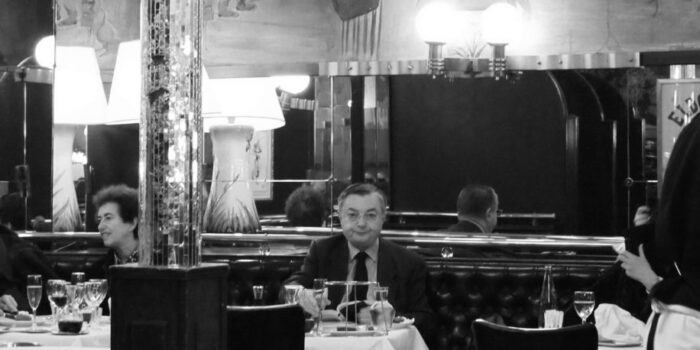
In 2015, Paris was shaken by a terrorist attack no fewer than twice. But the City of Light wouldn’t be Paris if it adapted its unmistakably cheerful, free-spirited way of life to that. Instead, the city celebrated its unbreakable freedom with Twitter hashtags such as #jesuisenterrasse and by collectively (re)reading the ultimate declaration of love for free-spirited Paris, Ernest Hemingway’s book A moveable feast.

What do you do when your city is attacked? You can bow to the violence. Or you can do what the Parisians did: take over the terraces en masse in protest, celebrating the Parisian joie de vivre in all its facets. And then share it with the world on Twitter under the hashtag #jesuisenterrasse.
And you (re)read iconic books by equally iconic writers about your city. After ‘Charlie Hebdo’, it was Voltaire’s Traité sur la tolérance from 1763; after ‘Bataclan’, sales of Ernest Hemingway’s A moveable feast (1964) soared. The French book title even got its own hashtag, #parisestunefête.
Protagonist
Paris is the protagonist of dozens of books, films and songs. Perhaps the most quoted line ever comes from the film Casablanca (1942), starring Humphrey Bogart and Ingrid Bergman: ‘We’ll always have Paris’. And for good reason, because the romantic city captures the imagination of everyone who has ever been there, or who still has Paris on their bucket list. The cafés, restaurants, terraces, wine bars and nowadays food trucks too – what’s not to like?
And it is precisely that last aspect that is celebrated in song in A moveable feast by American writer and journalist Ernest Hemingway (1899–1961), about his wanderings among Parisian cafés and restaurants in his early years as a writer. Not least the Ritz hotel, then and now located on Place de Vendôme. The only difference is that the hotel now has a Hemingway Bar, whereas the American writer, in the legendary Roaring Twenties in which the book is set, could at most afford to knock back a cocktail there once a week.
Rive Gauche
Many other addresses frequented by Hemingway still exist. From Café des deux Magots in Saint-Germain-des-Prés to La Closerie des Lilas, also in his beloved sixth arrondissement. Because unlike today, Hemingway’s Paris was chiefly experienced on the left bank of the Seine, la rive gauche. Except for the Ritz and nearby Harry’s Bar, that is, which, like the Bataclan, are located on the right bank. For almost ten years now, neighborhoods such as Canal St. Martin on la rive droite have formed Paris’s new creative center.
Just as Paris is a feast to visit, A moveable feast is a feast to read. A feast of recognition. A feast of enjoyment. A feast, period. Hemingway returned to Paris time and again throughout his life. And next year, we’ll all simply go back again too. Because #Parisestunefête, we’ll always have Paris and, in Hemingway’s own words: ‘There is never any ending to Paris.’
In keeping with the tradition of notorious boozer Hemingway, feeling thirsty? Click here for the champagne cocktail Death in the Afternoon he invented.
Text: Marjan Ippel
Image: Marjan Ippel


