



What are nightshade vegetables and how harmful are they really for us?
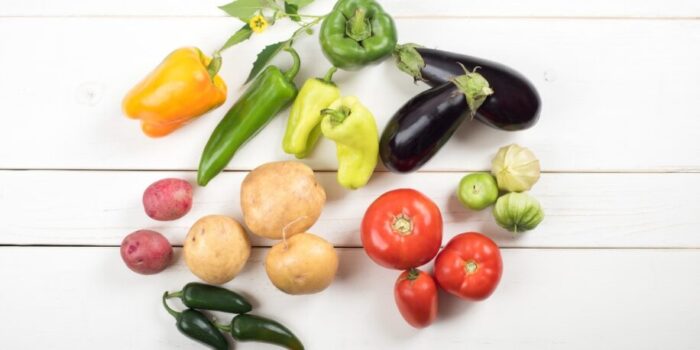
The aubergine, tomato, potato and bell pepper have something in common. Yes, you can use all four of them in delicious dishes. But they also all belong to the nightshade family. What does it mean to be a member of this family? And why do you sometimes hear critical opinions about eating these vegetables?

Nightshade vegetables sound a little mysterious. In a way, they are. Nightshade vegetables are vegetables that produce toxins at night. They do this to ward off insects and pests, which become active when the sun goes down. When the sun is at its highest, insects and pests are virtually nowhere to be seen. In the middle of the day, the amount of toxins in the vegetables is therefore minimal. The darker it gets, the greater the chance that they will ‘attack’ the vegetables. In the dead of night, when the danger is greatest, the amount of toxins reaches a peak.
Tomatine and solanine
Which toxins are we talking about? Mainly the substances tomatine and solanine. You can find tomatine, for example, in unripe, green tomatoes. Solanine is found mainly in potatoes. The substance is present in the skin of green potatoes and in the sprouts of older ones. Both toxins belong to the glycoalkaloids, or plant toxins.
TikTok
Videos are circulating on TikTok of people who are concerned about eating nightshade vegetables. They urge viewers not to eat these vegetables. However, it is not always possible to determine what background these TikTokers have: whether they are experts in this area or have simply given themselves that title. One of these TikTok videos comes from Richard de Leth. His position is known. Richard is a specialist in health management and founder of the OERsterk lifestyle platform. In his video, he says that it is better not to harvest and eat nightshade vegetables at night because this causes harm. What kind of harm is meant, however, is not entirely clear.
@richarddelethWhere does the name ‘nightshade’ come from? Here’s my explanation—make the most of it 😇 So if vegetables from this family are harvested when the sun is at its highest point, the negative antinutrients (and therefore effects) are minimal. In a varied diet, you also buffer any negative effects, so always choose plenty of variety. And oh yes, of course don’t forget to enjoy all the delicious food on your plate 🍽 📸 Excerpt from my recent interview with @zaraydagroenhart♬ original sound – Richard de Leth
The Netherlands Nutrition Centre
The Netherlands Nutrition Centre can provide more clarity on this. The toxins can cause stomach aches and diarrhoea, and make you feel nauseous. But only if you consume too much of these toxins. How likely is it that you will suddenly get an overwhelming urge to devour kilos of unripe vegetables? Dietitian Karine Hoenderdos also states that the harmfulness of nightshade vegetables at normal consumption levels has not been demonstrated. The Netherlands Nutrition Centre additionally claims that some of the toxins disappear when the vegetables are boiled, baked or fried. So if you use your tomatoes and aubergines in a sauce and boil your potatoes, you have even less to worry about.
Sensitivity
According to Hoenderbos, it is possible that you are sensitive to tomatine and solanine. You will then experience symptoms from nightshade vegetables more quickly than others. Research shows that the likelihood of sensitivity to nightshade vegetables is greater if you have an autoimmune disease or bowel disease. If you’re unlucky, you may then suffer from inflammation, joint pain and gastrointestinal problems. Hoenderbos advises removing nightshade vegetables from your diet for a while if you notice that you feel unwell after eating them. Do your symptoms disappear? Then you can conclude that you are hypersensitive to nightshades.
Healthy
The word ‘toxins’ probably immediately scares you off. Still, we should not forget that nightshade vegetables also contain many vitamins and minerals that are actually very good for us. Aubergines, potatoes and tomatoes, for example, contain a great deal of vitamin C. Aubergines also contain plenty of fibre, which is good for your bowel movements. And tomatoes are packed with folic acid. All these substances contribute to good health, making it important to eat them as part of a varied diet. Fortunately, because I am really not giving up my beloved tomato.
Minimising
Would you nevertheless like to minimise the chance of consuming these toxins? Store your potatoes in a dark, cool place. This significantly reduces the chance of sprouts and green spots—where a lot of solanine is found. Always cut away green spots on your potatoes. And as for tomatoes: simply leave the green ones alone.
Also read:
- Why you should wash and cut your fruit and vegetables yourself
- How to: regrow vegetables
- WTF: your chocolate spread contains a toxic substance
Source: The Netherlands Nutrition Centre, Women’s Health, Gezondheidsnet.nl, Draxe


