



What is the difference between Limoncello and Limoncino? Plus the recipe for a Limoncino Spritz!
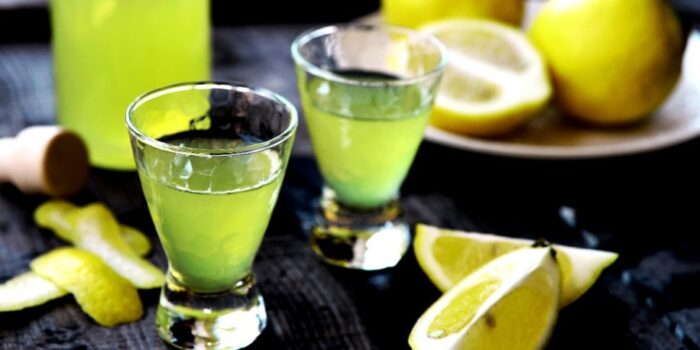
Italians swear by Limoncello or Limoncino as an invigorating digestif after a meal. But what exactly are the differences between these two lemon liqueurs? And how do you turn one into an irresistible spritz? We give you the answer—and the recipe!

Typically Italian: ending a sun-drenched lunch or a many-course dinner (where do Italians put it all?) with a glass of Limoncello, served in ice-cold glasses. Drunk in small sips or in one go, the seductive drink is enjoyed: its refreshing lemon flavor makes a bloated feeling disappear. Recently, I drank a delicious Limoncello from Bottega and wondered what the difference is between Limoncello and Limoncino.
Limoncello vs Limoncino
The answer is simple: in northern Italy, people usually say Limoncino, while in the south they say Limoncello. The main ingredient is lemon, and you can make Limoncello from any lemon. Limoncello can therefore also be made worldwide. Only Limoncello made with lemons from the area around Sorrento, a coastal town 50 kilometers south of Naples, may bear the name Liquore di Limone di Sorrento I.G.P. —and is therefore a protected product.
All you need: alcohol, lemon, water and sugar
The basic recipe for Limoncello is simple. Only four ingredients are needed: alcohol, lemon, water and sugar. Good Limoncello needs no fragrances, colorings or flavorings. As is customary with Italian mothers, every mama has her own recipe for the best Limoncello. The lemons used must be top quality, such as those from Sorrento or Sicily—the lemon variety Bottega uses for its Limoncino is Femminello. The lemons are grown naturally and picked by hand at the peak of ripeness, because the lemons must not fall to the ground; this could damage the peel.
An explosion of aroma
The trick to making Limoncello is to peel the lemon thinly. The white, spongy layer just beneath the peel tastes bitter and is not used. Nor are the flesh and juice. The yellow peel is rich in essential oils; if you scratch open the outside of the peel with your fingernail, an enormous explosion of aroma is released. These essential oils in the peel give Limoncello its unique flavor, color and syrupy consistency. The lemon peels are placed in a bath of alcohol to extract the aromatic and coloring substances.
The secret: grappa
How long the peels soak in the alcohol varies by producer. Some mamas leave them to steep for as long as three months, while others finish the job in a few weeks. Bottega’s lemon peels are steeped in alcohol for approximately 30 days. When the alcohol turns greenish-yellow and the peels become white, the limoncello is almost ready. The liquid is then separated from the peel, after which the lemon-infused alcohol is mixed with sugar. Bottega does things slightly differently: they use grappa (a distillate made from grape pomace) as the base instead of neutral alcohol.
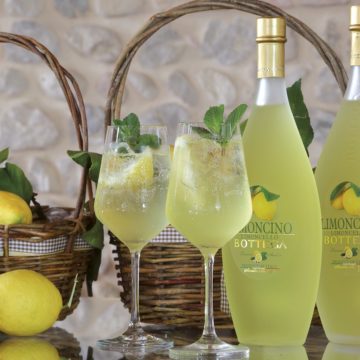
How to make a Limoncino Spritz
You are also seeing Limoncello increasingly often as an aperitif. And in my opinion, that is a very good development. Because a Limoncello tonic or a Limoncino Spritz is not only very tasty, but also very easy to make.
Use the following ingredients:
– 50 ml Bottega Limoncino
– 75 ml Bottega Gold Prosecco DOC
– 25 ml soda water
– Ice cubes
– 1/2 lemon wedge
– Sprig of mint
Method:
– Fill a Copa glass with ice cubes
– Pour in the Limoncino and Prosecco
– Top up with soda water
– Garnish with the lemon and mint
Very simple! And with this video, it becomes completely foolproof!
Also read:
- How to make the most delicious limoncello ice creams
- Recipe: lemon cheesecake cocktail
- Recipe: limoncello madeleines


