



What is the difference between sea salt, kosher salt and table salt?
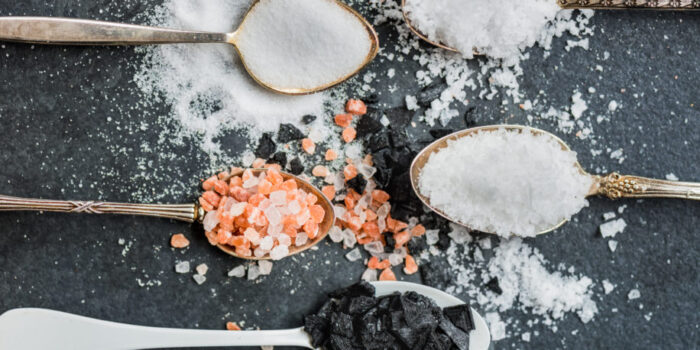
Salt is one of the most important ingredients worldwide, in every cuisine, and comes in many different varieties. The best known are table, kosher and sea salt. But what is actually the difference between these types of salt?

All salt consists of the same two elements: sodium (Na) and chloride (CI). So all salt is salt (NaCI), whether it is table, kosher or sea salt. The biggest difference is therefore not in the taste, but mainly in the coarseness of the grain.
Table salt
Table salt is the salt in the small glass shakers. Because of its very fine grain, table salt is also often called ‘fine’ salt. Although you could actually season anything perfectly well with table salt, this type is often mentioned in baking recipes. Because of its fine grain, table salt spreads through batter or dough better than, for example, sea salt. One downside to table salt in shakers: it often clumps into a block of salt, meaning almost nothing comes out of the shaker anymore – but with this tip, that will be a thing of the past!
Kosher salt
This salt gets its name from the fact that it was originally used by Jews to draw blood from meat. This makes the meat kosher, since Jews do not eat blood, but they do eat meat. For this purpose, salt with a coarse flaky grain is most suitable, and that is exactly what kosher salt is. This coarse salt is often used to season pasta water or large cuts of meat, but of course you can also perfectly well sprinkle it on a slice of bread with Nutella.
Sea salt
Technically speaking, all salt is sea salt, because all salt (yes, including table salt and kosher salt) comes from the sea. The only difference is which sea. Table salt and kosher salt come from ancient seas in caves, while sea salt comes from the water of ‘above-ground’ seas. So you can use fine sea salt as table salt and coarse sea salt as kosher salt.
The taste
Although you may think that the salt tastes different because of its different origins, that is not the case. Salt-processing removes any minerals from the source. Some types of salt do sometimes have extras added to them, which also makes one more expensive than the other.
And one type of salt is not healthier than another, either.
Also read:


