



What is vegan wine? And is it tasty?
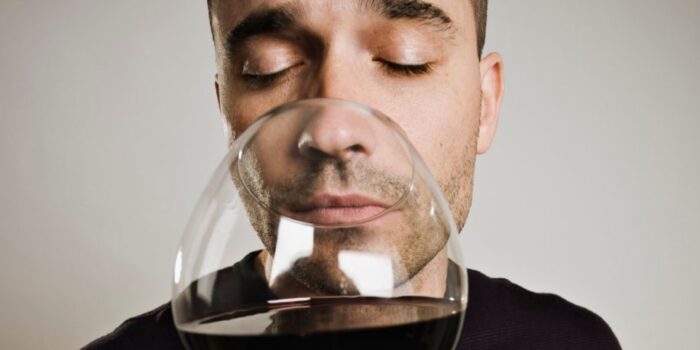
You’ll increasingly come across the word ‘vegan’ not only on menus, but also on wine lists. Especially at places where vegetables dominate the menu. But what exactly are vegan wines? And are they tasty?

Wine = grapes = fruit = vegan, right?
At first glance, that seems like a logical thought. Wine is made from grapes—how plant-based do you want it to be?! Although grapes are indeed purely plant-based, animal products may be used when making wine. This happens during the process of fining (simply put: clarifying) the wine. Wine that has just finished fermenting is still cloudy.
Fish glue, egg white and gelatin
Before wines are bottled, they are therefore first fined and usually filtered. In principle, wine clarifies itself; the solid particles sink to the bottom. But a winemaker can also lend a hand by adding a fining agent to the wine during the final stage of winemaking, causing the particles that make it cloudy, such as yeast residues and seed particles, to settle faster. These fining agents are often animal products, such as fish glue (also called isinglass, made from the swim bladders of fish), casein (an animal protein found in milk), gelatin (made from the skin, bones and cartilage of mammals) or egg white from chicken eggs.
All these processing aids have the ability to bind the solid particles floating around in the wine. The whole lot then sinks to the bottom more quickly, after which the wine can be separated from its sediment. Most wines are then filtered to remove the final remnants. Most wines, that is, because some winemakers deliberately do not filter their wines; they believe that the particles left behind add flavor to the wine.
Other alternatives
Vegans—and some vegetarians too—want nothing to do with animal-based fining agents. Although these substances only remove something from the wine, add nothing and do not affect the wine’s flavor, they have come into contact with the wine during the production process. Fortunately, there are also alternative agents, such as silica gel, bentonite (a type of clay) and plant-based ingredients for fining wine, such as potato protein obtained from potato starch.
Vin-nature wines
Vegan wines are therefore wines that have not been fined with animal-based processing aids, or wines that have not been fined at all, such as vin nature wines (in other words: natural wines). These are wines to which nothing has been added or removed during the winemaking process and in which no interventions have taken place. It is wine in its purest form, without all kinds of chemical additives or manipulation, without factory yeasts, and without filtering or fining the wine. All vegan, then!
Certification? Not always!
Wine producers are not required to state the fining agent used—animal-based or otherwise—on the label. Some wines fined without animal-based processing aids carry a prominent vegan certification mark, such as the sunflower logo for certified vegan products. You may also come across the V-Label. But obtaining such certification involves a lot of organization and paperwork. So you will not always find out from the label whether a wine is vegan or not. Much more often, you will encounter vegan wines without such a certification mark, because certification is an extra step for winegrowers. If it is unclear whether a wine is vegan: check with the producer.
And, um… what about organic wines and the like?
Wines produced organically (or organic) can be vegan, but they do not have to be. Organic wines may also be fined with animal-based processing aids. There are also many differences between organic wine standards. Regulations vary from country to country—there is no worldwide standard. Biodynamic wine is a tricky one, finally. Although this wine may be made without animal-based aids or not fined at all, biodynamic farmers do use animal-based preparations in their vineyards. Such as preparation 500: cow manure that absorbs cosmic forces while it spends a winter in a cow horn buried in the ground. So it depends on how strictly you adhere to the vegan principles.
Which one tastes best?
That depends entirely on your personal taste. When it comes to natural wines, it is often a case of that you love it or hate it. The flavor is often genuinely different from what you are used to and much less consistent than with wines where the winemaker does intervene in the winemaking process. But with ‘regular’ wines that have not been fined with animal products, you generally really cannot taste any difference from wines where this has been done. And although biodynamic wines may have something a little ethereal or granola-like about them, some of the most expensive wines in the world are biodynamic, so that says nothing about their flavor either.
Read also:


