



Why Brands Like Uncle Ben’s and Aunt Jemima Are Disappearing
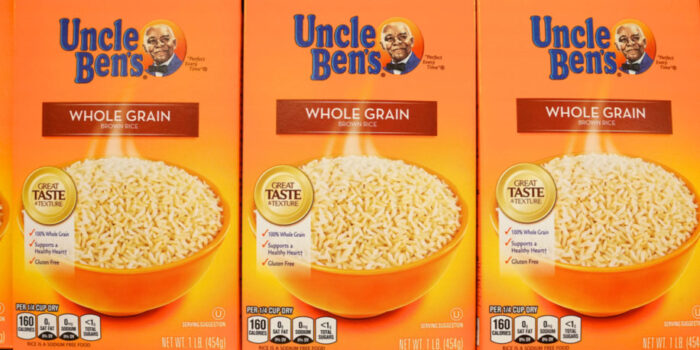
Remember? Pre-corona—in February this year—we briefly had the moorkop affair. The moorkop was labeled racist and renamed chocoladebol. People were furious. And I have a feeling that won’t be any different with the next piece of news: Uncle Ben’s may be getting a makeover.

Just like the American pancake brand Aunt Jemima—which recently announced it was stopping—Uncle Ben’s is considered racist by some. For food giant Mars, that is reason enough to reconsider the name and logo. Why? Many people will wonder. What is racist about the name ‘Uncle Ben’? I’ll explain it to you.
Subservient stereotype
Older male slaves and servants in the southern U.S. were often given the nickname ‘uncle’. So it is a direct reference to the history of slavery, dressed up in a kind of cheerful, jovial guise. As if it had been something very pleasant. Although none of us were there, I think we can agree that ‘pleasant’ is not the term to use when describing slavery.
Whether you are talking about Aunt Jemima or Uncle Ben, both evoke the image that enslaved people—and, indirectly, the entire Black population—are submissive, loyal and servile. Just like the product: ready to meet your needs at any time of day. ‘At your service.’
Unconscious perceptions
You may think that’s nonsense, and I also hope this is not how you consciously view your fellow human beings, but unconsciously these kinds of images reinforce one another time and again. That is why it is not so strange that we examine these kinds of brands and historical references more closely. Even if it is only to become aware of the image they evoke.
Exactly how, what and when Mars will change about Uncle Ben’s—or whether the brand will disappear completely or be adapted—is still unknown. “We are evaluating all possibilities. Listening to consumers, especially those within the Black community, and our partners, we believe this is the right time to evolve the Uncle Ben’s brand,” says Mars.
Read also:


