


Why Going to Jerez in Spain and Drinking Sherry Is a Brilliant Idea
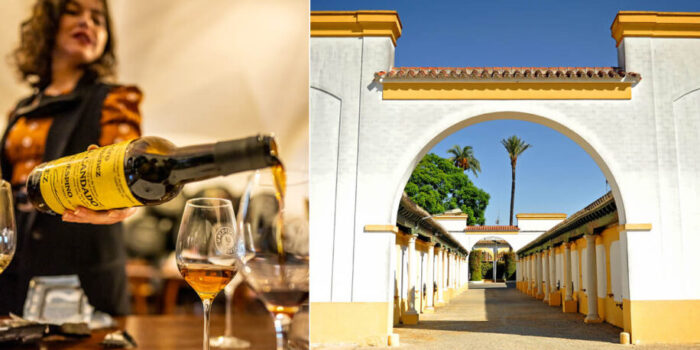
For as long as I’ve been writing about wine and food, I’ve wanted to go to Jerez. It’s the only place in the world where sherry can be made. Yes, yes, I can hear you thinking, ‘sherry?!’ Isn’t that the drink old ladies drink?! Yes, sherry. And no, it’s not (just) for old ladies. Sherry is incredibly diverse and an added bonus: it’s fantastic with food.

Sherry: a sleeping beauty
Sherry really is a sleeping beauty, a very special wine that is often misunderstood and unloved. There are several reasons for this, one of them being that genuinely good sherry isn’t widely sold in the Netherlands (3 euros at the supermarket?! That’s crap). And it’s true: dry sherries are often difficult for novice sherry drinkers to understand at first (and perhaps even the second and third time). Or sometimes downright unpleasant; you might even find yourself using the word rubbing alcohol.
That may not even have much to do with taste (‘I don’t like this’), but with a lack of understanding; if you don’t know sherry yet and think you’re tasting an ordinary wine, things go wrong: sherry isn’t an ordinary wine. It’s a fortified wine that matures under unique and bizarre circumstances.
Intrigued? Give yourself a few more minutes to read and I’ll tell you why you really want to get to know sherry. And not only that: why you’ll also really want to visit beautiful and delicious Andalusia in Spain.

Like a sponge
That’s where sherry is made: in the so-called sherry triangle in southwestern Andalusia, around the cities of Jerez de la Frontera, Sanlúcar de Barrameda and El Puerto de Santa María. In Spain, sherry is simply called jerez, after the most important city. In fact, viticulture shouldn’t be possible in such a hot region, were it not for the rather special climate (a rainy spring and autumn, a hot summer) and soil (extremely rich in limestone). The soil is able to retain all that moisture like a sponge.

Sherry for everyone
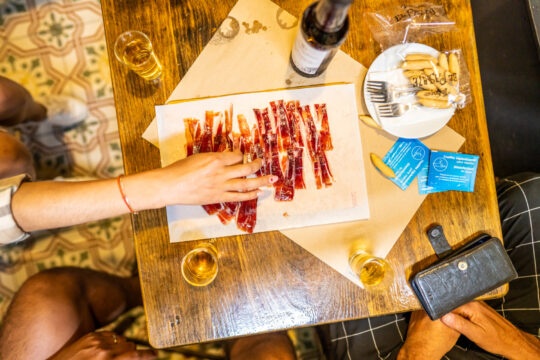
Saying you don’t like sherry is actually much like saying, ‘I don’t like vegetables.’ There are so many different styles, from salty, almost nutty and bone-dry to soothingly sweet, and that versatility is precisely what makes it so worth discovering. There’s always a sherry you’ll enjoy. And since we’re talking about vegetables: sherry is fantastic with food! But first, the million-dollar question — jamón, also brilliant with sherry 😉 — what actually is sherry?
Fortified wine
As mentioned, sherry is a fortified wine: a wine to which alcohol has been added during or after alcoholic fermentation, encompassing various styles, from bone-dry to sickly sweet. Depending on the style, this fortification means an alcohol content of between 15% and 22%. And 15% may sound like a lot, but outside Europe you’ll find plenty of unfortified wines that reach this alcohol level.
Stacking those barrels
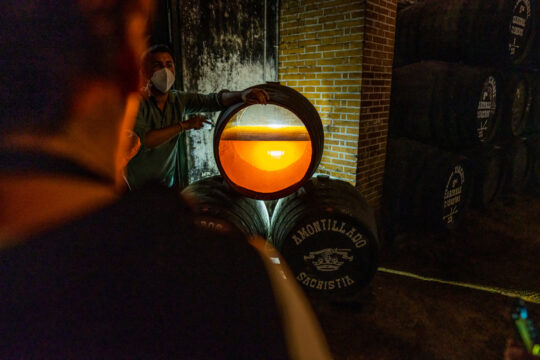
What makes sherry unique is its ageing in the solera system. Simply put, it is a stack of barrels filled with wine, in which the lower barrels are topped up with younger wine from the rows above. This ingenious stacking system dates back to 1830, and all types of sherry undergo ageing in it. The higher up the stack, the younger the wine. The bottom row (the solera) contains the oldest wine. That is also the sherry that eventually ends up in the bottle. The wine ages for at least three years, but usually much, much longer. And because the different vintages are continuously blended together, the final result has a beautiful, consistent quality.

Fluffy yeast blanket: special
Meanwhile, something fascinating is happening inside those barrels: ageing under flor, a type of mould, or rather, a fluffy blanket of yeast cells that forms on the sherry in the barrels. Fino and Manzanilla, the two main types of sherry, become covered by this flor over time, preventing oxygen from reaching the wine. That’s why the wine is still very fresh after 5 to 6 years of ageing.
Just like whisky!
Not all sherry gets flor — for example, because the winemaker adds extra alcohol. That’s what happens with Oloroso. These are the bold, whisky-like sherries (for a fraction of the price of a bottle of whisky!) Amontillado is an aged Manzanilla or Fino. Over time, the layer of flor disappears, so the wine comes into contact with oxygen. This makes it darker in colour and gives it an interesting hazelnut flavour.
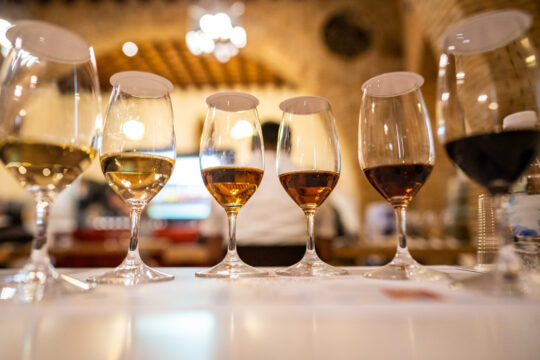
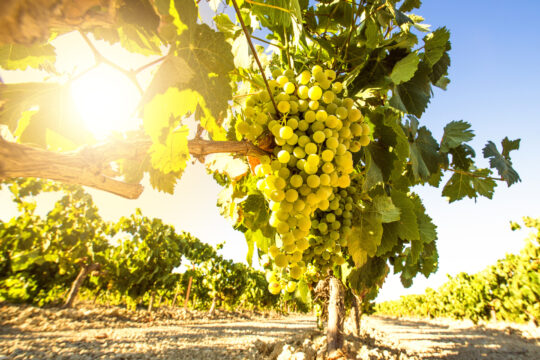
Dry sherries such as Fino and Manzanilla are made from the neutral, non-aromatic Palomino grape, which is planted almost nowhere else. The two other grapes found here are Moscatel (Muscat) and Pedro Ximénez (PX). PX is sweeter than Moscatel because the grapes are dried in the sun after harvesting.
Start with something sweet
When it comes to sherry, you’re certainly not the first person to feel a little dizzy; there are so many different styles. Their common denominator: they are absolutely fantastic with food! A common reaction is: it smells wonderful. Of nuts, brioche, but then it doesn’t taste nearly as good — or the opposite: it smells strange, but tastes delicious. That’s typical sherry, if you ask me. It’s different, it’s unique.
Novice sherry drinkers are often given a bone-dry fino to taste, but it’s actually easier to start with sweet sherries, such as PX. They can genuinely be sweeter than anything you’ve ever drunk. Like pressed dates — so sweet. You don’t gulp that down, but sip it with some aged cheese, for example, or foie gras; heavenly! My favourite is Cream sherry, and believe me, it’s impossible not to like it!
The main styles of sherry
Fino: light gold and clear in colour, fresh, light, bone-dry. Delicious with nuts, olives, seafood, fish & chips, tempura.

Manzanilla: pale yellow and clear in colour, spicy, dry, salty. Delicious with oysters and sushi.
Amontillado: amber-coloured, refined, dry, aromatic, elegant. Delicious with mushrooms and truffles, smoked meat, Iberico ham, roasted nuts, tuna.
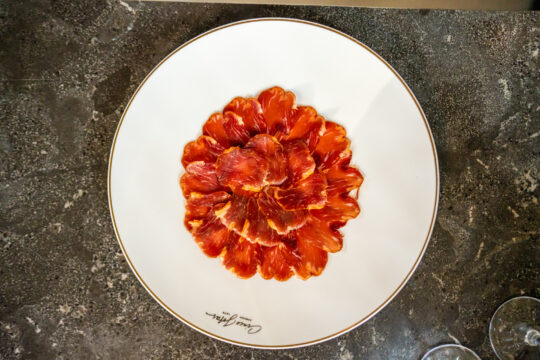
Palo Cortado: chestnut brown, complex, refined, full and round. Delicious with Spanish ham, complex cheeses, chocolate, oxtail, Thai dishes with coconut milk.
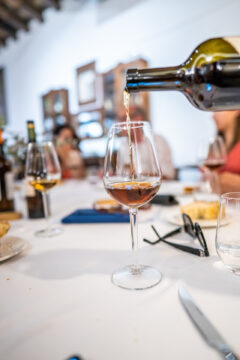
Oloroso: in colour, somewhere between amber and mahogany; warm, complex, powerful. Delicious with red meat, duck, rack of lamb, game, mature cheeses.
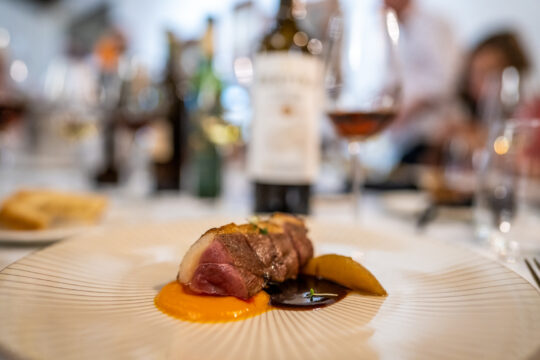
Cream: dark chestnut-brown colour, friendly and velvety smooth. Sweet but not too sweet. Delicious with terrines and pâtés, Oriental and spicy dishes.
PX: ebony in colour, syrupy, raisins, figs, chocolate, intensely sweet. Delicious with complex cheeses (creamy blue cheese!), vanilla ice cream, chocolate mousse, dark chocolate.
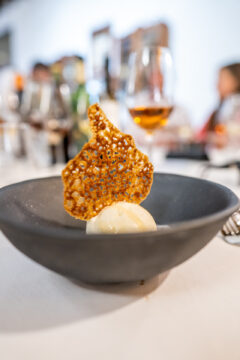
Bargain-priced on the spot
What I’m saying is: give sherry a chance and try to wake this beauty up! You can do that by ordering a sherry at a good restaurant (the sommelier will be grateful, because they often love this special wine), but even better: spend a weekend in Andalusia and drink sherry on the spot — where it’s also incredibly cheap and wonderfully beautiful.

Sherry’s image in Spain has changed enormously over the past 15 years. For the last 15 years, you’ve seen sherry on the menus of top restaurants all over the country. For example, have lunch at beautiful La Carboná in Jerez, a Michelin-starred restaurant where a menu of beautiful and delicious dishes costs just 55 euros — an absolute bargain! Or have lunch on the coast at a seafood restaurant, eat tapas at a wine bar and drink sherry while watching a flamenco show (at the wonderful Tabanco El Pasaje). It’s all possible, and it’s all incredibly fun and delicious!

Tasting = learning
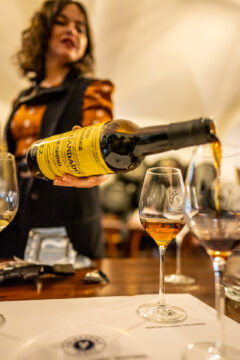
Would you like to learn even more about sherry, preferably while tasting it? Visit a bodega and take part in a tasting. A cellar tour in itself is already worth it (for example at Gonzales Byass, where a dizzying total of 90,000 barrels are kept), and a tasting afterwards is the icing on the cake (tip: Bodegas Barbadillo has a splendid tasting room with a beautiful, modern bar.)
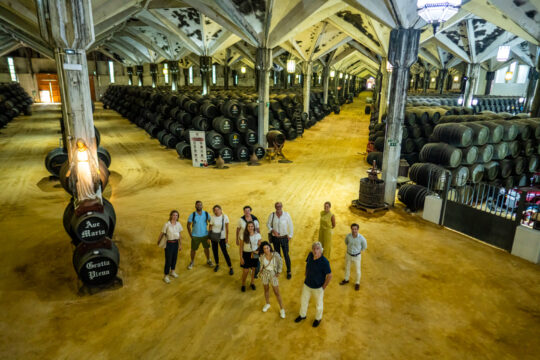
Most bodegas are also very much worth visiting for their architecture, and some producers manage to blend authenticity with something modern flawlessly. Like the famous Osborne, where you can also admire an excellent art collection. With, naturally, their famous bull as the centrepiece.

In the Netherlands, you can get acquainted with sherry during the annual International Sherry Week from 8–14 November. Around 25 wine bars across the Netherlands then serve a special sherry wine flight of three different wines. Want to know exactly where you can taste the most delicious sherries? Keep an eye on Instagram or visit ontdeksherry.nl
Photography: Tony Perez
Read also:
- 24 hours in Ghent: what a brilliant idea (and these places are worth visiting)
- Highly recommended if you’re going to Berlin: Thaipark!
- 10x the best market stalls in Amsterdam


