



Why Sauternes Is the Most Delicious Wine in the World

Oh, that seductive aroma alone! Sweet wines, or dessert wines, are exceptional wines in which you can discover all sorts of things and that you never tire of easily. As far as I’m concerned, they are even the most delicious wines in the world. But what makes this wine so special? To find out, we visited the mecca of sweet wine: Sauternes.

The sweet wines of Sauternes, the wine region south of Bordeaux, are incredibly special. Three grape varieties are permitted: sémillon, sauvignon blanc and muscadelle. So far, nothing remarkable. What is remarkable is that the wine is made from moldy grapes.
Moldy grapes?!
Wait a minute, mold on grapes… does that taste good?! It does when the mold is called Botrytis cinerea. Only an exceptional microclimate can cause this species of mold to develop on the grape skins. A delicate balance between moisture and dryness, between sun and wind, is essential. Just like here, where in autumn the cold Ciron River and the warm waters of the Garonne converge. The difference in temperature creates the morning mist that Botrytis loves so much. But that’s not all. Around midday, it also needs to get a little windy.
When there is no wind and it remains too humid, this noble rot (pourriture noble in French) can turn into gray rot, which is precisely what a winemaker does not want. No: that wind is essential to chase away the mist, allowing the sun to do its work.
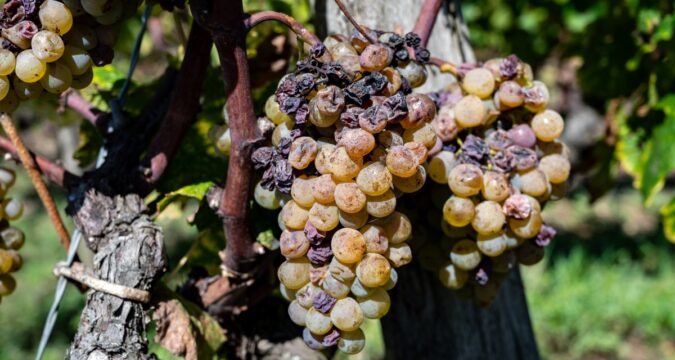
Botrytis
When all the climatic conditions are perfect: let the celebrations begin! In places where noble rot occurs, the skin becomes porous and water evaporates from the grape in the sun, causing it to shrivel and develop a high sugar content. The chosen grapes are picked by hand and produce a syrupy wine. Intensely sweet and concentrated in flavor. Botrytis creates velvety wines with a fresh twist from the delicate acidity, and they can age for as long as a hundred years.
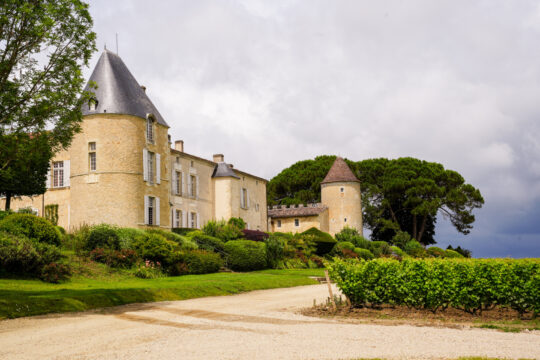
Château d’Yquem
The winemaker in Sauternes doesn’t have it easy, because Botrytis does not affect all the grapes at the same time. This means that the harvest here takes place not by bunch, but grape by grape. By the time the grapes are picked, they often weigh only half their original weight. Pickers must be trained to recognize the difference between gray rot (sob) and noble rot (olé!). At the famous Château d’Yquem, the pinnacle of Sauternes, each group of pickers has a supervisor who checks every picking basket to make sure they have done their job properly.
Once the ‘affected’ grapes have been picked, they wait and hope that Botrytis will affect the other grapes too. Some time later, the pickers go through the vineyards again to find the next affected grapes.
One glass per vine
The production of wines like these is a risky and labor-intensive undertaking. The careful harvest and low yield – you guessed it – mean that cheap Sauternes does not exist. When you consider everything required to make wine here, it is a wonder that there are still people willing to produce it. Depending on the weather, an unpredictable mold, pickers and labor-intensive harvesting trips… it’s quite a challenge. And then there is also the ridiculously low yield. With dry white wine production, growers achieve yields of up to 50 hectoliters per hectare. At Château d’Yquem, the average yield is only 8 hectoliters per hectare. That amounts to just one glass per vine!
Affordable Sauternes
Still, there are value for money Sauternes for which you don’t have to take out a second mortgage. Château Haut Bergeron proves it. We almost drive past it; because of the word château , we expect a castle (or at least a little one). But here the word mainly means that the house has been in the family for a very long time. In this case, since 1820; the ninth generation is now at the helm. Château Haut Bergeron is only a three-kilometer drive from Château d’Yquem, and some of its vineyards are even located next to those of d’Yquem.
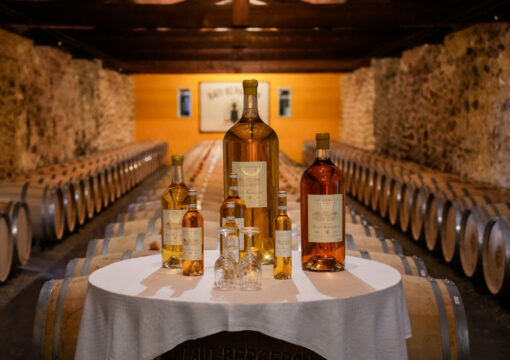
And here’s something nice: you’re welcome to visit the cellars and taste different sweet wines all year round. A glass of Château Haut Bergeron is rich and complex in flavor. Put your nose in the glass and all sorts of aromas emerge. Honey, apricot, pineapple, vanilla… Delicious to savor slowly just like that. Or even better: with creamy dishes such as foie gras. This wine also tastes sensational with contrasting savory dishes such as blue cheese (Roquefort!). And sweet with sweet works perfectly well too. Château Haut Bergeron with tarte tatin or a lemon curd pastry: a brilliant idea!
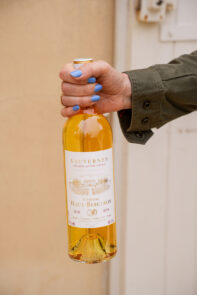
Château Haut Bergeron wines are available at Gastrovino stores throughout the Netherlands. A 1/2 bottle (375ml) of L’Ilot de Haut Bergeron costs 15.95 euros.
Read also:


