



What is Beaujolais Nouveau wine and why is it so popular?

The Dutch love freshly made Beaujolais wine; better known as Beaujolais Primeur or Beaujolais Nouveau. It is released onto the market every year—on the third Thursday of November. The very first wine of the new vintage is so popular here that we are the third-largest Beaujolais Primeur drinkers in the world. Only the French themselves and our German neighbours drink more of this cheerful young juice. But how is this special wine actually made? And how did this holiday come about?

Beaujolais Nouveau Day
Surrounded by plenty of marketing fanfare, this is the day when this so-called primeur wine is released onto the market. Precisely one minute past midnight. Beaujolais Nouveau is a young wine that is already on the shelves a few weeks after the harvest. It originally emerged as a drink for vineyard workers to celebrate the end of the harvest. It then evolved into a race to see which winery could deliver its young wine to Parisian bistros as quickly as possible. From there, the popularity of Nouveau wine spread around the world. The fruity, light, fresh red wines reminiscent of strawberry jam and fresh raspberries are still hugely popular.
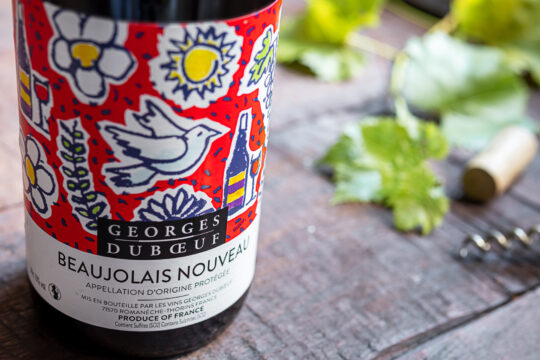
But which grape is Beaujolais Nouveau made from, and how can it end up in the bottle so quickly?
Gamay grape
The Beaujolais region begins about ten kilometres south of Macon and stretches for more than fifty kilometres towards Lyon in the south. In this hilly, charming patch of countryside grows a fresh, juicy grape full of cheerful fruit: Gamay. It is the quintessential Beaujolais grape responsible for the famous light Beaujolais Nouveaus. In Beaujolais, they are incredibly proud of their Gamay grape. But this fruity grape was not always embraced. In 1395, it was even banished from Burgundy, as a Burgundian duke considered it ‘a very bad and disloyal plant’. Precisely because the grape is virtually the same everywhere here, the wine’s success or failure depends on the type of soil.
Soil types of Beaujolais
Beaujolais has two very different types of terroir. The southern area—and the largest part of the region—consists of lush, rounded hills, where two appellations are produced on clay-limestone soils: Beaujolais and Beaujolais-Villages. This is where the light and fruity red Beaujolais Nouveau wines come from, which should be drunk young. With its rolling hills and houses built from golden-coloured stone (pierres dorées), this area is also known as the Tuscany of France.
Looking for more depth, refinement and power? Then buy one of the 10 crus. The crus are located in the north of the Beaujolais region, where the soil consists mainly of schist and granite. The vines growing on it produce powerful and elegant wines with a broader aromatic palette.
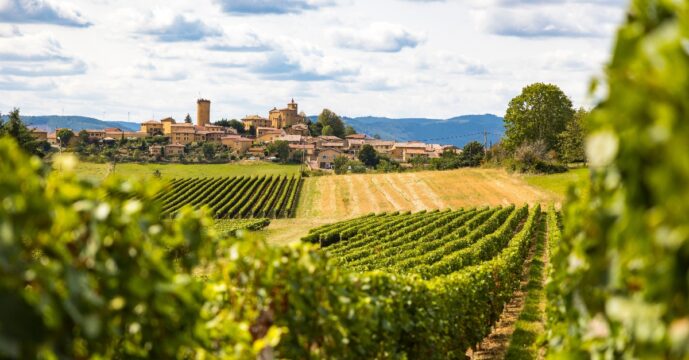
The Beaujolais Crus
From north to south, these are the ten crus you should know: Saint-Amour, Juliénas, Chenas, Moulin à Vent, Fleurie, Chiroubles, Morgon, Régnié, Brouilly and, within it, Côte de Brouilly. Remember these names, because they are the cream of the crop. Wines that also have the potential to age. Each cru has its own characteristics, shaped by ‘terroir’ factors such as climate, soil and altitude. A Fleurie, for example, is light, elegant, feminine, floral and full of ripe fruit, while a somewhat older Morgon is more masculine and earthy, more like a Pinot Noir.
The crus are beloved wines among sommeliers, from three-star establishments to bistros. They are praised for their freshness, fruitiness and drinkability. What’s more, they are a lovely, more affordable alternative to Burgundies.
Carbonic maceration
Back to Beaujolais Nouveau. The extremely short journey from grape to shelf requires a special technique: ‘carbonic maceration’. Here’s how it works. Gamay grapes are picked by hand so that the bunches are bruised as little as possible. After the harvest, the bunches are immediately placed in large cement or stainless-steel vats. The bottom grapes—approximately 10% to 30%—are crushed by the weight of the other grapes. These crushed grapes begin to ferment. During fermentation, carbon dioxide is released, causing the grapes at the top to end up in the gas. The carbon dioxide makes those grapes ferment inside their skins. If the grapes are of good quality, this is the ideal way to draw out everything beautiful from Gamay: colour, fruit, acidity, a measured amount of skin tannins and as little green tannin from the stems as possible.
The result: vins de plaisir! Delicious with charcuterie, dry sausages, grilled chicken and pâté.
Read also:


