


Why your beer keeps getting more expensive
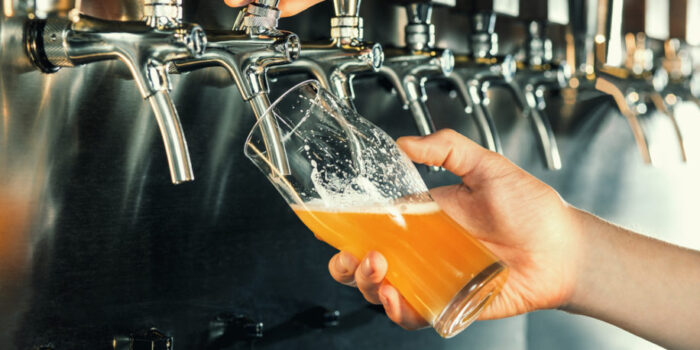
In 2000, a beer still cost an average of €1.28, but by now you pay almost €3 for a pilsner in a pub. And that’s despite the fact that the price of a beer in the supermarket has barely increased. How can that be?

Apart from the fact that in a pub you naturally also pay for the staff, service and location, the purchase price is different too.
Purchase price
Nu.nl did the math: ‘In 2019, a 50-litre keg of Hertog Jan (the most expensive pilsner in the Netherlands) costs €162.56. Per 25-centilitre glass, that comes to €0.81; per 30 centilitres, it is €0.98. In the supermarket, you pay approximately €0.67 per 30-centilitre bottle. Conclusion: a bottle of beer is cheaper in the supermarket than the purchase price of a glass for a pub.’
And the prices of the kegs keep rising. This year, the price increased by an average of four per cent. The four major breweries – Heineken (Heineken, Amstel, Brand), Grolsch, ABinBev (Dommelsch, Hertog Jan, Jupiler), Swinkels (Bavaria) – have all kinds of explanations for this: increased labour costs, production costs, logistics costs, a summer that was too dry, a summer that was too wet, inflation, higher energy costs, higher raw-material prices, you name it.
Dependent
But there’s something else: hospitality entrepreneurs are often dependent on the breweries in several ways. The breweries are often also financiers of the pub or even the owners of the property. And well, negotiating the price of a keg of beer is more difficult when your landlord is involved too. After all, without a location, there’s no pub.
Most hospitality entrepreneurs pass the higher keg prices on to consumers: et voilà, that’s where that expensive beer comes from. Will those prices keep rising? Could be. Maybe you should start looking for a different drink.
Still totally confused? NOS op 3 explains it clearly in this video:


