


Why you’re better off drinking diet cola than a glass of fresh orange juice
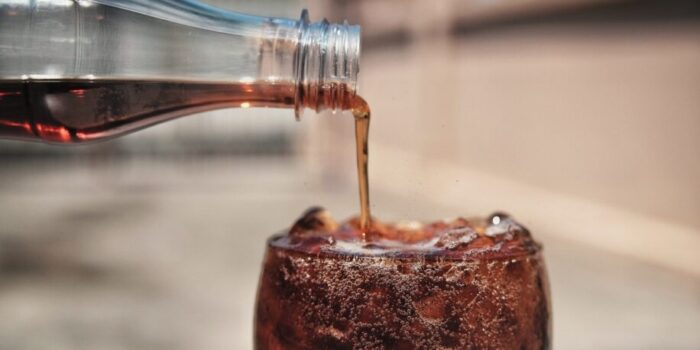
Want to eat healthily and watch your weight? Then you’re better off having a glass of diet cola than freshly squeezed orange juice—that saves you more than a hundred calories. And that sweetener? Completely safe, says nutrition professor Martijn Katan.

Many people are suspicious of aspartame, the sweetener in many diet soft drinks, such as Coca-Cola Light. Unhealthy—you could supposedly develop cardiovascular disease, behavioral problems and cancer from it, if you believe alternative websites. Complete nonsense, Professor Katan explains in his book Food Myths.
Strange substances
So what exactly is aspartame? They are sweet-tasting pieces of protein, he explains. It contains methanol (yikes, that sounds concerning). No worries, says the professor. Methanol also occurs naturally in fresh fruit. In high quantities it is harmful—you could go blind from it—but a liter of diet soft drink contains about as much methanol as half an apple.
17 liters a day
If your diet soft drink is past its expiration date, diketopiperazine can form. A frightening name, but a harmless substance, the professor explains: ‘You can drink up to seventeen liters of expired diet soft drink a day for your entire life without ingesting a harmful amount of diketopiperazine.’
Ridiculous amount
Okay, in theory, diet soda with aspartame isn’t bad for you—and is even better than regular soda or a glass of orange juice when it comes to calories. But does that also hold true in practice? Professor Katan pulls out a stack of scientific studies, and those also show that aspartame poses no risks. So what about the link between aspartame and cancer? Studies with rats show that laboratory animals given large amounts of aspartame had a higher chance of developing bladder cancer. They were fed such ridiculous amounts of aspartame—sometimes as much as a thousand times the normal dose—that the sweetener formed crystals in their bladders. Those crystals damaged the bladder, which eventually increased the rats’ risk of cancer.
Tap water
The professor’s conclusion: ‘Few E-numbers are examined as closely as E-951, aspartame.’ So it is safe. But he does not advise you to drink too much diet soda. It may contain few calories, but it is just as acidic as regular soda or fruit juice, so it is bad for your teeth. Just have a glass of tap water instead, he advises.
Also read:
- Diet Coke with your cheeseburger? Better not
- Do you know when drinking soft drinks is worst for you?
- Baking with sugar substitutes


