



Yacon is suddenly popping up everywhere: what is it and what can you do with it in the kitchen?
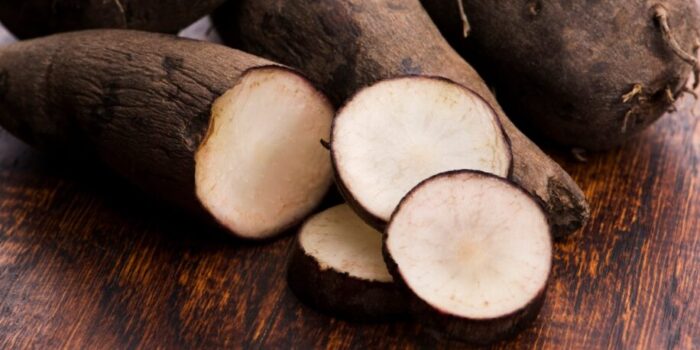
Recently, my boyfriend and I have been ordering a crate of vegetables from a local vegetable garden every week. The contents change weekly, so it’s always a surprise what you’ll get. Last week, I was especially surprised. There was a vegetable in it that I didn’t know: yacon. Time to get to know this new vegetable-garden resident better.

Interesting fact: yacon isn’t necessarily a vegetable. Nor is it a fruit, root or tuber, for that matter. So what is it? On yacon.nl—yes, yacon has its own website—you can read that it is a combination of ‘root and tuber structures’. So it’s a tuberous root. Or a root tuber.
South American beauty
Yacon originally comes from the Andes in South America. In countries such as Peru, Bolivia, Ecuador and Colombia, yacon is widely cultivated. Yet we are also seeing the tuberous root appear more and more in Dutch vegetable gardens. Yacon is not only delicious; the plant is also a beautiful addition to your garden. In summer, it produces all kinds of mini sunflowers. Pretty, right?
Fun fact: ‘yacon’ comes from the Quechua language. The word consists of two parts: yaku and unu. Literally translated, it means ‘water root’. The water refers to the substantial amount of water in yacon: no less than 80% consists of water.
Here’s how it tastes
Naturally, we’re even more interested in the taste of yacon. In appearance, it may remind you of a sweet potato, but you won’t taste any similarity. The resemblance to sweet potato? Yacon also tastes sweet. Depending on how you prepare it, different flavors come to the fore. We recently cooked yacon for a curry, and I found it tasted very much like pear and chestnut. Very mild. I thought it was an absolutely delicious addition to the curry. That was also because of yacon’s texture. It isn’t soft, but rather slightly crunchy. Think of something halfway between a carrot and a radish. Very surprising!
Versatile little tuber
Yacon is perfect in curry, but you can do more with it. For example, make a purée. A nice change from standard potato or celeriac purée! Or eat it raw out of hand, just as you would an apple or pear. And did you know you can even make syrup from yacon juice? If you reduce it, you get a lovely sweet substance that is delicious drizzled over your yogurt or pancakes.
Delicious and healthy
So it’s a delicious root tuber that is also incredibly healthy. It contains very few calories, which is why yacon is often chosen as a substitute for, say, pasta. Another plus: yacon contains a lot of inulin (5.25 grams per 100 grams of yacon). Our bodies do not absorb inulin well, which helps keep our blood sugar levels more stable. Good news for people with diabetes.
See yacon at the greengrocer? Give it a try! This delicious, healthy and sexy root tuber deserves a place on your plate. Or in your smoothie. Or salad. Or yogurt. Or…
Also read:
- Carrots with white spots: what should you do with them?
- Spicy spring mash with turnip
- The perfect curry—and how to ruin it
Sources: yacon.nl, Max Vandaag


