


Flammkuchen, pesto and eel
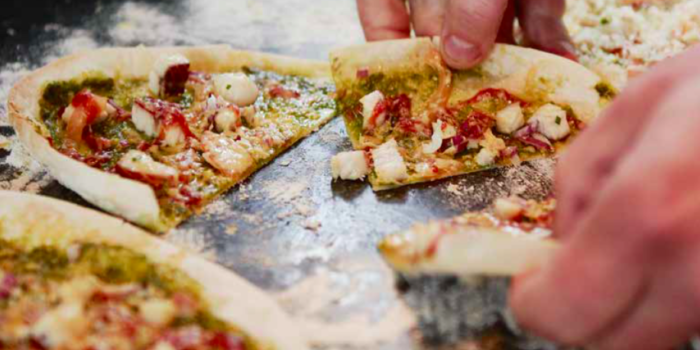
The Italians have pizza, in Provence they make pissaladière, in the Middle East lahma bi ajeen, and in the German-French Alsace region people eat flammkuchen. Jonnie and Thérèse do at home too, by the way. This one with eel, for example.

Dough
1. Mix the flour, yeast and salt in a wide bowl. Make a well in the centre and pour in the water.
2. Place your fingertips in the water, make a circular motion and gradually draw some of the flour mixture from the edges into the water.
3. Knead into an elastic dough and leave to rise for an hour with a cloth over it.
4. Roll out the dough into sheets approximately 4 mm thick.
Herb pesto
1. Lightly brown the pine nuts in a dry frying pan and leave to cool.
2. Put the basil and mint leaves, cheese, oil and pine nuts in the blender and blend into a lovely pesto.
3. Season with the grated zest and juice of 1 lemon and salt, if desired.
Topping
1. Bring 2 litres of water to the boil, meanwhile cut a cross in the bottom of the tomatoes and prepare a bowl of iced water.
2. Place the tomatoes in the boiling water for 15 to 20 seconds, cool them in the iced water and peel them.
3. Quarter the tomatoes, remove the seeds and cut the flesh into cubes of approximately 1 cm.
4. Marinate them in olive oil and a little salt for at least 1 hour.
5. Cut the eel into pieces approximately 1 cm wide.
6. Preheat a pizza oven, conventional oven or closed BBQ with a pizza stone to at least 250 °C.
7. Brush the dough with the pesto.
8. Top with the tomato cubes, finely chopped red onion and eel, and grate plenty of cheese over it.
9. Bake the flammkuchen until the edges are beautifully golden brown and crisp.
Thérèse’s wine tip
White wine: ‘Black Tie’ Cave de Pfaffenheim (2016)
Grape: Riesling/Pinot gris, Alsace region, France
A classic combination is not called classic for nothing, of course. When a dish has a very clear geographical origin, it is fun to look for a wine from the same region to go with it. The bacon, aged cheese and pesto on the flammkuchen contain full, ripe flavours. The wine should not be too taut or too fresh, otherwise it will not complement the dish. Riesling is a fresh grape, but a Riesling from Alsace is always just a little rounder and smoother – this is due to its location in the ‘rain shadow’ of the Vosges, for anyone interested. That is why an Alsatian Riesling goes so well with this Alsatian flammkuchen. The richness of a delicious Pinot Gris also works perfectly.


