



Recipe: the most delicious gado gado to woo your date
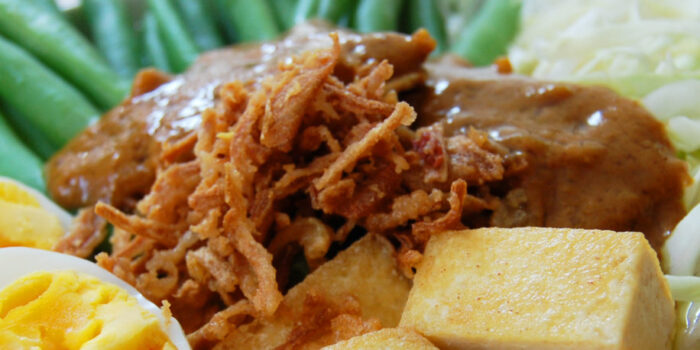
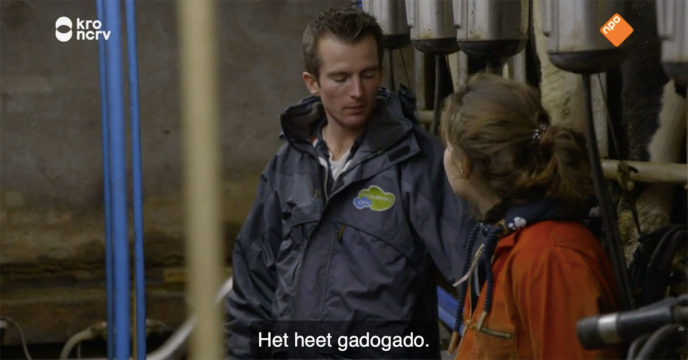
Imagine trying to woo Boer Zoekt Vrouw farmer Annemiek, with every attempt to get closer thwarted by her unflappable attitude. What do you do? Erik throws his cooking skills into the mix. ‘Shall I cook tomorrow evening? Gado gado.’

He describes the dish as something with potatoes and salad. Um… Wait. Hold on. Of course it contains neither of those things. Now, it could be that Erik figures Annemiek won’t bite if he offers her an Indonesian dish in which not potatoes and salad, but tofu and pointed cabbage play the leading role. Or perhaps Erik has invented a quintessentially Dutch version of gado gado.
With potatoes and lettuce?!
It does come with satay sauce, and that’s where his attempt to woo her goes awry in the milking pit. Peanuts? Annemiek is allergic to them. And if you make gado gado with potatoes and lettuce, and then also have to leave out the satay sauce, there’s actually nothing left. What a shame, Erik.
How it should be done
For everyone else: here’s the recipe for the Indonesian classic that you can take in all kinds of directions. The star is the peanut sauce. As long as you nail that and top the dish with a boiled egg, everything will be fine.
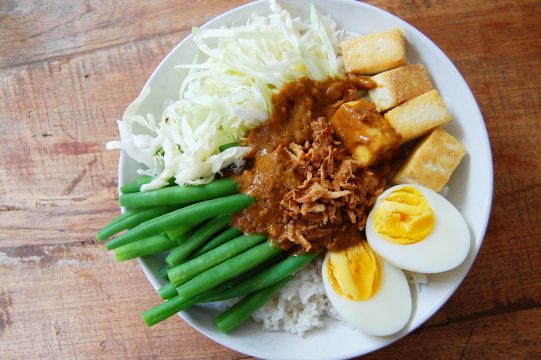
Gado gado means mix mix in Indonesia. In principle, you can therefore use almost any vegetables. I always use green beans, pointed cabbage, bean sprouts and tofu. But I’ve also come across cucumber, lettuce, tempeh or carrot in it.
Making your own peanut sauce is key. A hundred times more delicious than any ready-made version. It does need some spices, but otherwise this recipe is a piece of cake, so just go for it.
The recipe makes too much sauce for the vegetables you have. I always freeze it in single-serving bags, which is wonderful for when you make satay later. Or for the best patatje oorlog of your life.
How to make gado gado
Peanut sauce
First, make the peanut sauce. Put the sunflower oil in a deep pan and fry the onion over low heat for a few minutes until translucent. Add the garlic and fry for another minute, until it is translucent too. Be careful not to burn the garlic.
Add 500 milliliters of water to the pan and add the cumin, ground coriander, galangal, lemongrass, turmeric and kaffir lime leaves. Bring the water to a boil.
Once it is boiling, add the peanut butter spoonful by spoonful. After each spoonful, whisk until the peanut butter has completely dissolved. The sauce should now become increasingly thick. How much you need to add varies each time. Stop when you have reached the desired thickness.
Season the sauce with kecap manis, salt and lemon juice. The kecap is already sweet, but you may need to add some extra sugar for the perfect balance. Alternately add a little lemon and sugar or kecap manis until it tastes perfect.
Gado gado
Bring a large pan of water to a boil. Once the water is boiling, add the eggs and cook for 6–7 minutes. Remove them from the water and chill thoroughly under cold running water. I normally like a runny yolk, but I don’t think they’ve ever heard of that in Indonesia, so I cook the eggs a little longer.
Blanch the bean sprouts and pointed cabbage in the same water in which you cooked the eggs for about 30 seconds. Remove them with a slotted spoon and rinse well under cold running water so they do not continue cooking.
Add salt to the water and cook the green beans for 3–5 minutes, until tender but still with a little bite. Rinse these well under cold running water too.
Cut the tofu into pieces and heat oil in a frying pan. Fry them over medium-high heat until golden brown. Leave them to drain briefly on paper towels.
Let everything cool, arrange on a plate and serve with warm peanut sauce and rice.
Also read:


