



Cava Crash Course
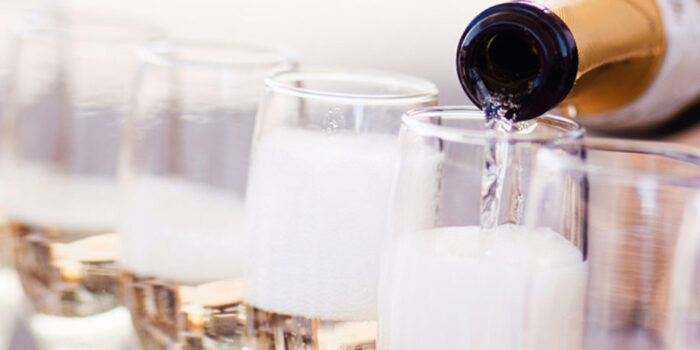
A good fizz tastes great with (almost) everything. But if champagne is too expensive for you, Spanish cava is an excellent alternative. Miss WineLane tells you everything you need to know.

Cava is Spanish sparkling wine. In terms of style, it is more like champagne than prosecco. But thanks to its indigenous grapes and the southern sunshine in the glass, cava deserves a place of its own. The bottles range from entry-level to truly top quality, from Extra Brut (dry) to Dulce (sweet), and you can find them at a relatively low price. You can recognise a genuine cava by the four-pointed star on the underside of the cork.
Cava versus champagne
Even though cava used to be called champan and is still often referred to as Spanish champagne, this is not legally permitted. These days, the generic name champagne is protected: only sparkling wine from the French wine region of Champagne may be called that.
Spanish sparkling wine is not champagne either. The subtle mousse and yeasty aroma may perhaps resemble those of its French brother, but the soil, the warm climate and the cava grapes xarel.lo, macabeo and parellada give the wine a character of its own. Cava is generally fruitier and has somewhat less acidity than champagne.
Méthode traditionelle
Cava is made according to the méthode traditionelle. By adding extra yeast and sugar to the base wine, a second fermentation takes place inside the bottle, just as with champagne. The wine matures in the cellar (cava means cellar, after all) for at least 9 months on its lees, which creates the fine bubbles and typical aromas such as biscuit dough and brioche.
Cava versus Prosecco
Prosecco undergoes a different, cheaper process. The second fermentation is much shorter and takes place in a large tank. Because the wine only goes into the bottle afterwards, its bubbles are simpler and less subtle. That is why the Italian wine can be sold in a regular wine bottle with a screw cap. Cava’s high carbon dioxide pressure (at least 3 bar) – and champagne’s in particular (around 6 bar) – would make such a bottle explode immediately.
Catalan Cava
Almost all cava comes from Catalonia (95%). Nevertheless, it is not necessarily tied to a specific region. A few other Spanish wine regions, such as Rioja and hot Extremadura, are also allowed to produce it. Catalan cavas (especially those from Penedès) are often blends of the three major cava varieties, while other regions more often work with a single variety. Chardonnay and pinot noir – the classic champagne grapes – are also increasingly being added to the blend.
What to eat with it
We Dutch people often do not get beyond an oliebol with our fizz. Such a shame, because sparkling wine is a proven all-rounder. A good fizz tastes great with (almost) everything. Especially a sunny cava like this: it is fresh enough for an oyster and fruity enough to accompany any meal.
Cheaper than champagne
Especially in the lower price segment, you get more cava for your money compared with French fizz. The slightly shorter maturation period and, let’s not forget, champagne’s bizarre reputation and scarcity create considerable (and sometimes unjustified) price differences.
And, uh… you do not store fizz, by the way; you simply drink it. Because sparkling wine does not get better when you leave it lying around.
CAVA FACTS
Categories:
Cava
Aged for at least 9 months – light, fruity and refreshing
Cava Reserva
Aged for at least 15 months – rich, full-bodied and exuberant – a good all-rounder at the table
Cava Gran Reserva
Aged for at least 30 months – complex, delicate and intense – gastronomic wine
Cava de Paraje Calificado
(a sort of grand cru among cavas)
Aged for at least 36 months – from the best vineyards – brut only – absolute top quality
Sweetness (dosage per litre):
Extra Brut
< 6 grams residual sugar
Brut
6 – 15 grams residual sugar
Extra Seco
12 – 20 grams residual sugar
Seco
17 – 35 grams residual sugar
Semi-Seco
33 – 50 grams residual sugar
Dulce
> 50 grams residual sugar
Read also:


