



FavorFlav’s Ultimate Chianti Guide
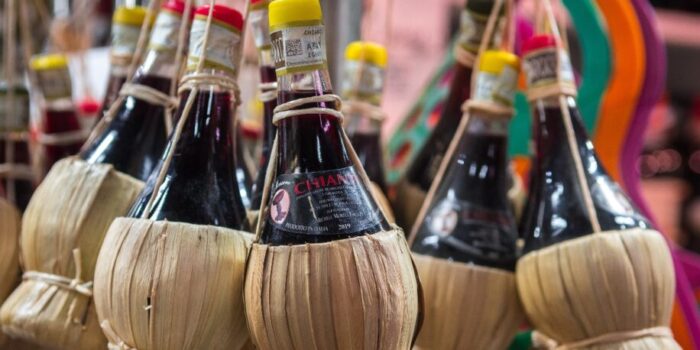
Chianti is one of Italy’s best-selling red wines. Once notorious for its meager taste, it is now known as a fantastic Super Tuscan. But what exactly is Chianti?

Chianti is a Tuscan red wine, with Sangiovese as its main grape. The same grape as in the famous Brunello di Montalcino and Vino Nobile di Montepulciano. The name Chianti comes from the Tuscan wine region of the same name between Florence and Siena. An enormous area, resulting in equally vast differences in quality.
The wicker flask
When properly handled, the Sangiovese grape forms the basis of some of Italy’s most beautiful wines. The grape has a pronounced acidity and firm tannins. But with overproduction, the wine becomes sour, astringent and terribly dry. Like the orange-colored Chianti of the past. The winemakers tried to save the wine by blending in sweeter white grapes (hence the pale color). But the wine’s poor reputation in the wicker flask was completely justified.
From the 1970s onward, the tide turned. Wealthy Italians bought vineyards and, together with good winemakers, developed better techniques and used different blends of grapes. The wicker flask was banished, and Chianti suddenly turned out to be delicious.
Super Tuscans
Today’s Chianti contains no white grapes. The wine consists of 80 to 100% Sangiovese. The remaining 20% may optionally be filled out with Canaiolo Nero and the French varieties Merlot and Cabernet Sauvignon. Those French roots in Italian wine are quite remarkable. But they are a logical consequence of the wealthy Italians who, at the time, paid no attention to Italian regulations.
They were the founding fathers of the so-called Super Tuscans: beautiful blends based on Sangiovese, Merlot and/or Cabernet Sauvignon, aged in French wine barrels. These ‘fake Chiantis’ proved impossible to keep in stock, forcing wine legislation to be amended.
Aroma, taste & food pairings
Today’s Chiantis have an earthy character and a deep color. They smell of cherries, violets and plums and have a soft, spicy flavor. With a pleasant acidity at the end. Aging in small barrels (for at least six months) makes the wine softer and more mature in taste, sometimes even slightly vanilla- and caramel-like.
And of course, a Chianti like that is fantastic with Italian cuisine. Delicious with meat- and tomato-based dishes, such as bistecca alla Fiorentina, pasta Bolognese, pizza and (vegetable) lasagna. There are considerable differences in style and origin, by the way. One bottle is made to be drunk young, while another benefits from being laid down. So always make sure to get good advice.
Chianti Classico and more
The best Chianti comes from the heart of the region, Chianti Classico DOCG. You can recognize a Classico by the black rooster (Gallo Nero) on the label. An ordinary Chianti DOCG can come from anywhere, as long as it is within the boundaries of the enormous Chianti area.
Its quality is therefore difficult to assess. The subzones Colli Aretini, Colli Fiorentini, Colli Senesi, Montalbano, Rufina and Colline Pisane provide a little more guidance and are in many cases better than the wines from the general DOCG. Chiantis from the north are usually more elegant, while those from the south are more powerful. The designations Superiore (1 yr), Riserva (2 yrs) and Gran Selezione (2.5 yrs) tell you all about the aging time in wood.
Read also:
- These are the best holiday addresses for wine lovers
- Top tip: this holiday home in England is actually a proper pub
- This Michelin cruise will make you want to go on a river cruise


