



How to build the perfect cheeseboard?
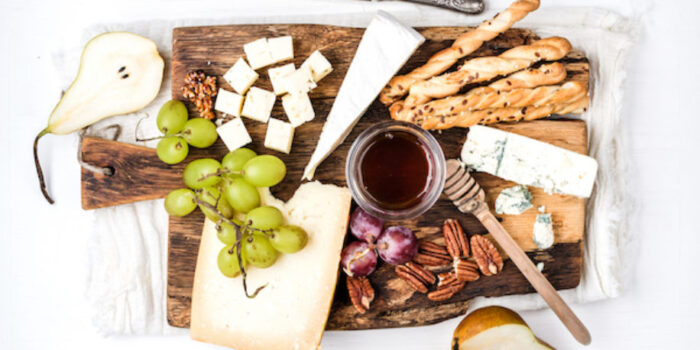
Anyone who thinks putting together a cheeseboard is easy is mistaken. Stocking up on as many of your favorite cheeses as possible, taking them out of the fridge at the last minute, serving garlic baguette alongside them and pouring leftover red wine is absolutely not done. With these ingredients, you can put together a proper cheeseboard.

Cheese
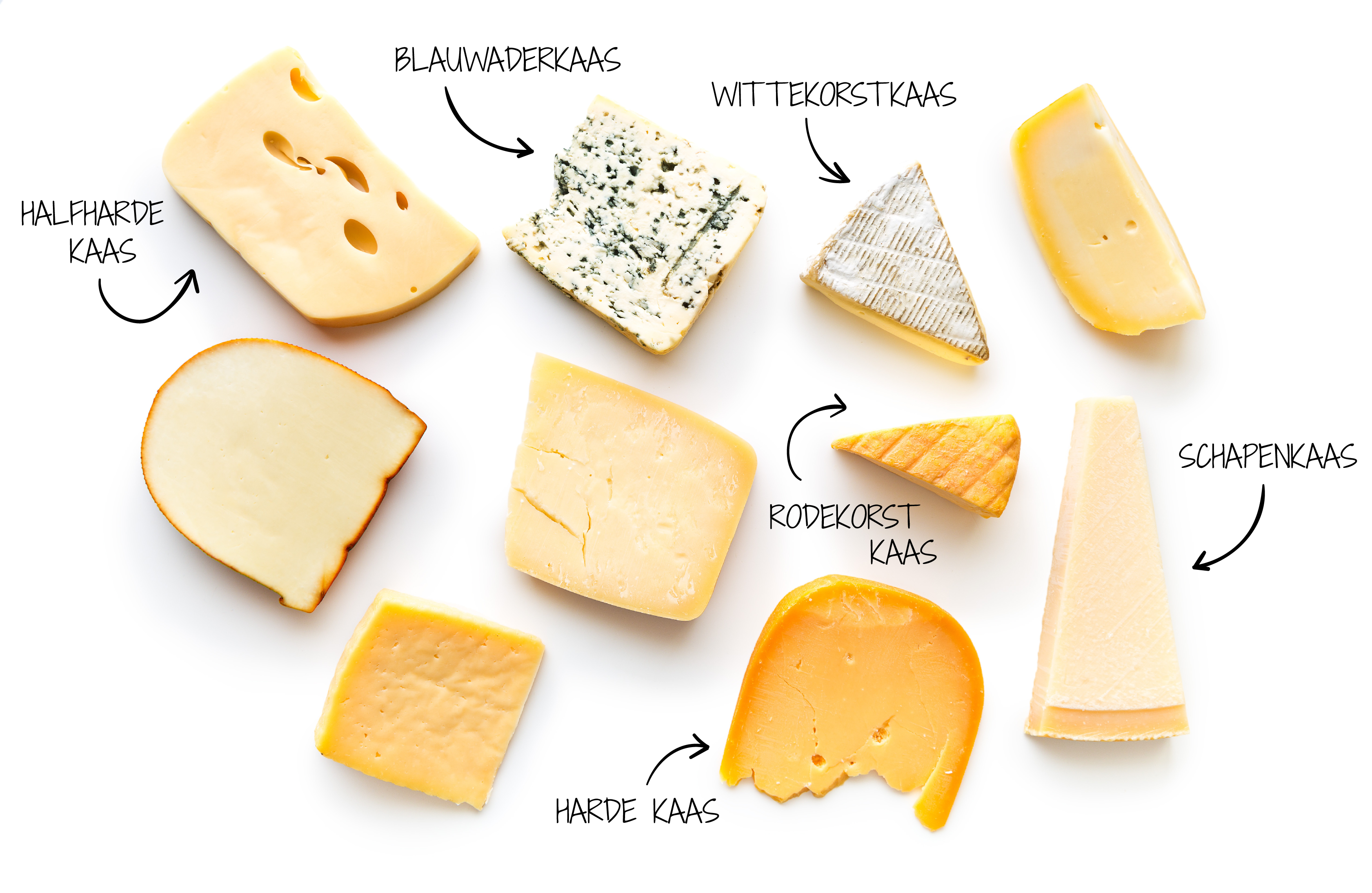
You really don’t need ten different types of cheese. Four cheeses are more than enough. Or five—that’s the absolute maximum. It’s important to choose one cheese from each category.
Category 1: Goat’s or sheep’s cheese
A plain piece of goat’s cheese always works well on the board thanks to its freshness and slight acidity. Would you rather try sheep’s cheese? Then go for pecorino Romano, a hard Italian cheese with a salty, piquant flavor.
Category 2: Bloomy-rind cheese
These are cheeses with a creamy texture and a white, fluffy layer of mold. You undoubtedly already know many of them. Brie and camembert, for example. Brie comes in several varieties, incidentally: brie de Meaux is mild and creamy (and therefore the most popular), while brie de Melun is a little more piquant and robust. Would you like to try a different bloomy-rind cheese? Then go for chaource, a round cheese with a nutty flavor and an exceptionally soft texture. Also delicious: brin de paille, a creamy, mildly piquant cheese from France.
Category 3: Semi-hard and hard cheese
Full-flavored cheeses, some of which are fairly mild and others a little more piquant. An example of a mild semi-hard cheese is the popular Swiss emmenthaler. Gruyere looks a little similar on the outside, but has a bit more bite. Also recommended: manchego, a hard cheese from Spain, and cheddar, a semi-hard crumbly cheese.
Category 4: Washed-rind cheese
We all know the mild and super-creamy port salut, with its soft, edible reddish-orange rind. It’s a great beginner’s cheese. Would you like to try a variety that’s just a little less mild? Then choose chaumes. Two washed-rind cheeses with even more bite are morbier and the strongly scented, piquant munster.
Category 5: Blue cheese
Blue cheeses all have a very intense flavor. You know gorgonzola, without a doubt: it’s a soft, creamy and buttery blue cheese. Another famous classic is roquefort, a firm and piquant blue cheese from France made from sheep’s milk. Bleu d’Auvergne is somewhat similar, but is made from cow’s milk and therefore tastes a little creamier. Are you afraid of the powerful flavor of blue cheese? Then choose a milder variety, such as gormas. This is a blue cheese made from layers of mascarpone and gorgonzola.
Sweet
First of all, provide some fresh fruit: white grapes or thin slices of apple or pear, for example. Less standard, but also good with cheese: pomegranate seeds, melon and strawberries. Dried fruit is also fine; choose figs, apricots and prunes. A compote of, for example, figs or membrillo, a quince jelly, also belongs on the board.
And an absolute must: honey. Why? Its sweetness contrasts perhaps even more than anything above with the saltiness of almost every cheese. No, not just with goat’s cheese. Honey is also good for softening the flavor of, for example, a strong blue cheese. Just remember: too much is not good. It makes the cheese flavor recede into the background.
Savory
Go for one or two savory items. Choose olives or sun-dried tomatoes, or mustard for dipping older cheeses into. You can also add some meat to the board. We consider prosciutto or serrano ham essential, but wafer-thin slices of truffle salami or a dried sausage are also excellent options.
Nuts
We also want some crunch on the board, so nuts must not be missing. Pecans are naturally a little sweet and therefore almost always pair well with cheese, while cashews in particular enhance the flavor of blue cheeses. Walnuts have a more earthy flavor and pair especially well with a somewhat harder, older cheese. Because of their dry texture, they also go perfectly with goat’s cheese.
Bread and crackers
Yes, we want both! As for the crackers: those with sea salt, oregano and sesame are perfectly fine alongside some basic crackers, too, but avoid varieties with onion or garlic. Their flavor is too overpowering. It’s important that you can continue to taste the cheese properly. The softer cheeses are delicious spread on thinly sliced baguette. Just don’t make sandwiches: the cheese is the star of the show.
 Cutting and serving
Ideally, take the cheeses out of the fridge half an hour before serving. They taste much better at room temperature. Place them on a wooden board (the most stable surface for cutting them later) and put one knife next to each cheese—preferably one without a serrated edge.
It’s even better to partially cut the cheeses before serving. Don’t cut them all the way through, as they will dry out; just cut some grooves into them. This prevents everyone from prodding at the cheese. Do this immediately after taking the cheeses out of the fridge: they will still be a little firmer then, including the runny cheeses, and will cut more smoothly. Want to do it absolutely perfectly? Then also arrange the cheeses in order: from soft and mild to piquant and strong. Handy, because cheese should be eaten in the same order.
Read also:


