



First Aid for Cheese Emergencies
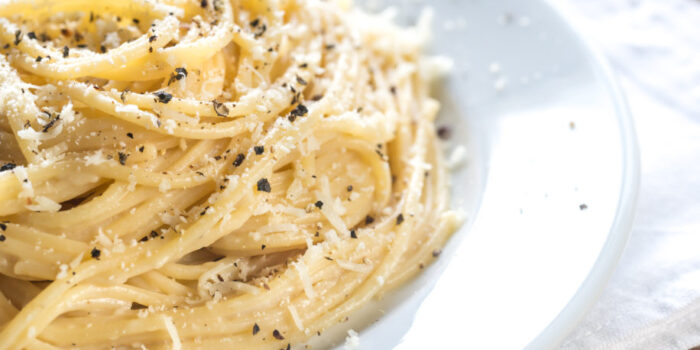
Anyone making the ultimate cheeseburger for themselves is guaranteed to be on the right track with a few generous slices of cheddar. Cacio e pepe, on the other hand, is a lot more complicated with those difficult-to-melt cheeses. No need to panic: FavorFlav offers first aid for cheese emergencies.

Cacio e pepe: it looks like a super-simple pasta dish, but appearances can be deceiving. Pecorino and/or Parmesan, the cheeses that play the leading role in the sauce, are not particularly melt-friendly. If you’re not careful, you’ll be left with a lumpy sauce that only vaguely resembles that appetizing-looking Pinterest pin.
Different melting points
How is this possible? It all comes down to the melting point of the cheese. Mozzarella melts at around 55°C, while cheddar quickly reaches around 65°C. The temperature rises significantly to around 85°C for pecorino and Parmesan. And ricotta, feta and halloumi? They barely melt at all – making them ideal cheeses for breading and frying.
Do you need to memorize all kinds of temperatures? Of course not. In general, you can say that young cheese melts better than aged cheese. So you’re generally safe with most young Dutch cheeses when you want to gratinate something. Taleggio, mozzarella, Gruyère and provolone are also your friends when it comes to melting.
But one more thing…
Let’s return to that cacio e pepe for a moment, because naturally you’re not going to replace the cheeses it calls for with something else. What does work is grating your cheese extra finely and making sure the pasta water contains plenty of starch: simply cook your pasta in much less water. Really, it works perfectly.
Also read:


