


How to: prepare scallops
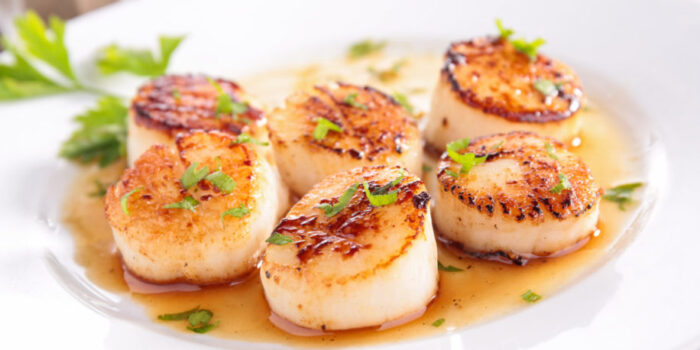
Scallops are the perfect quick starter for almost any menu. Make them classically French with a butter sauce or give them an Asian twist. The only drawback? Leave them in the pan for a minute too long and your guests will be chewing on rubber. Follow these steps for perfectly cooked scallops.

The buttery-soft texture of these shellfish makes them an ultimate luxury product. To preserve that soft texture, it’s important not to cook the scallops for too long, as they will become tough. You do want the outside to be crisp and brown, so how should you go about it?
What type of scallop?
You can buy cleaned scallops from the fishmonger, but also scallops in the shell. In that case, the coral, or roe, is still attached; it is always removed from cleaned scallops. Did you buy scallops in the shell? Fry that coral along with them—the flavour is slightly more intense than that of the white meat. Delicious, then.
Drying
You get that brown, crispy, flavoursome exterior through the Maillard reaction: the exterior caramelises at high heat. For that, the scallops need to be thoroughly dry; otherwise, too much moisture will end up in the pan. So pat the scallops dry with kitchen paper before putting them in the pan. Only season with salt just before cooking, too. If you add the salt earlier, it will draw moisture out of the scallops, leaving you with a wet pan after all.
Hot hot hot
Always cook scallops over high heat and make sure the pan is really hot. This will brown the outside beautifully without making the inside tough. If the temperature is too low, it can take about five minutes to get a bit of a crust on your scallop; by then, the centre will already be completely cooked through. Such a shame.
A cast-iron pan is a favourite because it retains heat well, but a non-stick frying pan is also perfectly fine.
Oil first, then butter
For that crisp layer, first add oil to the preheated pan. Cook the scallops over high heat for 2 minutes, turn them over and add a generous knob of butter. The butter gives the scallops more flavour, but if you add it earlier they will be less crisp because butter contains moisture. Oil also has a higher smoke point and can therefore get hotter (= more caramelisation). Tilt the pan and spoon melted butter over the tops of the scallops to give them extra flavour as well.
Poaching in butter
Would you rather have no crispy crust at all? Poaching is also an option. You can do this in butter or oil, but also in wine. Make sure your fat or liquid is at 85 ºC and poach the scallops for approximately 2–4 minutes.
Also read:


