



No nasi without trassi
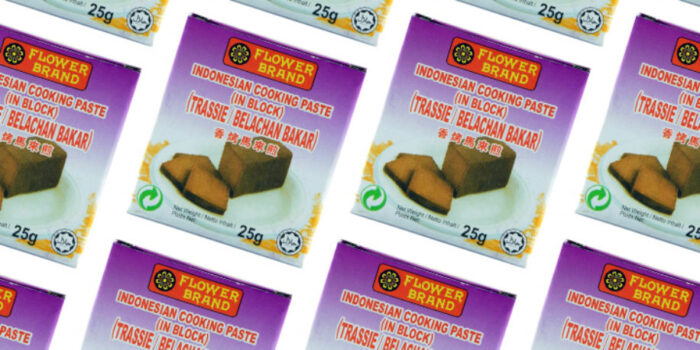
It stinks, it looks disgusting, and I wouldn’t advise you to take a bite of it just like that. Yet it’s one of the best flavor enhancers around and an indispensable ingredient in nasi goreng and soto ayam. I’m talking about trassi: the defining flavor enhancer from Southeast Asia.

Trassi is available at the toko as a pressed block, as a paste, and as a powder. It’s made from raw, salted shrimp fermented in the sun, and it really stinks. Although, it does have something about it – as long as you keep that bedroom door firmly closed. Fortunately, unlike the trassi you buy in Asia, trassi from Dutch tokos is almost always roasted; the label will then say trassi bakar. The smell is therefore relatively bearable.
What it tastes like
The taste of trassi is difficult to describe, not least because you naturally don’t eat it as a standalone ingredient. It has a fishy, umami-rich and salty flavor. It doesn’t get much more savory. You generally use it at the beginning of preparing a dish; for example, when frying the onions, garlic and ginger. Even more important than its specific flavor is that you immediately notice when trassi is missing from a dish. Nasi goreng without trassi tastes like rice with kecap manis, and the broth for soto ayam tastes flat if you don’t cook a spoonful of trassi into it.
How to use it
Did you buy a block of trassi at the toko? With a knife, you can easily scrape off the right amount. The paste comes in a small jar, and it’s best to dilute it with a little water first so you can distribute it properly. The powder is ready to use, so simply sprinkle the desired amount over the other flavor enhancers. In all cases, be careful with the quantity. Generally, half a teaspoon is more than enough to give your dish that characteristic savory flavor.
Also read:


