


Orzo: the ideal cross between pasta and rice
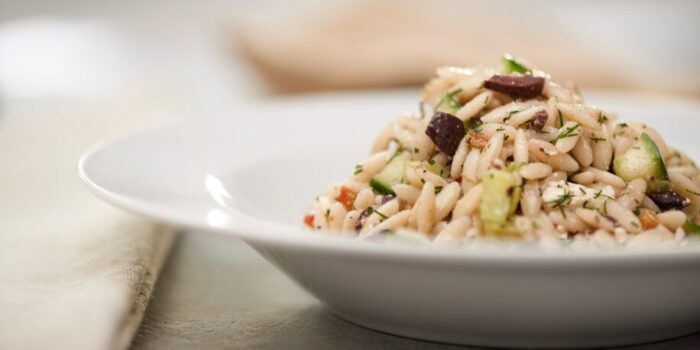
Can’t choose between pasta and rice? Orzo is the way to go. This dried rice-shaped pasta is the perfect middle ground, and here’s how to prepare it.

Orzo is mainly eaten in countries around the central and eastern Mediterranean. In Italian it is called risoni, in Turkish it is called arpa şehriye, and the Greeks call it kritharaki. The pasta is shaped like rice, only slightly larger. Delicious in pasta salads or as a side dish with meat, or in Turkish pilav, the way a friend of Emma often makes it.
Pilav
Emma: “She toasts a few tablespoons of orzo in a dry frying pan for a few minutes, until it smells nutty. Then you put the orzo, rice, butter and homemade chicken stock in a pan and let everything cook with the lid on. The richness of the butter, the nuttiness and bite of the orzo, the flavor of homemade chicken stock—and rice too? It seems almost too good to be true. This is typically a dish I just can’t stop eating.”
What do you eat it with?
Not in the mood for Turkish pilav? Orzo is also the ideal pasta to add to your soup or use in a pasta salad. For example, stay in a Greek mood with this saffron orzo with grilled artichokes. Or do as the Italians do and make this orzo ‘carbonara’ with creamy burrata. Orzo also goes very well as a side dish with stews, such as Kleftiko (slow-cooked lamb).
Where can you buy it?
At the supermarket, they often don’t know what you mean when you ask for orzo, but pasta brands De Cecco and Barilla both carry risoni. It should be available at really large supermarkets. Most organic supermarkets stock it anyway, but I always get mine at the Turkish or Moroccan supermarket and pick up bunches of herbs at the same time so I can head straight into the kitchen when I get home.
Also read:


