


Step by step: making ravioli
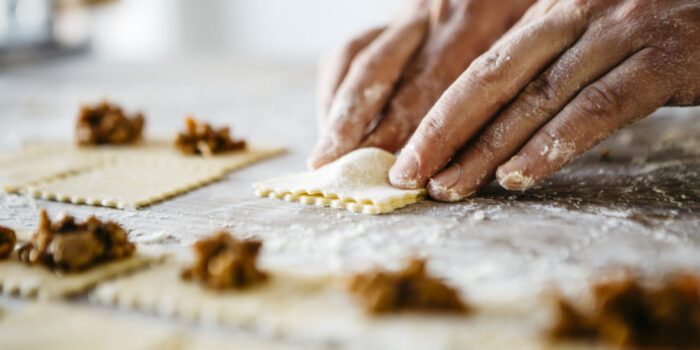
Those ready-made ravioli from the supermarket can be spruced up nicely with a generous dose of sage butter, but homemade is so much tastier. You simply won’t find the silky-smooth texture of fresh pasta sheets in the supermarket. Difficult? Not at all. We’ll help you step by step.

Making ravioli yourself is absolutely not difficult, but it is quite time-consuming. You have to knead the pasta dough, let it rest, roll it out again, and then fill and shape it. Oh yes, and somewhere in between you also have to make the filling. Tip: make sure you have company. Many hands make light work. Would you rather not have people help you in the kitchen? Then at least you can chat with your company while folding, and the job will be done before you know it.
If you make ravioli more often, it can be worth getting the right gear at home. A pasta machine and ravioli moulds are certainly no unnecessary luxury. Do you have a fancy KichenAid? Special pasta and ravioli attachments are available for that too. Don’t panic immediately if you have none of these things. As a beginner ravioli maker, you can get a long way with a rolling pin and a knife or cookie cutter (or even a glass). Let’s get started!
Dough
Your freshly made ravioli stands or falls with the dough. What makes homemade ravioli so irresistible is that soft, almost floppy exterior. The most important thing is that the dough is flexible. It would be such a shame if you had rolled everything out neatly, only to end up with cracks everywhere and the filling leaking out. The trick? Add a little olive oil to the dough. This keeps the dough supple and reduces the chance of leaks. This recipe from Bon Appetit works for us every time.
Resting
For the flexibility of the dough, it is also very important to let it rest after kneading. Allow at least half an hour for this, but longer is certainly fine. While resting, the flour absorbs the water, causing the gluten to relax and making the dough easier to shape and roll.
Rolling
Now that you have made and rested your dough, it’s time to roll. It is important that the dough is paper-thin. You place two layers of dough on top of each other around the ravioli, and you don’t want the edges to become too thick. Do you have a pasta machine? Great. Roll the dough out to setting six or seven. No pasta machine? No stress. The rolling pin is your friend. It takes a little more work, but it’s perfectly doable.
How do you know if the dough is thin enough? Hold the dough up to the light and move your hand beneath it. You want to see the shadow of your hand moving across the dough; then you know you’re seeing it correctly.
Filling
All very well, that dough, but what about the filling? That’s the beauty of ravioli: you can put anything you like inside. A classic is pumpkin ravioli served with sage butter, but a simple ricotta filling with egg, spinach and Parmesan cheese remains a favourite too. For meat lovers, fill the ravioli with slowly cooked meat, and do you really want to impress your guests? Then hide a whole egg yolk in the filling, which slowly runs across the plate when you cut it open.
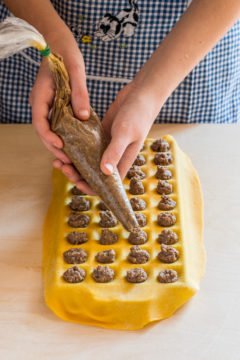
One tip that applies to every filling: make sure your filling isn’t too wet and fill the pasta when the filling is cold. This prevents the dough from becoming soft and tearing. Is spinach going into the filling, for example? Cook it first, then squeeze it until almost all the moisture has been removed. You can simply spoon most fillings onto the dough, but if you’re using a purée, it’s much easier to work with a piping bag.
A tip from Giorgio Locatelli: don’t make the ravioli too far in advance of cooking them. In any case, not more than an hour ahead. The moisture in the filling can soften the pasta, causing it to break when you cook it.
-
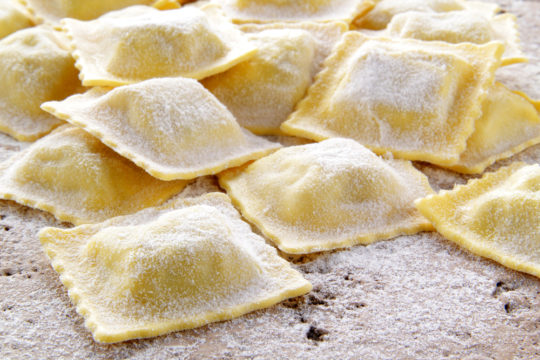

- Ravioli
-
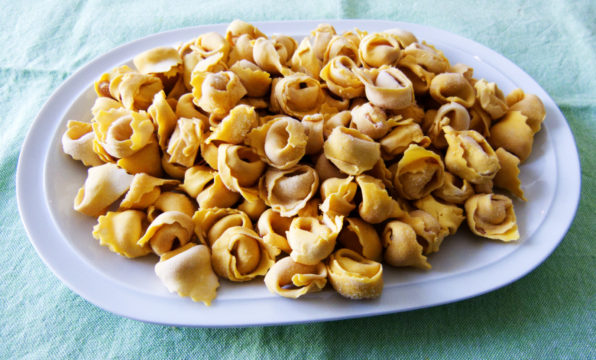

- Tortellini
-
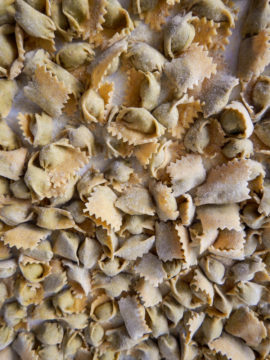

- Agnolotti
-
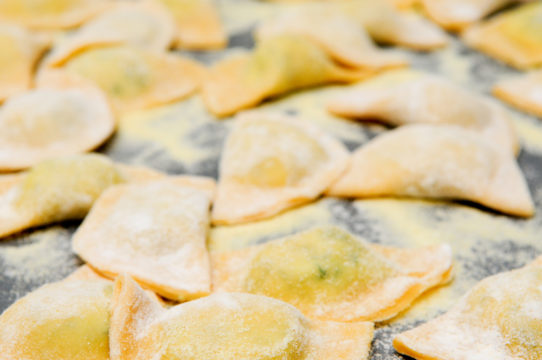

- Mezzelune
Shape
A classic ravioli is square and not too large. Those square pieces with crimped edges that you know from the supermarket. If the pasta has a different shape, it immediately gets a different name too. A raviolo is a large ravioli, of which you usually get only one served to you. This shape is perfect for that egg yolk mentioned earlier.
Those small rounds with the ends pinched together are called tortellini. A mezzelune is shaped like a half moon, and agnolotti are small, compact rectangles in which the filling sits more to the side. So there are plenty of ways to shape your pasta.
Start with simple squares or rounds. You don’t need a mould for these; you can simply spoon or pipe the filling onto one layer of pasta. The second layer of pasta goes on top. Be sure to dampen the edges with a little water so the layers stick together. Then cut the pasta very easily into squares, and use a cookie cutter or a glass for rounds. Even a child could do it.
Sauce
And what kind of sauce do you eat with it? That naturally depends on the filling and shape. Remember: the ravioli is the star. Especially
if your filling has a very pronounced or rich flavour, it’s better not to make a very heavy sauce as well. This ravioli with slowly cooked lamb, for example, goes very well with a simple tomato sauce. Often, a simple butter or cream sauce is enough.
Do you have a more pronounced sauce? For example, this one with anchovies, broccoli and walnut. Then keep the filling simple, with just some ricotta and a few other flavourings.
Also read:


