


The best-kept secret of Chinese cuisine: velveting
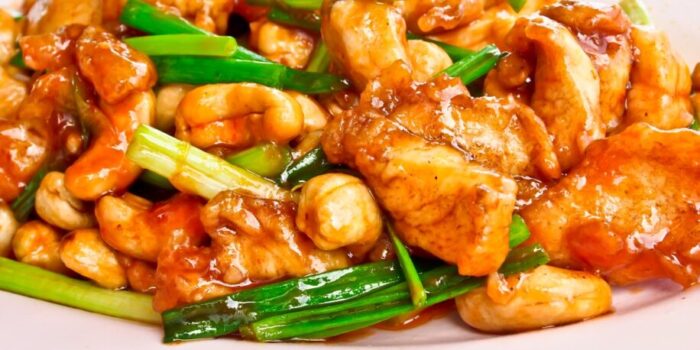
Chicken at Chinese restaurants is often incredibly tender, even when chicken breast is used. What’s the secret? A technique widely used in Chinese cuisine called velveting. Because yes, it makes your chicken just as soft as velvet. I’m happy to tell you how to recreate it at home.

You know the feeling: you order a dish from a Chinese restaurant and the chicken is so tender that you almost think magic is involved. Even when it’s chicken breast, it practically melts in your mouth. But what’s the secret? Well, no magic – just a technique widely used in Chinese cuisine. Velveting, that is. The good news? You can easily do this at home too.
What exactly is velveting?
Velveting is a technique in which you give chicken a kind of spa treatment before it goes into the hot wok. It involves briefly poaching the chicken in water or oil after marinating it. This effectively seals the meat, keeping it wonderfully tender, even when you fry it thoroughly afterwards.
This is the standard method in many Chinese restaurants – which immediately explains why your own chicken breast always ends up a little tougher in the pan.
Velveting: how to do it at home
Want to experience that velvety-soft chicken for yourself? Easy. With these steps, you can make the chicken at home that you normally only enjoy in a restaurant.
- Cut the chicken into bite-sized pieces.
- Beat an egg well and mix in a little cornstarch and rice wine.
- Mix this mixture thoroughly into the chicken and marinate for at least 20 minutes in the refrigerator.
- Meanwhile, bring a large pot of water to the boil.
- Lower the heat once it boils – the water should be gently simmering.
- Add the chicken and cook for about 3 minutes, until just cooked through.
- Drain and immediately add the chicken to the wok for your favorite dish.
And voilà: you now have chicken so tender that you’ll never want it any other way.
Why velveting works so well
The secret to velveting lies in the layer of egg and cornstarch. It forms a kind of protective jacket around the chicken, preventing the meat from drying out in the heat. Instead of all the juices escaping into the pan, they stay neatly inside. And you can taste it!
Briefly cooking the chicken in gently simmering water (or oil) also allows it to cook a little without drying out. That way, your wok only has to add that delicious fried flavor.
Velveting: not just for stir-fries
Although velveting is traditionally used for stir-fried dishes, you can use this technique in many other ways. Think salads with warm chicken pieces, wraps or pitas, and pasta dishes where you add chicken to the sauce.
Really, anywhere you use small pieces of chicken breast, you can apply velveting. Whole chicken breasts? Don’t even try. This technique works best with bite-sized pieces.
You can taste the difference immediately
A simple comparison: you put regular chicken breast in the pan and after a few minutes it already starts to become dry and tough. With velveting, the chicken stays juicy and tender, even if you accidentally stir-fry it for an extra minute. Plus, it looks even better, with that glossy, juicy coating.
The only downside? You’ll never want it any other way again. So prepare for comments like “Wow, what did you do to that chicken?!” and “Seriously, this is better than Chinese takeout.” You’ll also have the immediate answer to why everyone always wants to eat at your place.
Read also:


