


The difference between sharpening and honing your knife
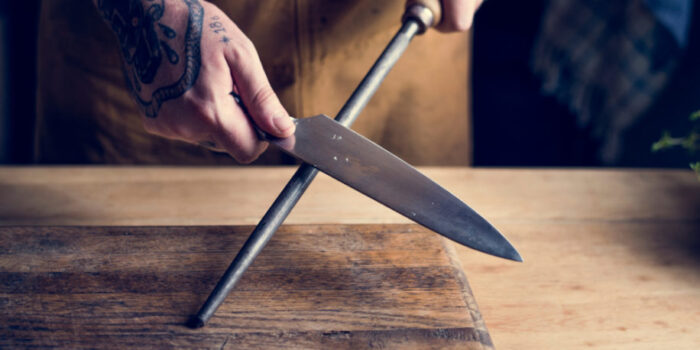
It always looks so cool on TV when chefs skillfully work with their honing steel, so naturally you want to do the same at home. Just don’t think that you’re sharpening your knives with that tool, because that’s not what it does at all.

Honing
A honing steel is certainly not a useless tool; it does make sure that your knives become blunt less quickly. Cutting creates countless tiny hooks and imperfections in your knife, which eventually make it blunt. With a honing steel, you essentially push those hooks back into place, but you don’t remove any metal from the blade.
This means that your knife becomes blunt less quickly, but is your knife already blunt? Then there’s no saving it with a honing steel. If you use your knives a lot, they will eventually become blunt anyway. So you’ll still have to sharpen them.
Sharpening
When you sharpen your knives, the outside of the blade is actually ground away and the shape of your knife changes. This makes the edge of your knife sharp again. You can do this with a whetstone or an electric knife sharpener, but I always take my knives to a professional sharpener.
Sharpening knives is a craft in itself, and because you’re actually removing material from your knife, you want it to be done properly. Otherwise, you’ll soon be left with a shadow of what your knife once was. It costs a few euros per knife, and in my opinion it’s more than worth it. I always take my knives to Firma Moes in Amsterdam, but many cookware stores also offer a sharpening service. If you maintain your knife properly with a honing steel and sharpen it once a year or every two years, your knives will last for years.
Also read:
- Are you taking proper care of your knives?
- Test: are your knives still sharp enough?
- This knife is affordable and razor-sharp


