



These are pans for the pros
My pan cupboard is a mess. Pots, roasting pans and frying pans in different sizes and from different brands. From my favorite indestructible steel frying pan (DeBuyer) for searing my perfect steak to some less durable stuff in the category of non-stick-pans-that-I-never-threw-away before, but which have had their best days.

The pot section is an eclectic assortment. Cooking pots, with and without matching lids, sometimes damaged (read: black, burnt bottoms) and in sizes that don’t stack properly. There is even a Blokker model among them that dates back to my student days.
Time for a major clear-out. Starting with the cooking pots.
The pleasure
At first glance, a cooking pot is not the most exciting addition to the kitchen compared with, for example, a frying pan or chef’s knife. You can boil water and make soup in any cooking pot. Until you discover the pleasure of a quality cooking pot.
When I asked the pros for advice, one name kept coming up: the quintessentially German brand Fissler. I like things that pros work with – then you know you’re in good hands –. The same goes for my road bike (for enthusiasts: from the American brand Specialized). Whether you work (or cycle) with it is of secondary importance. It starts with good equipment.
Makes everything else redundant
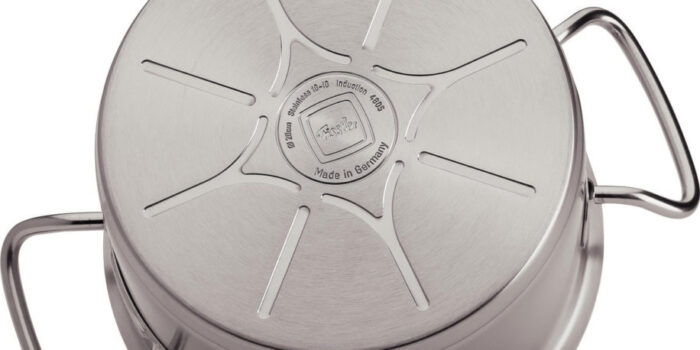
After some Googling and more than one visit to the specialist cookware shop, I settled on the five-piece Fissler Original Pro collection. They have been making pans since 1845, a reassuring fact that I am not insensitive to. Price: four hundred and thirty-nine euros. No money for a pan set that makes every other pan set redundant for the rest of your life.
Since then, all five of them have been gleaming on my stove. High-quality stainless steel with a base made of highly conductive aluminium. Still unused. But a feast for the eyes and a pleasure to hold. The robust handles (with grips that don’t get hot), the thick, heavy base and the perfectly fitting, heavy lids. The lids are made of glass – I find that less attractive than stainless steel – but it has the major advantage that you can see through the lid what is happening in the pan without having to lift it (with a loss of moisture and aroma).
Crispy quail
I am already especially looking forward to using the sauté pan, a saucepan with sloping sides that, thanks to the superior heat conduction of the sides and base, will let me make the tastiest sauces, sauté vegetables or crisp up a quail. But first, I’ll just keep looking and feeling them.


