



What to Make (and What Not to Make) in a Cast-Iron Pan
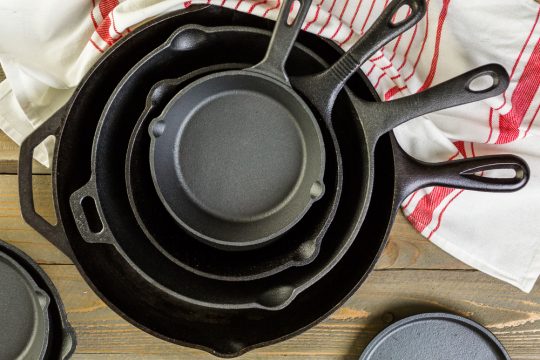
The cast-iron pan is a must-have for anyone who enjoys spending time in the kitchen. It can be found in many households, but plenty of (beginner) mistakes are still made with this ultimate piece of kitchenware. We know the do’s and don’ts.

The great advantage of a cast-iron pan — also commonly known as a skillet — is its thick base, which retains heat well. This means it can get very hot and stay that way, even when you add cold ingredients to the pan. For the best result, preheat the pan thoroughly.
Steak
When cooking a steak, you need heat — lots of heat. This creates, through the Maillard reaction, the crispy crust we all want. To cook the steak perfectly, place the pan in the oven for a while; it can handle that just fine.
Placing a piece of fish directly in your skillet is a slightly less good idea. Because of the pan’s texture, there’s a good chance the fish won’t stay intact. Prevent this by placing a piece of baking paper in the pan.
Tarte tatin
Another advantage: it can go straight from the stovetop into the oven. Ideal for tarte tatin, where you make the caramel with apples on the stovetop. Add the pastry and put it in the oven. Just be careful not to touch the caramel with your bare hands. It’s extremely hot.
Cornbread
Delicious with chili con carne or Mexican meatballs: cornbread. It is traditionally baked in a cast-iron pan. The perfect way to mop spicy sauces from your plate. Pouring the batter into the searing-hot pan gives you a wonderfully crispy crust; then finish baking it in the oven. This recipe is highly recommended.
Pizza
Unfortunately, not all of us have a wood-fired oven. A cast-iron pan is much cheaper and works very well too. Place the pizza dough in your thoroughly preheated pan; this makes the crust incredibly crispy. In this video from Bon Appetit, you’ll see how to make a pan pizza in 30 minutes.
Fried chicken
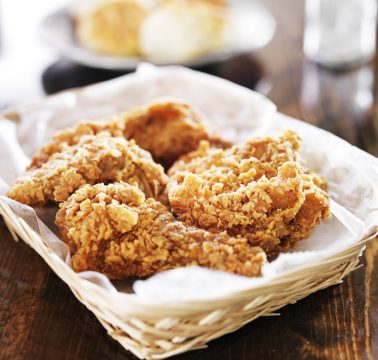
A deep fryer is also unnecessary once you’re the proud owner of a skillet. Because the pan retains heat so well, the temperature barely fluctuates, and it has the perfect depth for making, for example, fried chicken. Delicious.
Grilled cheese
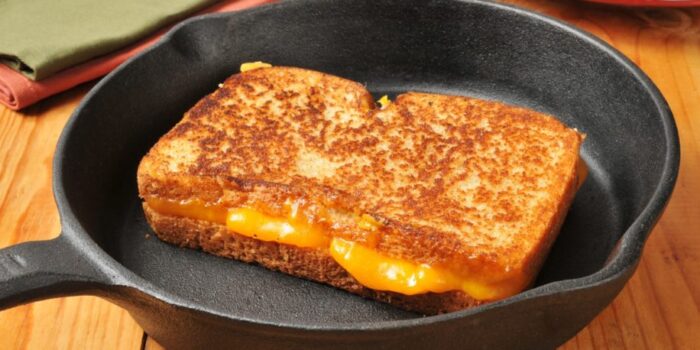
Temperature is also key when making a grilled cheese. It shouldn’t be too high, so the cheese can melt slowly while the bread turns golden brown (rather than black). Do preheat the pan thoroughly, but over low heat, so you stay in control throughout the cooking process. The best grilled cheese ever, guaranteed.
No go
After reading this, you may be tempted to start making everything in your cast-iron pan from now on. Don’t. Cast iron doesn’t react well to acids, so don’t make tomato sauce in it, for example, and don’t deglaze it with wine or vinegar either. This damages the pan’s outer layer, and your food may also develop a metallic taste.
Also remember that the pan absorbs all the flavors of the food you make in it. If you use it occasionally, this isn’t a major issue. But if you fry fish in the pan every day, your tarte tatin will taste less delicious. Frequent users are best off using a separate pan for sweet dishes and another for savory ones.
Also read:


