


You can learn how to marinate

Whether you’re going to barbecue or make amazing chicken from the oven: a good marinade is your best friend. As long as you follow the rules, that is—but don’t worry: we’ll help you. You can learn how to marinate.

The word marinate comes from the Latin word mare, meaning sea. Marinades were initially intended for fish and made with salt water. Marinades could extend the shelf life of products such as fish and meat and, secretly of course, mask unpleasant smells and colors. The authoritative Van Dale dictionary defines it as soaking in vinegar with herbs and onions.
That’s the gist, but not the full story. Far from it, even. Whereas the original purpose of marinating was preservation, today it is mainly about enhancing the flavor of products and tenderizing their texture.
In short, this is indeed done by soaking products in vinegar with herbs and onions. Good to know: there is so much more you can do than that.
Dos
- Your baking dish or bowl should be large enough to toss everything around in. You want room to move.
- Make sure the piece of meat or fish is dry (patted dry) before you marinate it. Extra moisture dilutes your marinade. It also means the marinade will adhere less easily to the product you want to marinate.
- It’s important for the marinade to contain acid and salt. They work effectively on the proteins in the meat or fish, making it much more tender and juicy. Besides acid and salt, it’s important to have sweetness for balance, oil to distribute the marinade and create a crispy crust at the end.
- Have the time? Then let the marinade sit for a long time. Generally speaking, the flavor will have penetrated as much as possible after 18 hours. That doesn’t stop us from sometimes secretly putting meat in the oven after just half an hour. Delicious too, but it can be more intense.
Don’ts
- Marinate meat for longer than 24 hours. The proteins then break down too much, causing the outside of the meat to become soggy instead of juicy.
- Marinate fish for longer than three to four hours. Fish, especially soft white fish, is so delicate that the acids in your marinade will break down the entire structure of the fish. You’ll simply have very little left.
The marinade
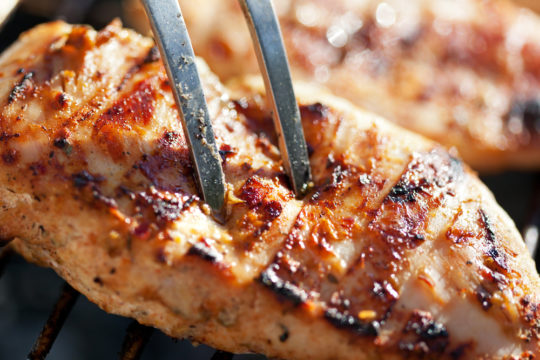
Broadly speaking, marinades can be divided into two types: wet and dry. Wet marinades contain, as you’ve probably already guessed, moisture. This can be an acidic vinegar, a salty soy sauce or a rich oil. Wet marinades are ideal for preparing meat and fish at high temperatures, such as hot grilling. Pay close attention when adding sugar: it can caramelize deliciously, but it also burns quickly.
Dry marinades, also known as dry rubs, are mixtures of herbs and spices that you massage into the meat. Dry rubs adhere well to the proteins in the meat during massaging. This is primarily for flavor, but the salt in the spice mix does create a deliciously crispy skin.
Combining
Right, here we go. First of all, make sure you include an acidic element. You can use vinegar, lemon or lime juice and different types of wine for this. The salt can come from sea salt, soy sauce or fish sauce, for example. For sweetness, use sugar, honey, agave syrup or maple syrup, and for the fatty element you can choose from all kinds of oils. When it comes to herbs and spices, you have so much choice that it depends on which cuisine you’re in the mood for. Go Thai with ginger, garlic, lemongrass and chili, or Mexican with oregano, cinnamon and cumin.
Read also:


