


10 luxury foods that used to be very cheap
‘What would you like for an afternoon snack? A bowl of caviar, perhaps?’ If someone said that to you now, you’d probably think they weren’t quite right in the head. But did you know that caviar wasn’t always such a fancy product? That it actually cost next to nothing and you could get it pretty much anywhere (for free!)? There are plenty of other products that are super luxurious and expensive now, but weren’t in the past.

And I can only say one thing about that: why is it taking us so long to invent time machines?! I want caviar, lobster and Wagyu for next to nothing too!
1. Caviar
Caviar, then. If you’re served that now, it almost feels as though you’re holding a plate of gold. Things used to be very different. Caviar consists of the unfertilized eggs of sturgeon. Sturgeon used to be worth a lot, but the eggs were merely a by-product. Around 300 years ago, caviar was dirt cheap. It was even transported from America to Europe for one pound at one point. Bizarre! You were often given caviar for free as a side dish with your drink. As sturgeon became increasingly difficult to catch and actually rather rare, caviar became rare too. The result: prices shot up. Even though it had already been hugely popular all along. It now has the status of a luxury product, but the people living 300 years ago would laugh at that.
2. Lobster
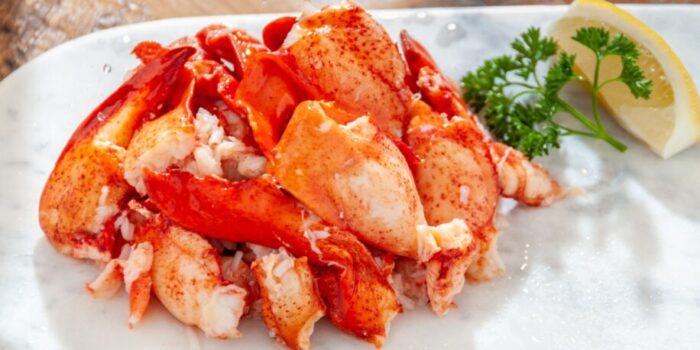
Another product with a luxury status: lobster. You can’t imagine it now, but these were once the ‘cockroaches of the sea’. Say what?! Yes, really. They used to crawl across the beach in huge colonies. Lobsters were even fed to prisoners because there were so many of them and they cost nothing. Can you imagine it, a piece of lobster as prison food? Overfishing and habitat destruction made lobsters much scarcer. And yes, that was when they suddenly came to be regarded as food for connoisseurs.
3. White salmon
White salmon is not the same as the pink salmon we know so well. The fish has a unique, pale color and is highly sought-after for its distinctive flavor and texture. It mainly swims in the waters around Alaska. White salmon used to be far less popular. Its pale color meant that many people wanted nothing to do with it. No, they wanted a bright pink piece of salmon. White salmon was therefore sold very cheaply at fish markets. But preferences changed. Top chefs in particular helped white salmon gain much more appreciation. Its delicate, buttery flavor and unique appearance made the fish wildly popular in Michelin-starred restaurants. From ugly duckling to luxury product, that white salmon.
4. Caterpillar fungus
Does the term ‘caterpillar fungus’ not ring a bell? That’s hardly surprising: the product is especially popular in traditional Chinese medicine. With high class status to match. The fungus has been praised for its medicinal properties for centuries. Among other things, it is used to treat fatigue, kidney disease and low libido. A miracle cure, then. It used to be hugely affordable, and almost anyone could get hold of it. Now caterpillar fungus is even more expensive than white truffle! Well, that’s what happens when something is popular, scarce and difficult to obtain.
5. Oysters
An oyster with a glass of champagne: there’s almost nothing that radiates as much luxury as that. Just like caviar, oysters were a simple snack hundreds of years ago. In the 19th century, you could buy them on the street for next to nothing. But that changed. Over time, many oyster beds were removed because all kinds of diseases were spreading through them. There was also a long history of child labor in the oyster industry. Fortunately, that is no longer the case. Oysters are now farmed in an ethically responsible and as sustainable a way as possible. Side note: that comes at a cost. And therefore, expensive oysters. Bizarre, isn’t it, that they were once such a casual snack?
6. Sushi
I know, these days you can eat sushi on every street corner. Still, it has a luxurious image. And honestly, an evening of sushi isn’t exactly cheap either. Did you know that it was once simple street food in Japan? When it came to be regarded as ‘refined cuisine’ in Europe and America, sushi’s status slowly but surely changed. Restaurants wanted increasingly high-quality ingredients and top-level chefs. And yes, you can see that reflected in the price.
7. Wagyu
There’s hardly any cut of meat that is as expensive and carries as much status as Wagyu. It’s the grand prize on your plate—and the grand prize for your wallet. But it really wasn’t always that way. In fact, during the twentieth century, this meat was even considered inferior to other types of beef. It only became truly popular and regarded as a luxury product in the 1980s and 1990s. Watch out: people still talk a lot of nonsense about Wagyu. Don’t believe everything you hear about this delicate cut of meat.
8. Foie gras
I have a bit of a love-hate relationship with foie gras. When I eat it, I feel luxurious and incredibly bloated at the same time. And I really do have reservations about the way foie gras is produced. So the times I’ve eaten it can be counted on one hand. Anyway, foie gras. It was once a humble by-product. For a long time, it was enthusiastically used in Jewish farm cooking. Affordable, but delicious. Things are different now. Foie gras comes with a high price tag. Because of its questionable production methods, but also because of its limited availability. All reasons why you don’t see foie gras on menus quite so often anymore.
9. Snails (escargots)
On holiday in France, I thought I’d be adventurous and chic by ordering a plate of escargots. I was immediately punished for it. No, I really don’t like this. I’ll eat practically anything, but this goes too far for me. That doesn’t change the fact that they still have a rather posh image. Funny, because for years they were very affordable and ‘simple’. That was because they were so plentiful. Their refined flavor and texture also contribute to the luxurious status of this French delicacy. Well… I still have to discover those flavors and textures, I think.
10. Monkfish
Monkfish was literally regarded as the devil for a long time. Unattractive, with a strange anatomy: no. Nobody wanted anything to do with it. The fish was even banned from fish markets for quite some time. Imagine that. Now monkfish is practically the most popular kid in class. Chefs discovered that its tail contains delicious meat. Its firm texture and delicate flavor even resemble lobster a little. And yes, when you’re compared to lobster… Your status must be doing pretty well.
Read also:
- 5 pro tips from chefs for buying salmon
- Know before you go: 12 French dishes you might want to avoid
- Most expensive bottle of alcohol ever auctioned: winning bid was 2.4 million euros
Source: Chef’s Pencil


