


5x the biggest nonsense about Wagyu, the most celebrated meat in the world
Beautiful black cows that are massaged, rubbed until they shine like an apple, pampered with beer and grain and then: served on your plate in outrageously expensive slices. That’s Wagyu, the legendary Japanese beef. But is it true? ‘Massages? Volunteers are welcome, but we don’t have time for that.’

Wagyu is just as fatty as a croquette
Is Wagyu fattier than regular beef? The fat is distributed differently; it runs through the meat in thin streaks. So you probably eat more fat with your Wagyu steak, because home cooks normally cut off the fatty edges. Silly, because fat is flavor, but hey, it’s up to you. What’s more, Wagyu fat is said to be packed with good fatty acids that help lower the LDL level in your blood— that’s the bad cholesterol. Fat, yes, but healthy fat, and delicious to boot.
You have to eat Wagyu as steak
The exclusive Wagyu katsu sando at Wagyumafia costs 180 dollars. It’s a top-quality chateaubriand between two slices of white bread with a special vintage vinegar sauce. But it can be a little less fancy too. A hamburger made with Wagyu beef? Wagyu barbecue sausages? Stew? Delicious.
All Wagyu beef is expensive (and delicious)
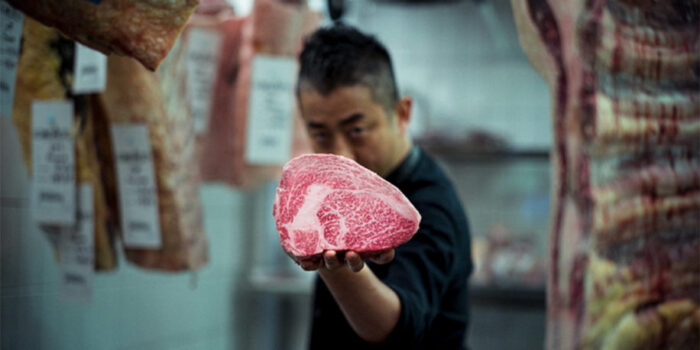
One Wagyu is not the same as another. Even in Japan, only a very small percentage of all those beautiful black cows receives the official stamp: Kobe beef. That is the very best Wagyu, with a hefty price tag. All Wagyu can be graded by a Japanese organization. They look at the color of the meat, the color of the fat, the consistency and the marbling. Based on this, classifications from A to C are awarded, based on how much usable meat comes from a carcass (A is the highest score), as well as grades from 1 to 5 based on the meat’s fat marbling. The thinner the streaks of fat, the more exclusive the meat—and the more the cow is worth. The cow is sold at auction, to the highest bidder. A1 is therefore the maximum qualification, and that means serious money. That doesn’t mean the rest of the meat isn’t delicious, but it is much more affordable.
Wagyu has to come from Japan, otherwise it’s fake
Wagyu is actually the Japanese word for ‘cattle’. Four types of Japanese cattle fall under this classification. But Japanese cows graze all over the world: Wagyu is also found in Australia, as well as in Canada, England, Scotland and even the Netherlands. But only Wagyu from Japan is guaranteed to be 100% purebred.
The cows are massaged
In Benningbroek, North Holland, you’ll find Koeienhuis, a farm with Wagyu cows exclusively. Their website says it plainly: they don’t have time for massages. There are rotating brushes in the barn, though, which the cows can rub against if they feel like it. In the past, cows in Japan were massaged, I read. Because back then, the animals got little exercise. But the herd in Benningbroek happily walks around the meadow, so no massage is needed. Although, the website says, volunteers who feel like massaging cows are welcome to report for duty.
Why Wagyu is so special
Because of its exclusivity (there isn’t much Wagyu in the world) and because of its amazing flavor. That’s why it is often the centerpiece on the menu of many a (Michelin-starred) restaurant. But fortunately, you can eat Wagyu at home too. At Nice to Meat, the Dutch importer of 100 percent Japanese Wagyu beef, they already sell Wagyu for €6.50 (for 30 grams)! These are the so-called ‘nikutori sticks’. Fry them briefly with just a tiny bit of salt… heavenly!
Want to know more about Wagyu?
We asked Mikel Pouw from Nice to Meat if he could briefly explain why Wagyu is so addictive. You can see it in the video below.
Also read:
- Wagyu katsu sando is the most expensive sandwich in the world
- Does Wagyu really taste different from Angus?
- Recipe: Japanese-style hot dog by top chef Robert Kranenborg
Photo: Wagyumafia


