


10 x the perfect base for your dish
In the Netherlands, we don’t get much further than a chopped onion and garlic, but what forms the base of your dish in Italy, France, China and the rest of the world?

Tired of boring, bland sauces, stews, soups or rice dishes? Or simply ready for some variety? Try these flavor bases.
France: mirepoix
Consists of: onion, carrot, celery
The proportions aren’t too strict, but to give you some guidance, I’d use half onion, a quarter carrot and a quarter celery. Cut everything into cubes, paying particular attention to making them roughly the same size so they cook evenly. Gently cook everything in butter or olive oil, but don’t let it brown.
Spain: sofrito or sofregit
Consists of: onion, tomato (and sometimes garlic and/or red bell pepper)
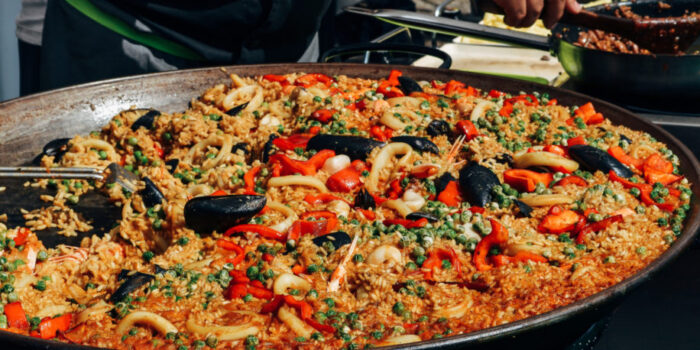
Seafood and saffron may steal the show in a paella, but if you don’t season the rice, the other ingredients won’t come into their own. That seasoning is provided by sofrito, a base with quite a few variations. This is because tomatoes only arrived in Spain in the 16th century, and from then on were combined with onion, garlic and bell pepper. Before that, especially in Catalonia, a mix was made from locally grown vegetables such as onion, leek and carrot: sofregit. Either way, choose whatever sounds good to you and gently cook the vegetables in plenty of olive oil until browned.
Italy: battuto / soffritto
Consists of: onion, carrot, celery
This combination is called battuto when raw, but once it has been cooked it is called soffritto. The name resembles the Spanish version, but the observant reader will notice that the ingredients are the same as those in the French mirepoix. The only difference is that you chop everything very finely and gently cook the vegetables in plenty of olive oil until browned. Flavorings are also often added: parsley, garlic, fennel or even strips of pancetta or prosciutto. Every Italian family has its own recipe.
India: adu lasan
Consists of: ginger and garlic
It’s no secret that countless spices are used in Indian cuisine, but however much they vary from dish to dish, nine times out of ten the garlic-ginger paste adu lasan is included. The proportions are simple: half and half. Grind the ginger and garlic into a paste using a mortar and pestle or (if you lack the arm strength and/or patience) in a food processor. Rub it onto meat or poultry, or let it sizzle in oil with some gently cooked onions, and your base is ready.
China: Cantonese base
Consists of: scallions, ginger and garlic
Do you like a strong flavor? Cut the flavorings into small pieces. Prefer something milder? Add them in larger pieces to your dish at the beginning of the cooking process.
Germany: Suppengrün
Consists of: carrot, celery and leek
Literally translated, Suppengrün means soup vegetables. Just as you may know them from Dutch supermarkets, the vegetables are also sold together in a bag in Germany, sometimes supplemented with onion, parsnip and potato. Don’t take the name too literally, though: these ‘soup vegetables’ also work well as a base for a stew.
Puerto Rico: recaíto
Consists of: onion, green bell pepper, (Mexican) cilantro, garlic and aji dulce peppers
Hate it or love it, but (Mexican) cilantro is simply the basis for countless Puerto Rican dishes. Incidentally, Mexican cilantro doesn’t differ much in flavor from the cilantro we know, but its shape is somewhat coarser. Finely chop everything, lightly sauté it in a neutral oil, and you’ll get a beautiful green paste that adds a pleasant, fresh, herby flavor to your stews and rice dishes.
United States: holy trinity
Consists of: onion, green bell pepper and celery
Go to the southern states of America and everyone knows what the holy trinity is. Think of it as the foundation of Cajun and Creole cuisine, where French, African, Spanish, Indian and Caribbean cuisines come together. Unlike Italian soffritto, there is no experimenting with the holy trinity. The base is virtually the same in every household. Though sometimes a little flour is added to make a roux as the basis for gumbo, étouffée and other well-known Cajun and Creole dishes.
Poland: Włoszczyzna
Consists of: carrots, parsley, celery, leek, savoy cabbage or white cabbage
Literally meaning ‘Italian’, this Polish soup base is actually more of a cross between Italian soffritto and German Suppengrün. Because cabbage is used as the main ingredient, it is somewhat more bitter than the others.
West Africa: ata lilo
Consists of: red onion, tomatoes, Scotch bonnet peppers and bell peppers
Ata lilo literally means ground pepper. Not black pepper as we know it, but Scotch bonnet chili peppers, paprika and (red) bell peppers. These are puréed together with tomatoes and red onion, then reduced to a thick paste that is used, among other things, for the famous West African Jollof rice.
Read also:


