



10x the best tips for pasta
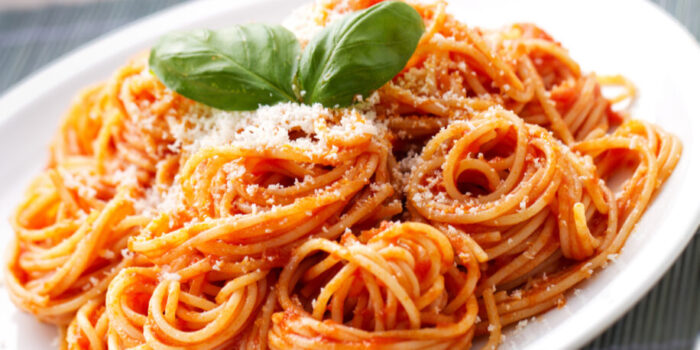
Pasta: savior of the weeknight in the form of a quick primavera, weekend hero with a traditional ragù stewed for hours. In whatever shape or type, we absolutely love it. And you do too, we have a feeling, so tadaaa: the handiest pasta tips all in one place!

After all those reminders from us about everything you should definitely NOT do with pasta, we thought it was time to list the most useful ‘things you should do’ pasta tips for you again.
The best tips for pasta
Here’s to such a wonderfully steaming, aromatic plate! Open a suitable chardonnay or generously fill the glasses with red, and live your best pasta life!
Measure out exactly enough spaghetti
You may already know this one, but that hole in the spaghetti spoon? That is exactly the size of a single serving of dry spaghetti! Handy…
And plenty of water
Large pot, lots of water. The pasta needs room to move around nicely, otherwise you’ll end up with one big pasta clump.
It needs to boil
Never throw pasta into water that hasn’t boiled yet! First of all, it will take longer for the water to finally boil, and you’ll also ruin the pasta’s texture. Big rolling bubbles—that’s what you want to see before the pasta goes into the pot.
Salt the water
Italians themselves disagree about how much. Some say as salty as soup, others as salty as the sea. Either way, you must salt your pasta water before the pasta goes in. And only do this once it’s boiling vigorously, because then the salt moves around and dissolves instead of settling on the hot bottom and potentially damaging your pan.
Keep stirring
Not constantly, mind you—risotto day is tomorrow. But stirring the pasta loose once or twice while it cooks is a good idea. This prevents it from sticking to itself or to the pan.
A coat of oil
Never, ever add oil to your pasta water. It doesn’t prevent sticking and is simply a waste of oil. What you can do, if you’re not immediately (ahem, properly) tossing your al dente pasta into the pan with the sauce, is coat the pasta with a drizzle of good olive oil and gently stir it through. Do this if, for example, you want to make a delicious pasta salad, or if you miscalculated the cooking time and your sauce isn’t quite ready yet (it happens to the best of us).
Make your own sauce
Unless, for example, restaurant Toscanini puts their sauce in a jar (yes!), you should generally steer clear of jarred sauce. At least, that’s what I think. Walk right past that entire supermarket aisle and head to the produce section, where you need exactly 1 bulb of garlic and 1 onion, then continue to the canned tomatoes, where you’ll pick up a can of the best ‘polpa’. There, you’re ready to make marinara—and believe us, the simpler, the better. Incidentally, marinara is the term for the original red sauce, and originally had nothing to do with seafood.
Use a spacious pan
Don’t make that sauce in a tiny saucepan. Choose a spacious sauté or frying pan with a thick base (there’s a good chance you’ll first fry something like an onion or soffrito), which will also fit the cooked pasta later. Because you know: the pasta needs to be stirred through the sauce with a splash of pasta water, since thankfully we’ve moved far beyond the stage of plopping sauce on top of a plate of naked pasta.
Finish it off
Once everything is ready, the pasta has been stirred loose through the sauce and spooned onto deep plates, be patient for a few more seconds. Give your carefully made pasta one final touch with freshly grated Parmesan, some torn basil, a drizzle of your best olive oil and, if you like, some chili flakes. And then: dig in!
Reheating is fine, but…
It’s best to eat pasta right after it’s made. But what if you have leftovers the next day? It’s better not to reheat spaghetti or other loose pasta shapes in the microwave. If you heat it in a saucepan with the sauce and a few tablespoons of water, the reheated pasta will be a little less soggy. Or worse: it may develop hard, dried-out tips because they weren’t quite covered by the sauce.
Also read:
- Recipe: Toscanini’s pasta with almond pesto
- Why pasta water is worth its weight in gold
- Recipe: pasta chips


