


Parmesan cheese or Grana Padano; these are the differences
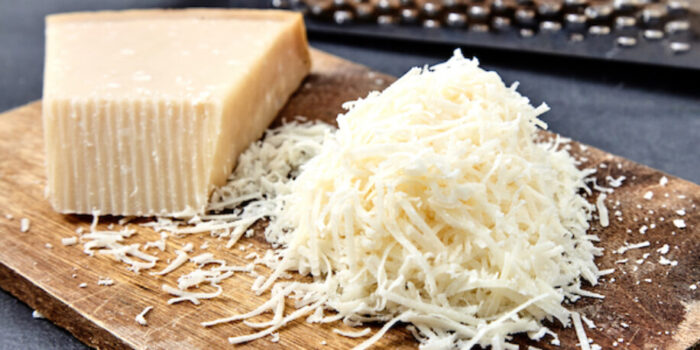
Do you ever find yourself standing in the shop, staring at two pre-packaged wedges of cheese, wondering what the difference is and why one is slightly more expensive than the other? At first glance, they look an awful lot alike, but there really are differences between (real) Parmesan cheese and its slightly cheaper look-alike, Grana Padano…

We think a piece of this cheese is absolutely indispensable in the fridge, and besides grating it over the usual suspect (pasta), we also sprinkle it over salads, soups, open sandwiches and chicken dishes. But what exactly are the differences between Parmigiano Reggiano (the ‘real’ one) and Grano Padano?
Sticking to its roots
Parmigiano Reggiano may only be produced in five provinces: Parma, Reggio Emilia, Modena (also the source of the best balsamic vinegar), and parts of Mantua and Bologna. Italians are strict about production processes and their designation of origin (DOP, Denominazione di Origine Protetta), which also applies to Grana Padano. But the latter may come from farms spread across thirty-three Italian provinces.
Clean stuff
Parmigiano Reggiano is made without additives (substances added to improve properties such as shelf life, colour, aroma, flavour and stability). So it all comes down to the cheesemaker’s finesse (fortunately, they have quite a lot of experience, considering 3.8 million cheeses were produced last year). Grana Padano may still contain an extract from egg whites to prevent unintended fermentation.
Cow diet
And what do the cows eat to produce that precious milk? The ‘Parm’ luxury cows get nothing but hay and pasture grass, while, legally speaking, Grana cows may also be fed silage (grass stacked in a large silo and covered with plastic and car tyres to preserve it).
Whey, me, him
To start the microbiological process during cheesemaking, a lactic acid bacterium from a lab may be used for Grana Padano (though it must come from naturally fermented whey). This may happen a maximum of twelve times a year, and it is strictly monitored. For Parmigiano Reggiano, the only permitted bacterium is the (‘good’) bacterium naturally present in fermented whey.
Strictly inspected
Every one of those millions of ‘real’ Parmesan cheeses is inspected after twelve months. Really, every single cheese. This allows the industry to boast one hundred per cent quality control. Only a few Grana Padano cheeses are inspected at random after nine months of ageing.
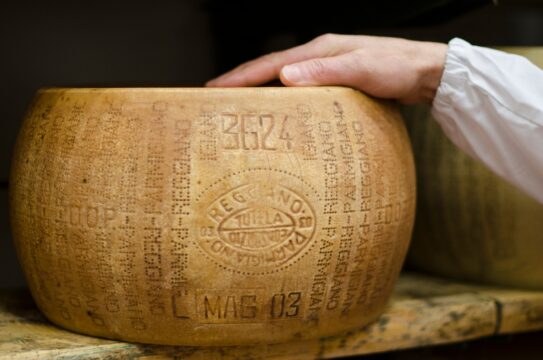
Old dear
The minimum ageing period for a ‘Parm’ is twelve months, but the average ageing time is twenty-four months. For enthusiasts, the cheese can mature even longer, for more than thirty months. This also makes the cheese grainier and more intense, reminiscent of mature Dutch cheese. Grana Padano is generally eaten after fifteen months of ageing.
What do you choose?
If we’re making pasta for a large group of teenagers or children, or, as in the OLD DAYS, for the twenty friends who would come over half-drunk for a final drink and some food after King’s Day, we’ll happily grate the affordable piece of Grana over it. But a beautiful crumbly piece of Parmesan cheese, spicy and umami-rich in flavour, simply cannot be matched when it really matters!
Also read:
- The power of a cheese soufflé in shitty situations
- You’ve been grating your cheese wrong your entire life
- Is this the vegan (!) ‘Parmesan cheese’ that actually tastes good?
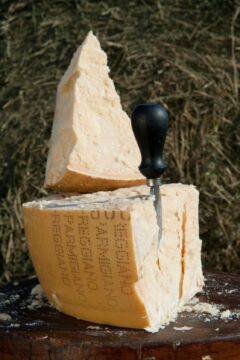
Image in article: CONSORZIO DEL FORMAGGIO PARMIGIANO REGGIANO


