



Tips & tricks
6 common mistakes made by beginner bread bakers
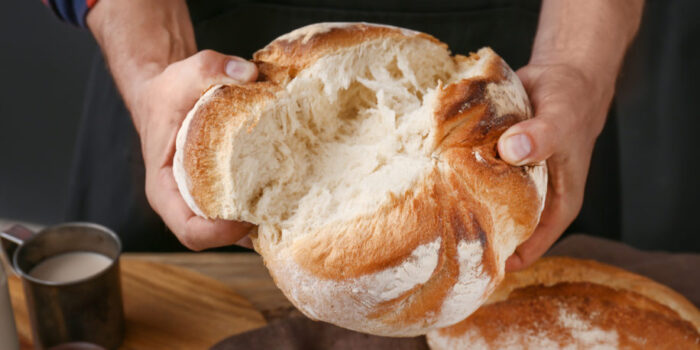
Have you also been bombarded on social media for weeks with one photo after another of beautiful homemade loaves? And yet you just can’t seem to make it work, you’ve already thrown your bread maker in the bin, somehow managed—with considerable effort—to raise a sourdough starter as if it were a toddler, and are you now going crazy with frustration?!

It’s quite possible that one of the causes is listed below. Read on and see whether the solution to your homemade bread heaven is hiding among them.
These are the 6 mistakes beginner bread bakers make most often (+ the solution!)
- You killed your yeast. You’re left with an unintentionally flat loaf (otherwise you would have decided to make flatbread) and you’re furious. Next time, pay close attention (= feel) to whether the water is not too hot and not too cold. It should feel pleasantly lukewarm.
- You’re not using the most suitable flour. You wanted a sturdy loaf, sourdough or not, but all you had was cake flour (which is actually intended for cakes or cookies). Or you tried to make focaccia with rye flour: also not ideal. Check carefully what type of flour your recipe calls for; it’s very particular.
- You don’t knead for long enough. After ten minutes of kneading, your arm is so exhausted that you think, ‘yeah, forget it,’ and then you just rush through the rest. Fifteen to twenty minutes is really the minimum for giving the gluten the best chance to develop. The obvious best solution is a stand mixer with a dough hook.
- You’re too impatient to let the dough rise properly. Patience really is a virtue here. Too little rising time and you’ll end up with a structure that’s too dense and chewy. Follow the instructions carefully, but just as every oven can be slightly different, you also need to keep a close eye on the dough, because the place where you let it rest may naturally be warmer or cooler than someone else’s.
- You want to get started with your own starter too quickly, as soon as you see the first bubbles. If you make a starter ‘from scratch’, don’t be surprised if it takes another one to two weeks before you start your first sourdough loaf. Wait until your starter shows a regular pattern of rising and sinking.
- You absolutely had to have warm bread. Let your bread cool properly. If you slice into a loaf too quickly after it comes out of the oven, you’ll get a gummy texture and the rest of your bread will go stale and dry more quickly. Leave it alone for the first few hours—really.
Good luck! Your perseverance will be rewarded with deliciously fresh and hearty bread, which needs nothing more than, for example, the very best butter. And of course, if you actually have the patience of a hyperactive hummingbird (that would be me): support your local baker and take their hard work home with you.
Also read:
- Video: baking bread without kneading
- Recipe: garlic knots, super-quick garlic rolls
- Emma’s food frustrations: paying for bread


