


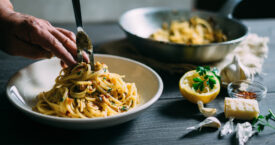
7 common mistakes when cooking pasta
Our tips for cooking pasta (from saving the cooking water to leaving the oil out) may seem never-ending, but ask the average Italian and you’ll see that the source of pasta knowledge a gift that keeps on giving is. (But in Italian). So here they are once again: common mistakes when cooking pasta, and how to fix them.

Sticky pasta, pasta that is slippery on the outside and hard and crumbly on the inside, pasta that you can no longer find in the enormous amount of sauce; all possible consequences of the common mistakes below. But salvation (for your pasta) is near!
You use too little water
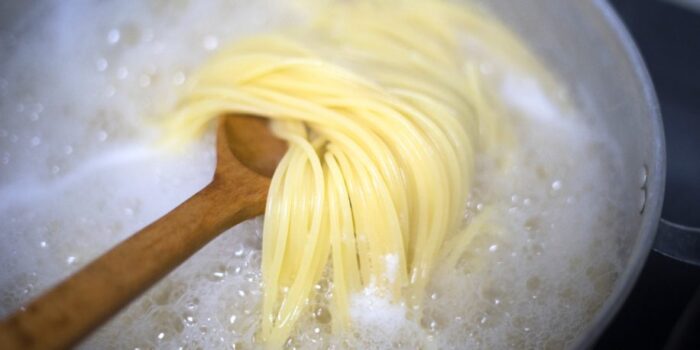
Use 1 liter of water per 100 grams of pasta. Yes, that means looking for a large pot if you’re cooking for more than 2 people! But it’s really important that the pasta has plenty of room to move, otherwise it will stick together. If you don’t have such a giant pot, use at least 3 liters for 500 grams.
You don’t wait for the water to boil
The eternal wrath of all Italian nonnas will befall you. Not simmering, not a few feeble bubbles; the water needs to be boiling.
You add oil to the water
We’ve talked about this before – don’t. It doesn’t mix with the water, it sticks to the pasta when you drain it, and this actually makes it harder for the sauce to cling to it.
The salt issue?
Well, this is genuinely complicated, and an entertaining source of debate to follow among (Italian) chefs. One says: your pasta water should be as salty as the sea. The other: like soup. My humble opinion: if you’re cooking fresh pasta, go with ‘soup’. The texture of fresh pasta is much softer, seems more porous, and absorbs that salted water sooner. Dried pasta: as salty as my tears, which will surely start flowing when the first Italian reads this paragraph.
You don’t stir immediately when the pasta goes into the water
Giving it a quick stir as soon as the pasta is in the pot also prevents it from sticking together. According to experts (once again: Italians), pasta is more likely to stick together at the beginning of the cooking process, because little starch has been released yet.
You throw away the cooking water
What a waste! We already wrote that you should never, ever do this. Pasta water is worth its weight in gold!
You think sauce is a cloak of love
But that doesn’t mean your pasta should be swimming in it. Think of the sauce as a vinaigrette for a salad; a thin layer is all it should be, as long as everything is covered. Don’t pour the sauce on top, but gently toss the pasta through the pan or bowl of sauce. And of course, as described above, you saved your pasta water, with which you can make your sauce perfectly loose yet still starchy, allowing it to cling well to the pasta and giving every individual strand or other shape of pasta a glossy, warm coating.
There are so many incredibly delicious pasta dishes that are simple, affordable because they require so little (and therefore perhaps allow you to afford good quality), and that all let the main ingredient shine: your perfectly cooked pasta! Think cacio e pepe, puttanesca, carbonara; all easy to make if you follow our simple instructions. Buon appetito!
Read also:


