


9 sneaky tricks supermarkets use to make you pay more
Does this happen to you too: you go to the supermarket for a half-loaf of sliced brown bread, cat food and stock cubes, and at home you also pull soda, crisps, mandarins, a magazine and a can of soup out of your bag. How does that happen? Max Klymenko is a very smart marketer who knows exactly which sneaky tricks supermarkets use to make you buy more than you intended.

Max lives in the United States, but is originally from Ukraine. Lately, he has mainly been focused on the war in his country—which makes sense—and he also uses his TikTok account to share information about it. But he started out with videos about marketing, and especially the clever tactics supermarkets use to make you buy as much as possible. How does it work? We’re sharing a few of the sneaky tricks Max has revealed.
Sneaky supermarket tricks
Eye level
Expensive brands are placed at eye level, while cheaper store brands are one shelf lower. We all know that—and a money-saving tip has been shared before: go grocery shopping on your knees—but we still buy most of the things that are right in front of us. Sixty to eighty percent of everything you put on the conveyor belt was at eye level.
Self-scanning
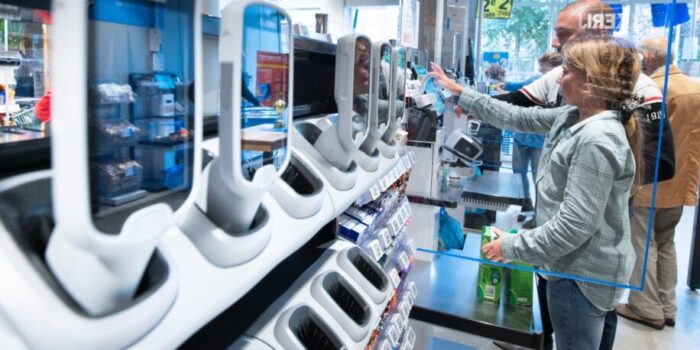
What’s faster: the self-checkout or the cashier? Most people don’t feel like scanning their own groceries, but they choose it anyway: it’s a lot faster. Or is it? According to Max, the regular checkout is always faster. We only feel like we’re faster when we scan our own groceries and type in a bag and search for broccoli on the screen, because we’re busy instead of waiting. If you’re waiting for something, it always takes longer.
Exit!
Those self-checkouts are also always a little closer to the door than the regular checkouts. It seems as though you’ll be outside faster if you choose the self-checkout. Clever, huh?
Hidden groceries
The basic groceries are always somewhat hidden. The eggs? Go find them. A bag of flour? Somewhere at the bottom of the baking aisle—and is that in the breakfast section or by the coffee? Who knows. That isn’t accidental: while you’re looking for those basics, you pass all kinds of groceries that you end up taking with you too.
Fruit and vegetables
They’re always at the front of the supermarket. It looks colorful and healthy, and immediately puts you in a good mood. Once you already have a cauliflower and a net bag of mandarins in your cart, you’re much more tempted to buy cookies or crisps too. After all, you’ve already got the healthy stuff!
Maze
Do you know why the layout of the supermarket is changed every few months? You have to search for your regular groceries, and while searching, you toss all kinds of things into your basket or cart. Sneaky!
What time is it?
Most supermarkets don’t have windows. You can’t look outside. As a result, you don’t realize how long you’ve already been in the supermarket, so you stay there longer. And spending longer in the supermarket means buying more—that’s a fact. Or do you spend half an hour in the magazine aisle just enjoying a read?
Still not enough
Shopping carts are getting bigger and deeper, says Max. These days, they’re twice as big as they were ten years ago. Why? It makes it look as though you haven’t loaded that much yet, so you keep shopping for a little longer.
Check your receipt
Yes, Max counts supermarket receipts for a living. And it pays off, he says. The average consumer pays $500 too much over the course of their lifetime because prices on the receipt don’t match the shelf prices. Wow!
Read also:
- This is what people find super annoying about supermarket employees
- 11 tips for saving a crazy amount of money at the supermarket
- 9 people this stingy are rarely encountered
Image, Albert Heijn, source: BoredPanda


