



Aged Ramen Noodles
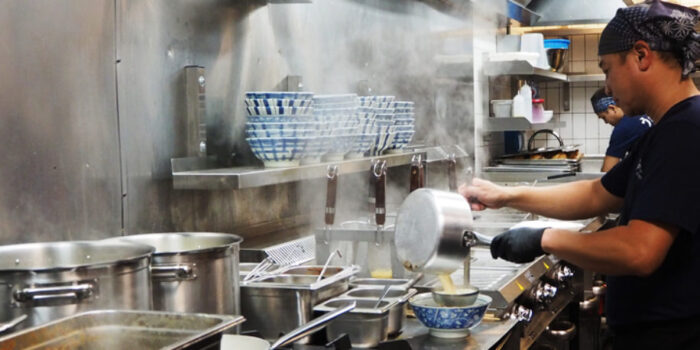
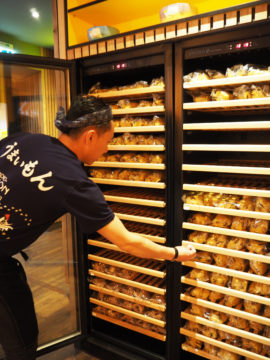
We’re living in a ramen bubble. Somewhere, a ramen noodle shop opens every week. But as far as we know, the new Umaimon in Amsterdam is one of the few—perhaps even the only one—in our country with a ramen noodle aging cabinet, a climate-controlled cabinet for ramen.

The recently opened Umaimon near Amsterdam’s Leidseplein serves chicken ramen with noodles from the Nishiyama Seimen’s Factory in Sapporo, the capital of the cold northern Japanese prefecture of Hokkaido.
Curly
‘These Sapporo noodles are relatively thick compared with, for example, Tokyo-style noodles. They’re also very elastic and curly,’ says Umaimon’s manager Jordan San. The factory makes them especially for Umaimon, as well as for ramen shops in Japan itself.
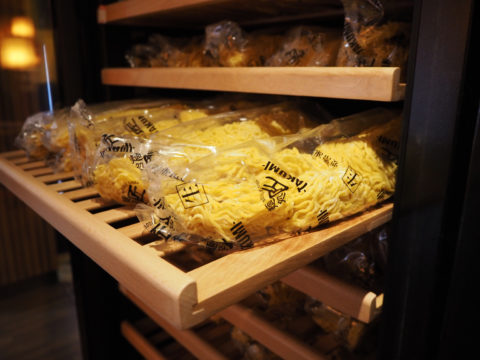
Within two weeks of being made, the noodles arrive frozen in Amsterdam. They don’t go straight into the noodle bowl, but are first allowed to age for three days in a special ramen noodle aging cabinet. It looks like a climate-controlled wine cabinet, but with drawers containing the plastic-wrapped ‘blocks’ of noodles, which age at a temperature of 18 degrees Celsius and precisely the right humidity until they are completely defrosted and ready to use. The cabinet stands by the entrance as a showcase of quality, much like a butcher displays sausages and hams in the window.
Aging, massaging and only then cooking: Umaimon’s ramen noodles.
Jordan San: ‘Aging ensures that the noodles, made from wheat flour, salt, water and kansui (alkaline water), remain elastic, curly and flavorful.’ But even after the three-day aging process, they don’t go straight into the cooking basket. Instead, they are gently ‘massaged’ for about five minutes—a typical Japanese food treatment that we also encounter, for example, with Wagyu cattle.
Not sticking
In this case, it means that the still relatively firm blocks of noodles, after three days of aging, are loosened by hand; otherwise, the individual strands would simply stick together during cooking. And all that aging would have been for nothing.
Although Umaimon has its roots in Japan, owner Mr. Saeki started his now modest empire in Düsseldorf’s Japantown at the beginning of this century with restaurant Takumi, after the initial plans from the 1990s (!) for Amsterdam had to be put on hold due to circumstances in the aging cabinet. To make sure everything is going well with the aging and processing, chef Mr. Okada comes from Düsseldorf every week to personally check the contents of the aging cabinet.
Whole wheat
It contains two different types of Sapporo noodles: whole wheat and egg noodles. The whole-wheat noodles go into thicker broths such as the Tsukemen dipping noodles, in which the noodles are served separately and you dip them into the broth yourself. The egg noodles go, for example, into the spicy mala tori soba.
Because noodles continue cooking in the broth, you need to eat quickly—and Umaimon does not offer delivery either. The quality would no longer be optimal. Amen.
Umaimon chicken noodles powered by Takumi Düsseldorf, Korte Leidsedwarsstraat 51 Amsterdam.
Image: Marjan Ippel


