



Battle of the pancakes: American pancakes versus the European pancake
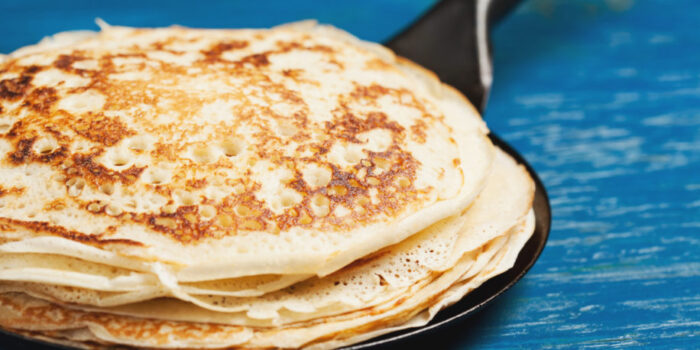
They’re both amazing, right? The fluffy, plump, airy little chubby things that American pancakes are, versus the paper-thin, ultra-refined, almost veil-like French crêpes. Not to mention the quintessentially Dutch pancake: comfort food at its best, filled according to preference with cheese, bacon, apple or syrup (preferably all four). So what are the biggest differences?

Let’s make one thing clear: we don’t think one is better than the other. There’s simply room in your life for both! Sometimes a beautiful stack of small, plump pancakes (espresso martini pancakes, yes please!) and sometimes a gorgeous handmade galette from such an impressive griddle that you’d rather eat it while walking through a picturesque French neighborhood. Or simply roll up your sleeves, put three pans on the stove and feed the entire soccer team! By the way, many countries in Western and Central Europe have a strong pancake tradition:
High but not dry
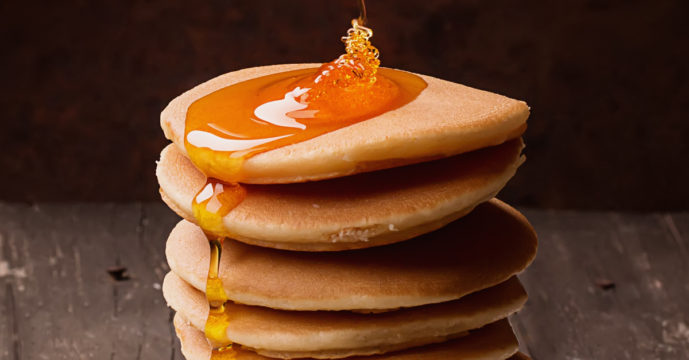
The biggest difference between American and European pancakes is that the former are almost always leavened. Often with baking powder in the batter, but whipped egg whites can also do the trick. This also makes it easy to see during cooking when they need to be turned: when air bubbles appear on the uncooked surface, it’s time for the ‘flip’ (a spatula is perfectly fine).
Regional differences
And of course, there are also plenty of differences among European pancakes. In England, pancakes aren’t particularly mainstream and are eaten almost exclusively on Shrove Tuesday (Mardi Gras). French crêpes are made with wheat flour, while the aforementioned galettes are made with buckwheat flour. Sometimes they’re flambéed right at your table (crêpes Suzette with Grand Marnier, delicious with vanilla ice cream).
Crêpe batter needs to rest for a few hours before cooking; in the Netherlands, we often think half an hour is enough (if we even manage that). In several Central and Eastern European countries, the dish is known by a variation of the name palatschinke or palačinka. They’re eaten both sweet and savory, for example as a main course filled with meat in a rich sauce in Hungary (‘hortobágyi palacsinta’). And a great way to get children to eat vegetables? Spinach pancakes!
All day all night
You don’t often find the American pancake outside the breakfast or brunch menu. But, admittedly, it’s perfectly normal to order a stack of pancakes and a mug of coffee as big as your face at an all-night diner at three in the morning. Bacon on the side, a little jug of maple syrup; that’s pretty great too, isn’t it?! So whether you look at it from one side of the Atlantic or the other: when it comes to pancakes, both continents are cooking with gas.
Read also:
- 5x next-level pancakes
- Why does the first pancake fail?
- Recipe: Roasted Peking duck with pancakes and hoisin sauce


