


Can you actually eat the Parmesan rind, and more facts about a wedge of Parmesan cheese
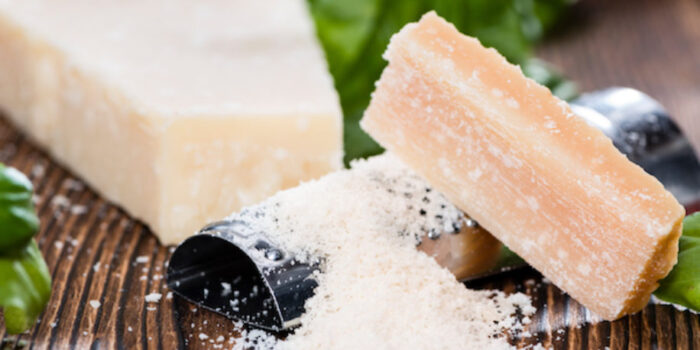
With cheeses whose exterior isn’t made of plastic or another synthetic material, it is in fact possible to eat the rind as well. Whether it tastes good is another matter, but your stomach can digest it and, if all goes well, it won’t make you ill. But before you subject every cheese rind to a bite-and-swallow test yourself, it’s more useful to read this first…

Parmesan cheese is certainly one of the greatest treasures human hands can create, in our humble opinion. The tradition, the craftsmanship behind it and, good grief, that FLAVOR; isn’t it simply unrivaled? And did you know that the flavor right in the middle is completely different from the flavor near the outside? Read on, and we’ll tell you the story from the inside out:
The mild core
A (whole) Parmesan cheese is washed in a salt bath. That salt moves inward, and the brine washes the cheese receives during aging are absorbed by it. However, the salt will penetrate the deepest core of the cheese in a lower concentration than the area just beneath the rind on the outside. So when a wedge is cut, the actual tip will be the mildest in flavor. This is particularly delicious on a cheese board, eaten out of hand, or shaved into broad ribbons over a dish where you want a somewhat milder Parmesan flavor.
The bold middle
The further you ‘eat’ your way from the middle toward the outside, the stronger the flavor becomes, partly because there is more salt there. Grate this section generously over pasta, or still eat it in pieces because you can’t keep your hands off it (me). And of course: the longer it has aged, the more intense the flavor.
The rind
Yes, here you are! You’ve neatly eaten, shaved and grated your way through the entire wedge, and now you’ve reached the rind. There’s no wax or protective coating on it, so you can simply put it to further use. It is wise, however, to wipe the rind with a paper towel dipped in a small layer of half white vinegar/half water. The cheese has most likely passed through many hands before you took it out of the packaging, so from a hygiene perspective it can’t hurt to clean it before using it further.
We previously described in detail what you can do with your saved Parmesan rind, and here’s one extra tip: if you’ve used it to simmer away in a soup or sauce for a good long time, it will be soft afterward. You could now eat it as is with some herbs and a drop of balsamic vinegar, or cut it into pieces and fry them until crisp in oil. That gives you incredibly delicious cheese croutons!
Also read:
- Once and for all: Parmesan etiquette
- The ultimate cheese fondue with Parmesan cheese
- The most delicious gnocchi (with Parmesan cream sauce!) are easy to make yourself
Source: Food and Wine/My Recipes


